EV Charger Installation in Eureka, CA
Charging where you park, in Eureka: the utility programs, state law, permit process and housing facts behind a home charger install, gathered in one place.
A decade of EV adoption has quietly sorted Eureka's streets into two kinds: the ones where charging already happens behind garage doors, and the ones where the first charger on the block is about to arrive. Either way, the questions are identical and local. Eureka itself is home to about 26,010 people. Across California, 1,843,100 battery-electric vehicles and 490,900 plug-in hybrids were registered through 2025. Which utility serves the address and what it currently offers, what the panel can honestly carry, what an association may and may not refuse, what the permit office expects — this page answers each for Eureka, from sources, with the dates attached.
How PlugReady USA works, in one breath: you describe the job once, licensed local installers who cover Eureka receive it, and the conversations happen with them directly. The rest of this page exists so those conversations start from facts — yours about the house, ours about the metro — rather than from a sales script.
What the Experian and AFDC registration data say about Eureka–Arcata: Far-north CA. Translated out of market language: your neighbours are already charging at home, the permit office already knows the paperwork, and the installers already know the housing stock.
Context from the Census Bureau's survey of Eureka: median household income $57,662; 48% of occupied homes are owner-occupied; 61% of housing units are single-unit detached houses. It is the profile of a city where the typical charger job is a homeowner job — scoped by the panel and the wire run, not by permissions.

The composite picture matters more than any single statistic. In Eureka: an older housing fabric, where panel archaeology is a normal part of the first visit; a detached-house majority with a real attached and multifamily minority; buildings of five or more units are a visible minority of the stock; meanwhile, renters form a large share of households, so the landlord conversation is a first-class topic here. A page that ignored that profile would give the same advice everywhere; this one is ordered by it.
The counts behind the percentages, for the record: Eureka has 11,628 housing units on the survey's count, 10,392 of them occupied, and 4,965 owner-occupied households making their own electrical decisions. Detached houses number 7,037; homes built before 1980 number 9,621; units in buildings of five or more number 1,724. An installer's week in this city is a walk through exactly that distribution. The page's geography is equally concrete: 3 ZIP codes across Humboldt, centred near 40.79 degrees north latitude. The city anchors the Eureka–Arcata metropolitan area, home to roughly 135,000 people on the research file's metro estimate — the wider labour and housing market this page's installers work across.
The same survey release fills in the household economics around the housing stock: a median home value of $404,500, median gross rent of $1,195, per-capita income of $35,450, and a median resident age of 39. And the daily rhythms behind the housing numbers: 69% of Eureka workers drive to work alone — the commute pattern home charging is built around; 12% work from home, a population whose cars charge on daytime and overnight schedules alike; 2% commute by public transit; 29% of adults hold a bachelor's degree or higher. And the fleet in the driveways: 4,177 households in Eureka have exactly one vehicle, 4,995 have two or more, and 1,220 have none.
The cost-burden lines say who feels housing costs most in Eureka: 60% of renters spend 30% or more of income on rent, and 0% of owners with mortgages spend the same share on housing costs. Family households are 51% of all households — the two-car, school-run demographic whose charging patterns this page's planning sections keep circling back to.
The signature matters because installs follow it, street by street. Where so much of the stock predates modern code cycles, the site visit doubles as a survey — grounding electrode, service entrance, panel provenance — before it is ever a quote. Installers here run two trades in one van — domestic circuits in the morning, a building's shared-service design in the afternoon — and the city's pages, this one included, have to serve both readers.
Property managers are the metro's charging gatekeepers at this tenure mix, and the installers who thrive are the ones whose proposals arrive manager-shaped: standardised, insured, reversible on paper. Budget discipline shapes the specification — the circuit sized exactly, the management device considered wherever it defers a service upgrade, every scope line asked to justify itself. Tariff design is the quiet policy: the shape of the overnight window, the demand charges commercial customers face, the interconnection queue's pace — all set in dockets the diligent can read.
The state's fleet has reached the scale where charging is unremarkable infrastructure: installers booked out, permit clerks fluent, neighbours comparing circuits over fences. Eureka sits inside that normalisation. The permit counter in a smaller city is a conversation, not a queue: applications are read by people who may know the street, and complete paperwork is remembered kindly. Shared-property households here work with a written legal position rather than a board's mood, which changes the application from a petition into a procedure.
The electrical reality in Eureka homes
The survey's housing portrait for Eureka opens with its median: a home built in 1954, in a stock where 83% of units predate 1980 and 61% stand detached on their own lots. 48% of occupied homes are owner-occupied. An installer reads those lines as a weather forecast: mostly settled conditions, with older wiring fronts moving through the pre-1980 districts. Age shows up electrically before it shows up anywhere else: services sized for a house with a third of today's appliances. Expect the first conversation to be about capacity — what the panel is, what it already feeds, and which of the three routes (circuit, management, upgrade) your numbers support. Detached houses matter for a practical reason: a garage or driveway on your own lot means the charger, the car and the circuit are all under one roof and one owner's control, which is the simplest configuration there is.
One further survey line belongs in any Eureka install conversation: 22% of the city's homes heat with electricity — 2,276 households whose panels already carry a major winter load before a charger is contemplated. Electric heat and EV charging are the two largest discretionary loads a house can host, and where they coincide, the load calculation stops being a formality.
One further split matters for how this page is organised: about 5,427 of Eureka's occupied homes are renter-occupied. Everything above assumes you can approve your own electrical work; where you cannot, the approval layer — landlord or association — becomes part of the job, which is why the law section carries unusual weight here.
And 15% of Eureka's homes are in buildings with five or more units — apartments and condominiums where charging is a building decision before it is an electrical one. If that is your situation, the law and multifamily sections of this page are the ones written for you.
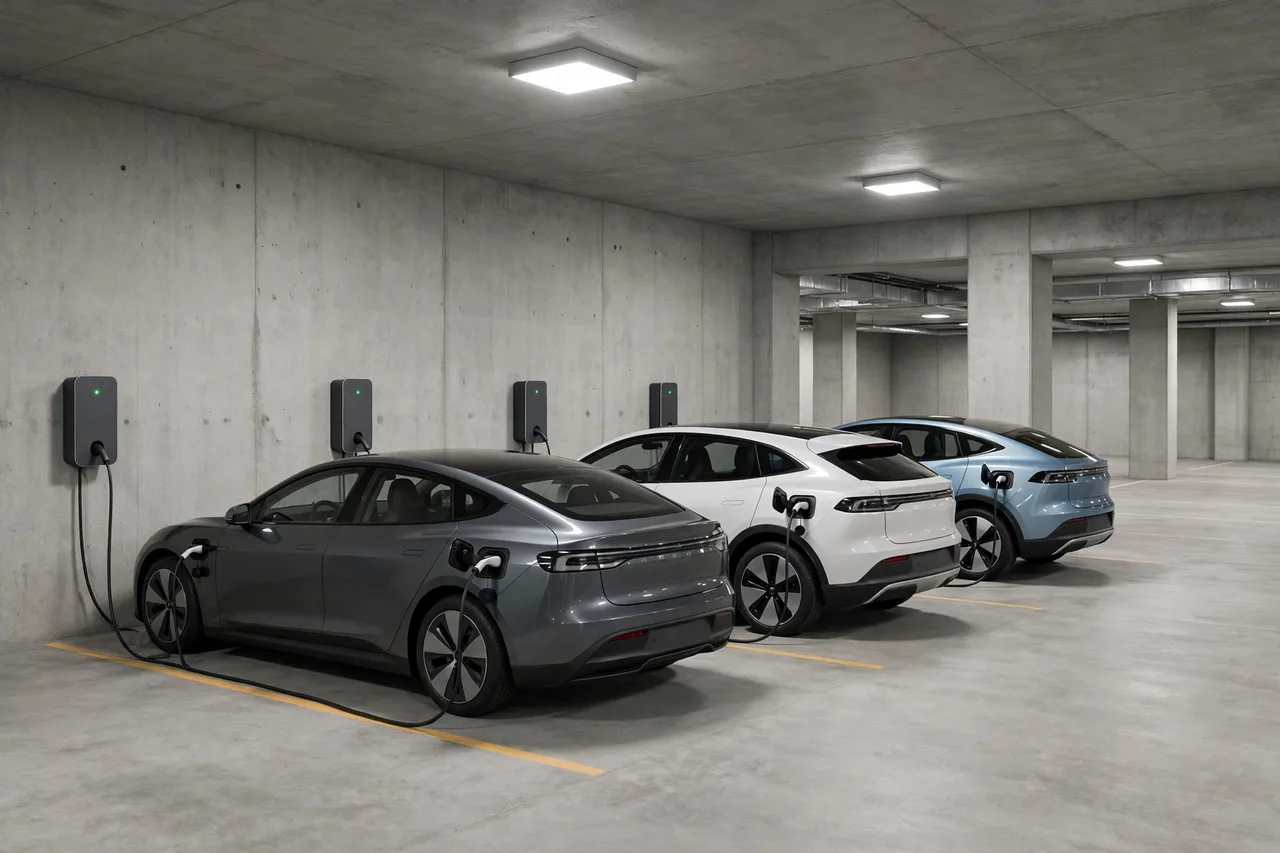
EV charging services in Eureka
An installer's work in Eureka usually starts with one of the three lead services below. The cards describe the job as it is actually scoped; the grid underneath carries the rest of the menu.
Home EV Charger Installation in Eureka
Start to finish, the domestic install is a half-day of electrical work wrapped in a week of scheduling: the survey, the circuit, the mounting, the configuration, the inspection. What the household experiences is simpler — a car that is full every morning and a cable that lives where the car does.
In Eureka: the default first install for Eureka's EV households — a station where the car already parks.
Dedicated Circuit & Electrical Panel Upgrade in Eureka
Where the load calculation fails the existing service, the upgrade is not an upsell — it is the finding. Done under permit with the utility's meter work coordinated, it converts the charger project into the house's electrical reset, and every later project inherits the headroom.
In Eureka: the capacity fix that lets the charger circuit go in without the rest of the house living at its limit.
Multifamily & Condo EV Charging in Eureka
In a multifamily building the charger is the easy half. The craft is the route to yes: a complete board application, a metering design that bills the right owner, load management that shares the building's capacity, and only then the circuit. Installers who do this work weekly carry the paperwork templates with them.
In Eureka: assigned-space and shared charging for Eureka buildings, including the metering that keeps costs on the right owner.
Utility programs and electricity in Eureka
Electricity in Eureka comes from Pacific Gas & Electric Co.. Parts of the wider metro are served by Shelter Cove Resort Improvement Dist No. 1. The utility matters twice over for a charger install: it sets the time-of-use rates that decide what overnight charging costs you, and it is the organisation that may — or may not — currently help pay for the equipment.
Do not budget for a rebate in Eureka right now. As of the sources checked for this page, Pacific Gas & Electric Co. publishes no residential charger rebate, California offers no state program for typical home installs, and the federal 30C credit ended on September 30, 2025. If that changes, the utility's program page will say so with an as-of date — and this page will be updated to match. Until then, judge quotes on the work itself.
One more utility habit worth copying from Eureka's EV owners: charge on the overnight rate window if your plan has one. The charger itself can usually be scheduled from the car or the station, so the habit costs nothing once it is set.
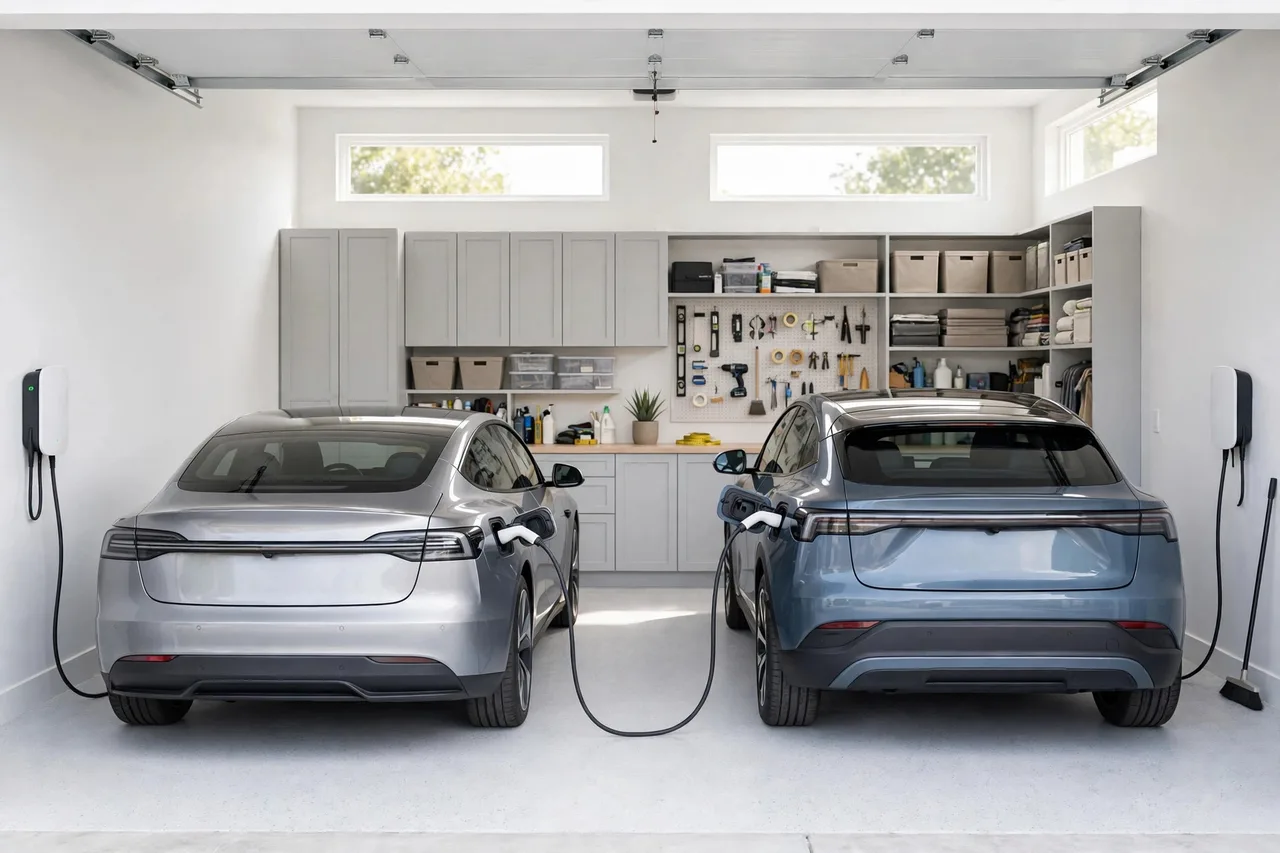
Condos, HOAs and the law in California
California law protects an owner's charger. Civ. Code §4745; §1947.6 (renters) gives owners in association communities a statutory route to a charging station in their own space: the association may set reasonable conditions on how the installation looks, where exactly it sits, and how it is insured, but a flat prohibition is not one of its options. Owners fund the work, use licensed installers, and remain responsible for the equipment — the statute allocates the burdens; it does not remove them.
In practice, boards in California process charger applications the way they process any exterior electrical work — drawings, equipment listing, the installer's licence and insurance — with the statute standing behind the timeline. Applications in Eureka that arrive complete are typically answered in one meeting cycle; incomplete ones teach their owners the meeting calendar.
The step-by-step version lives in our guide to installing an EV charger in a condo or HOA community — the application sequence, the metering designs and the questions boards ask, in order.
Climate, garages and charger placement
The shoulder seasons are charging's easy months in a mixed climate, and the install conversation can afford to plan for the extremes instead: the coldest night the cable must flex through, the hottest afternoon the garage will hold. Design for those two days and the other 363 take care of themselves.
A four-season spec sheet is a compromise written in equipment ratings: cable jackets flexible at the January low, electronics rated past the July high, an enclosure indifferent to both. The listed gear covers it; placement decides the rest.

Permits and inspection in Eureka
What the inspector is checking, in plain terms: conductor size against breaker size, the continuous-load calculation, terminations torqued, protection where the code wants it, and a station whose settings match the circuit it landed on. It is a short visit that validates everything you cannot see.

Neighbourhoods and ZIP codes served
The page covers 3 ZIP codes in and around Eureka — including 95501, 95502, 95503 — across Humboldt. If your ZIP is not in the first set shown, ask anyway: installer coverage follows the metro, not a postcode fence.
The same working area takes in the neighbouring localities of Cutten, Samoa, Fields Landing, Bayside, Arcata, Loleta, Mckinleyville, Fortuna, Korbel, Hydesville, Blue Lake, Trinidad, Kneeland, Ferndale — the county ring an installer based in Eureka actually drives. Requests from those communities route exactly as city requests do: same services, same permit discipline, same local facts where they differ.
Humboldt County accounts for 38 of the ZIP codes and 35 named postal localities in the research file, the nearest of them Cutten, Samoa, Fields Landing, Bayside, Arcata. The survey counts 134,541 residents in the county, with a median household income of $61,160 and a median home value of $446,900. Measured across its ZIP codes, the Eureka footprint runs about 3 miles north to south and 1 east to west, from ZIP 95501 to 95503 — the ground an installer based here actually covers in a working week.
Beyond the county seats, the working area takes in Cutten, Samoa, Fields Landing, Bayside, Arcata, Loleta, Mckinleyville, Fortuna, Korbel, Hydesville, Blue Lake, Trinidad, Kneeland, Ferndale, Rio Dell, Carlotta, Scotia, Bridgeville, Willow Creek, Hoopa, Salyer, Redcrest, Weott, Petrolia, Honeydew, Orick, Myers Flat, Hyampom, Burnt Ranch, Miranda, Blocksburg — the named localities for which Eureka is the nearest metro in the network (neighbouring metros' pages cover their own ground), each routing to the same installer-matching service.
The largest communities in that working area after Eureka itself, by the GeoNames populated-place file: Arcata (population 17,843), Bayside (population 17,132), McKinleyville (population 15,177), Fortuna (population 12,000), Crescent City (population 6,774), Myrtletown (population 4,675), Humboldt Hill (population 3,414), Rio Dell (population 3,387), Pine Hills (population 3,131), Cutten (population 3,108), Bayview (population 2,510), Bertsch-Oceanview (population 2,436), Willow Creek (population 1,710), Fort Dick (population 1,405), Ferndale (population 1,369), Blue Lake (population 1,252), Hydesville (population 1,237), Redway (population 1,225), Westhaven-Moonstone (population 1,205), Garberville (population 913). Charging demand follows those populations — the subdivisions and town centres where the next driveways, and the next panels, are.
Trinity County reaches into the working area with 15,860 residents, a median household income of $53,002 and a median home value of $325,800; its localities on this page include Salyer, Hyampom, Burnt Ranch.
| ZIP | Locality | County |
|---|---|---|
| 95501 | Eureka | Humboldt |
| 95502 | Eureka | Humboldt |
| 95534 | Cutten | Humboldt |
| 95564 | Samoa | Humboldt |
| 95503 | Eureka | Humboldt |
| 95537 | Fields Landing | Humboldt |
| 95524 | Bayside | Humboldt |
| 95518 | Arcata | Humboldt |
| 95521 | Arcata | Humboldt |
| 95551 | Loleta | Humboldt |
| 95519 | Mckinleyville | Humboldt |
| 95540 | Fortuna | Humboldt |
| 95550 | Korbel | Humboldt |
| 95547 | Hydesville | Humboldt |
| 95525 | Blue Lake | Humboldt |
| 95570 | Trinidad | Humboldt |
| 95549 | Kneeland | Humboldt |
| 95536 | Ferndale | Humboldt |
| 95562 | Rio Dell | Humboldt |
| 95528 | Carlotta | Humboldt |
| 95565 | Scotia | Humboldt |
| 95526 | Bridgeville | Humboldt |
| 95573 | Willow Creek | Humboldt |
| 95546 | Hoopa | Humboldt |
| 95563 | Salyer | Trinity |
| 95569 | Redcrest | Humboldt |
| 95571 | Weott | Humboldt |
| 95558 | Petrolia | Humboldt |
| 95545 | Honeydew | Humboldt |
| 95555 | Orick | Humboldt |
| 95554 | Myers Flat | Humboldt |
| 96046 | Hyampom | Trinity |
| 95527 | Burnt Ranch | Trinity |
| 95553 | Miranda | Humboldt |
| 95514 | Blocksburg | Humboldt |

Planning the install: from panel to parking
Consider the two households inside every Eureka install. The first owns the panel, the parking and the decision; the second — a partner, a teenager with the next car, a future buyer — inherits all three. Designing for the second household is the difference between an install and an asset: capacity reserved, conduit honest, paperwork filed. The first conversation with an installer should name both households explicitly.
Finally, photograph the finished work — station, nameplate, panel directory with the new breaker labelled — and file it with the inspection record. When the car changes, the house sells or a second station joins the first, that folder is the difference between a five-minute answer and an archaeological dig.
Home charging know-how for Eureka households
Two kinds of protection, one circuit
Modern charging circuits sit at the meeting point of two protection philosophies: the breaker's ground-fault protection watching the circuit, and the station's own ground-fault and monitoring systems watching the session. Coordinating them is a specification task — which device leads, which breaker types the station manufacturer lists as compatible, whether the installation is hardwired or receptacle-fed. Done at design time, the two systems coexist silently for decades; done by trial, they announce themselves at 3 am.
Charging with an accessory dwelling
Houses with a second unit — a garage apartment, a granny flat, a rented studio — add a cast member to the charging design: another household. The questions multiply politely. Whose panel carries the circuit? Whose meter records the energy? Does the tenancy agreement mention the charger at all? None are hard questions, and all are cheaper answered at design time than at the first shared bill. Where the second unit has its own meter and panel, the design is simply two small domestic installs sharing an address.
Carports and the condensation line
A carport shelters the car from rain but not from air, and overnight condensation is its signature: cool surfaces, damp mornings, connectors beaded with moisture. Equipment listed for the exposure handles it as routine; the details are in drainage and holstering — a connector docked nose-down in its holder sheds water, one left coiled on the slab collects it. Small physics, daily consequences.
Breaker spaces are not capacity
Two different shortages hide inside the phrase 'my panel is full'. A panel can run out of breaker spaces while its service still has honest capacity — answered with a subpanel or, where the listing permits, tandem breakers. Or it can run out of capacity while spaces remain — answered with a service increase or a management system. The load calculation distinguishes the two in minutes, and the distinction is worth real scope: one answer is an afternoon's work, the other is a project. Any quote that treats them as the same problem has skipped the arithmetic.

Frequently asked questions
What happened to the federal home-charger credit in Eureka, CA?
That credit is finished: 30C ended on September 30, 2025. What about locally? In the utility and state sources checked for this page, nothing verified was running for Eureka homeowners — no Pacific Gas & Electric Co. rebate, no state scheme. If one opens, it will appear on the utility's site with dates; plan your install without it meanwhile.
What can my HOA in Eureka, CA do about a charger install?
Not outright. Under Civ. Code §4745; §1947.6 (renters), California associations cannot prohibit an owner's charger; they can condition it — reasonably — on placement, insurance and restoration, with the owner funding the work. The disputes that do arise are usually about conditions, and they settle fastest when the application answers them in advance.
Does a Level 2 charger mean a panel upgrade for a Eureka, CA home?
It hinges on two numbers you cannot read off the panel door: the service's rating, and what the load calculation says it already carries. The vintage of Eureka's stock — median build year 1954, about 83% of homes from before 1980 — means both answers are common here. The charger enters the arithmetic at 125% of its draw; whatever room survives that entry decides between a circuit, a management device, and an upgrade.
How much faster is Level 2 charging at home in Eureka, CA?
A Level 1 cord on a household outlet adds roughly 3–5 miles of range per hour; a Level 2 station on a 240-volt circuit typically adds about 25–40 miles per hour depending on the circuit's amperage and the vehicle. For most drivers that is the difference between rationing the battery and never thinking about it.
What happens after I request an installer through this page?
Your request — service, Eureka ZIP, property type and timing — goes to licensed local installers who cover Eureka. They contact you directly to arrange a site visit and quote. PlugReady USA is the matching service, not the installer, and the sections above exist so you can judge any quote against the local facts.
How long does a typical home charger installation take in Eureka, CA?
Plan on a day of electrical work for the standard layout, plus the permit and inspection appointments that bracket it on the city's calendar. Capacity work — an upgrade or a subpanel — extends the electrical day; approvals in a condo or HOA extend the calendar, not the tools. Your site visit ends with all three durations stated separately.
Nearby cities in California
- EV charger installation in Redding — about 98 miles from Eureka, metro population 180,000
- EV charger installation in Chico — about 147 miles from Eureka, metro population 210,000
- EV charger installation in Santa Rosa — about 180 miles from Eureka, metro population 500,000
- EV charger installation in Yuba City — about 182 miles from Eureka, metro population 185,000
- EV charger installation in Napa — about 192 miles from Eureka, metro population 140,000
- EV charger installation in Vallejo — about 209 miles from Eureka, metro population 450,000
- EV charger installation in Medford, OR — about 124 miles from Eureka, metro population 220,000
- EV charger installation in Eugene, OR — about 234 miles from Eureka, metro population 400,000
- EV charger installation in Reno, NV — about 255 miles from Eureka, metro population 500,000
Ready to charge at home in Eureka?
Two minutes of form, and the request is in front of licensed installers who cover this city — quotes follow site visits, in writing.