EV Charger Installation in El Centro, CA
Charging where you park, in El Centro: the utility programs, state law, permit process and housing facts behind a home charger install, gathered in one place.
Charging at home is the version of EV ownership that actually works day to day, and in El Centro it starts with a straightforward question: where will the car sleep, and what can the electrical panel behind that wall honestly support? El Centro itself is home to about 44,240 people, and 1,843,100 battery-electric vehicles plus 490,900 plug-in hybrids were registered across California by the end of 2025 — every one of them a household that charges somewhere. This page gathers what a homeowner in El Centro needs to know before booking an installer: the local utility and its current charger programs, the state law that applies in condos and HOA communities, the permit process, and the housing realities that decide how simple or involved an installation will be.
The sections that follow are deliberately unglamorous: statutes, survey data, permit counters, tariff habits. That is what a good install is made of. The car is the exciting part; this page is about the wall it plugs into.
Measured demand, not enthusiasm, put El Centro in Tier C of this network: Imperial Valley. For a homeowner the useful translation is simpler — installers here do this work weekly, know the local permit counter, and have seen your housing stock before.
The same survey puts median household income in El Centro at $53,082, with 49% of occupied homes owner-occupied and 54% of the housing stock single-unit detached. For charging, those are the operative facts: owners can approve their own electrical work, and detached homes put the car, the panel and the parking under one roof.

The composite picture matters more than any single statistic. In El Centro: an older housing fabric, where panel archaeology is a normal part of the first visit; a detached-house majority with a real attached and multifamily minority; buildings of five or more units hold a substantial share of homes, which keeps the multifamily sections of this page in daily use; meanwhile, renters form a large share of households, so the landlord conversation is a first-class topic here. A page that ignored that profile would give the same advice everywhere; this one is ordered by it.
The counts behind the percentages, for the record: El Centro has 14,656 housing units on the survey's count, 12,890 of them occupied, and 6,377 owner-occupied households making their own electrical decisions. Detached houses number 7,850; homes built before 1980 number 6,936; units in buildings of five or more number 3,342. An installer's week in this city is a walk through exactly that distribution. The page's geography is equally concrete: 2 ZIP codes across Imperial, centred near 32.79 degrees north latitude. The city anchors the El Centro metropolitan area, home to roughly 180,000 people on the research file's metro estimate — the wider labour and housing market this page's installers work across.
The same survey release fills in the household economics around the housing stock: a median home value of $323,100, median gross rent of $1,052, per-capita income of $23,590, and a median resident age of 31. How the city moves completes the picture: 77% of El Centro workers drive to work alone — the commute pattern home charging is built around; 6% work from home, a population whose cars charge on daytime and overnight schedules alike; 15% of adults hold a bachelor's degree or higher; 12% of housing units stood vacant at the survey. Vehicle ownership, from the same release: 8,055 households in El Centro run two or more vehicles, and 753 run none — the two ends of the market this page serves and does not serve.
Household structure, from the same release: 76% of El Centro households are family households. The burden shares behind the housing stock: 51% of renting households are cost-burdened at the 30%-of-income line, as are 0% of mortgaged owners — context for why the overnight rate window, once set, is treated here as a household fixture rather than a hobby.
The signature matters because installs follow it, street by street. Pre-war and immediate post-war streets dominate the map, and their electrical fabric is stratified — original services beneath mid-century additions beneath modern subpanels, an archaeology the load calculation reads layer by layer. Mixed form means mixed timelines: a homeowner's install is a fortnight's scheduling, a condo's is a season's governance; the metro's charging growth arrives on both clocks at once.
High renter share also means charging follows the lease cycle: applications cluster at move-in, installations at renewal leverage, and the whole market breathes on the rental calendar. Modest incomes make the overnight tariff the headline act: the difference between peak and off-peak charging, compounded nightly for years, is the largest single number in the ownership equation. Filed tariffs and public dockets give this territory a paper trail most markets lack: the diligent household can read the utility's own electrification plan and know which programmes are funded, piloted or merely proposed.
A mature fleet also means a mature used market — households buying their first EV second-hand arrive at this page with the same install questions the pioneers asked, minus the pioneers' uncertainty. Smaller metros adopt on their own clock: the fleet follows the dealers and the demographics, and each install is a visible event a street notices. Where the state's statute speaks, the local conversation changes register: installers quote the framework, boards keep counsel's template, and approvals become administrative.
The electrical reality in El Centro homes
Start with the survey's three operative figures for El Centro: median build year 1982; 47% of housing units standing since before 1980; 54% of the stock in single-unit detached houses, with 49% of occupied homes owner-occupied. Between them, they sketch the electrical city an installer works in. Age shows up electrically before it shows up anywhere else: services sized for a house with a third of today's appliances. Expect the first conversation to be about capacity — what the panel is, what it already feeds, and which of the three routes (circuit, management, upgrade) your numbers support. Owner-occupiers can plan on their own timeline; renters and condo owners have an extra approval layer, which the law section below covers for this state.
The fuel table adds one more local fact: 9,076 El Centro homes — 70% of the stock — heat with electricity. Those households already think in kilowatts through the winter, their panels carry the load to prove it, and a charger's overnight appetite joins a system that is, in the useful sense, already electrified.
One further split matters for how this page is organised: about 6,513 of El Centro's occupied homes are renter-occupied. Everything above assumes you can approve your own electrical work; where you cannot, the approval layer — landlord or association — becomes part of the job, which is why the law section carries unusual weight here.
One more structural fact shapes El Centro's charging map: 23% of the city's housing units sit in buildings of five or more units. Those households cannot simply book a circuit — their charger runs through a building, a board and a shared electrical service, which is why the multifamily service and the law section below carry unusual weight on this page.
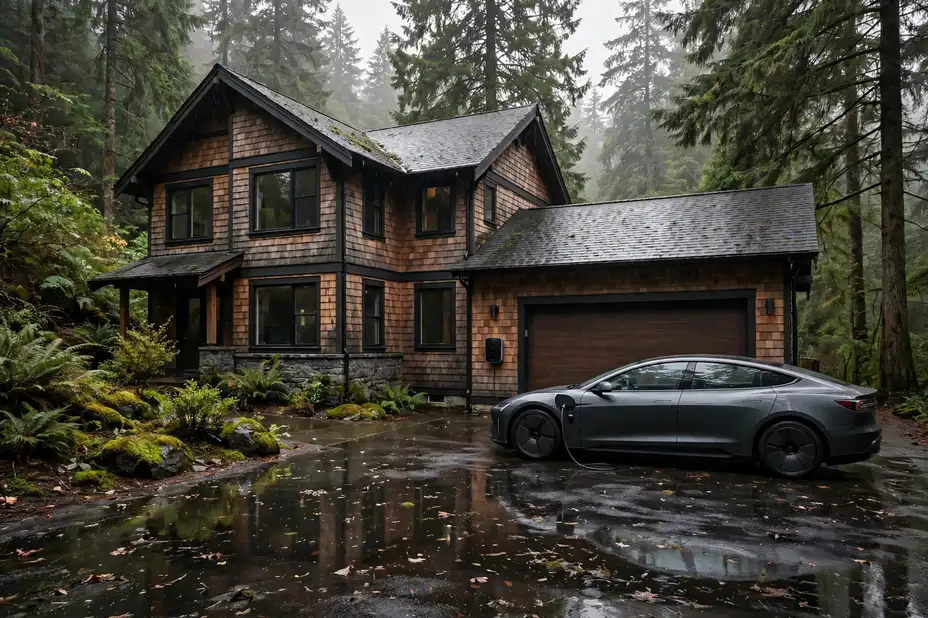
EV charging services in El Centro
Installers in El Centro book the same ten services as everywhere — but not in the same proportions. The three leading cards below are this city's pattern, set by its panels, its buildings and its statute book.
Home EV Charger Installation in El Centro
For most households this is the whole project: a Level 2 station mounted where the car sleeps, fed by its own 240-volt circuit. The visit pattern is consistent — load calculation, route the run, mount and configure, inspect — and the variables are your panel, your parking and your permit office.
In El Centro: the core residential job in El Centro: circuit, mounting, configuration and inspection in one visit pattern.
Dedicated Circuit & Electrical Panel Upgrade in El Centro
A service change is the least reversible and most enabling job on this page: it re-bases the whole house's electrical life. Done inside the charger project, it shares the permit, the utility visit and the electrician's day with the circuit it makes room for.
In El Centro: service work that turns 'no room' into a circuit with headroom in El Centro homes.
Multifamily & Condo EV Charging in El Centro
The multifamily install is won in the board pack. Load study, metering plan, insurance certificates, a licensed firm's name, a restoration clause — assembled once, they answer the meeting's questions before they are asked, and the circuit that follows is the easy part.
In El Centro: constitutions for shared charging in El Centro buildings: metering, load and approvals.
Utility programs and electricity in El Centro
Electricity in El Centro comes from Southern California Edison Co. Parts of the wider metro are served by Imperial Irrigation District, WAPA-- Western Area Power Administration. The utility matters twice over for a charger install: it sets the time-of-use rates that decide what overnight charging costs you, and it is the organisation that may — or may not — currently help pay for the equipment.
Program status is a snapshot, and this page dates its snapshot: sources checked at build time found no Southern California Edison Co residential charger rebate, no California home-charger program, and a federal credit that ended September 30, 2025. El Centro households should treat that as the position until a utility announcement changes it — utilities publish openings prominently when budgets exist, because unspent program money is a problem for them too.
Net-metering households — rooftop solar is common across the metro — should tell the installer: charging schedules and load management are planned differently when the house generates as well as consumes.
Condos, HOAs and the law in California
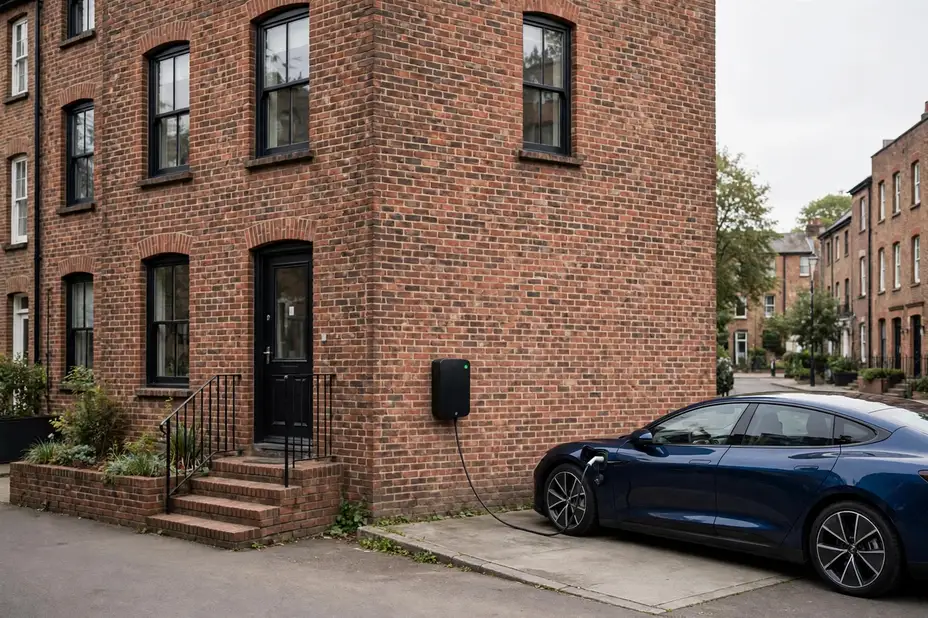
Charging is a protected right for association owners in California. The state's right-to-charge statute (Civ. Code §4745; §1947.6 (renters)) stops a homeowners association or condominium from banning an owner's charging station outright. Conditions still exist — placement, appearance, insurance and restoration can all be regulated, and the owner pays — yet the starting position is yes-with-rules rather than no-unless-persuaded, and that difference decides most applications before they are written.
For renters, coverage in California is recorded as: Yes. If you rent in El Centro, the practical route is still a written proposal to the landlord — dedicated circuit, licensed installer, your name on the permit — because a charger-ready space is an asset most landlords keep when you leave.
Start with the condo and HOA guide for the application itself, and the multifamily service page for how the electrical design is usually laid out in California buildings.
Climate, garages and charger placement
The seasons rotate the charging advice: precondition from the wall in winter, dodge the afternoon peak in summer, and let the shoulder months do what they like. Households here learn the two settings and change them with the clocks.
Freeze-thaw cycles test the install's civil engineering more than its electronics: pedestal foundations heave, conduit seals work, driveway surfaces move. A local installer has watched a decade of winters grade the neighbourhood's installs and specifies the foundation accordingly.

Permits and inspection in El Centro
If your install is part of a larger job — a panel upgrade, a garage build — the charger usually rides on the same permit set. Ask for the charger circuit to be listed explicitly so the inspection record shows it.

Neighbourhoods and ZIP codes served
The page covers 2 ZIP codes in and around El Centro — including 92243, 92244 — across Imperial. If your ZIP is not in the first set shown, ask anyway: installer coverage follows the metro, not a postcode fence.
The same working area takes in the neighbouring localities of Imperial, Seeley, Calexico, Heber, Holtville, Brawley, Westmorland, Ocotillo, Calipatria, Niland, Salton City, Winterhaven, Bard, Palo Verde — the county ring an installer based in El Centro actually drives. Requests from those communities route exactly as city requests do: same services, same permit discipline, same local facts where they differ.
Imperial County accounts for 18 of the ZIP codes and 16 named postal localities in the research file, the nearest of them Imperial, Seeley, Calexico, Heber, Holtville. The survey counts 180,202 residents in the county, with a median household income of $57,681 and a median home value of $309,600.
Beyond the county seats, the working area takes in Imperial, Seeley, Calexico, Heber, Holtville, Brawley, Westmorland, Ocotillo, Calipatria, Jacumba, Niland, Salton City, Boulevard, Borrego Springs, Mecca, Thermal, Desert Center, Indio — the named localities for which El Centro is the nearest metro in the network (neighbouring metros' pages cover their own ground), each routing to the same installer-matching service.
The wider working area also reaches Gadsden, San Luis, Somerton, Guatay, Potrero, Palo Verde, San Ysidro, Dulzura, Ramona, La Quinta, Palm Desert, Chula Vista, Indian Wells, Santee, Wellton, La Mesa, San Diego, Lemon Grove, Ehrenberg, Poway, Rancho Mirage, Cathedral City, National City, Palm Springs, Coronado, Mountain Center, Del Mar, Solana Beach, Quartzsite, Encinitas, Carlsbad, Vista, Bonsall, Temecula, Oceanside — ground shared with neighbouring metros, where installers cross the same county lines in both directions.
ZIP codes in that shared ground include 85356, 91906, 91911, 91913, 91914, 91915, 91932, 91944, 91946, 91950, 91951, 91987, 92014, 92019, 92020, 92023, 92029, 92037, 92056, 92059, 92064, 92065, 92066, 92070, 92086, 92102, 92107, 92110, 92115, 92118, 92123, 92124, 92126, 92134, 92137, 92143, 92150, 92153, 92165, 92166.
The largest communities in that working area after El Centro itself, by the GeoNames populated-place file: Calexico (population 40,053), Brawley (population 25,897), Imperial (population 17,095), Mecca (population 8,577), Calipatria (population 7,424), Oasis (population 6,890), Holtville (population 6,404), Heber (population 4,275), Salton City (population 3,763), Borrego Springs (population 3,429), Vista Santa Rosa (population 2,926), Thermal (population 2,865), Westmorland (population 2,267), Seeley (population 1,739), Desert Shores (population 1,104), Niland (population 1,006), Jacumba Hot Springs (population 561). Charging demand follows those populations — the subdivisions and town centres where the next driveways, and the next panels, are.
Riverside County reaches into the working area with 2,478,600 residents, a median household income of $93,074 and a median home value of $557,300; its localities on this page include Mecca, Thermal, Desert Center, Indio. San Diego County reaches into the working area with 3,288,774 residents, a median household income of $106,268 and a median home value of $854,700; its localities on this page include Jacumba, Boulevard, Borrego Springs.
| ZIP | Locality | County |
|---|---|---|
| 92243 | El Centro | Imperial |
| 92251 | Imperial | Imperial |
| 92244 | El Centro | Imperial |
| 92273 | Seeley | Imperial |
| 92231 | Calexico | Imperial |
| 92249 | Heber | Imperial |
| 92232 | Calexico | Imperial |
| 92250 | Holtville | Imperial |
| 92227 | Brawley | Imperial |
| 92281 | Westmorland | Imperial |
| 92259 | Ocotillo | Imperial |
| 92233 | Calipatria | Imperial |
| 91934 | Jacumba | San Diego |
| 92257 | Niland | Imperial |
| 92275 | Salton City | Imperial |
| 91905 | Boulevard | San Diego |
| 92004 | Borrego Springs | San Diego |
| 92254 | Mecca | Riverside |
| 92274 | Thermal | Riverside |
| 92239 | Desert Center | Riverside |
| 92202 | Indio | Riverside |

Planning the install: from panel to parking
The order of operations protects you. Load calculation before equipment choice, because the circuit sizes the station's settings. Route before purchase, because reach decides models. Permit before work, because inspection closes the file the insurer will one day read. In El Centro the sequence is the same as everywhere — what varies is only how much of it your particular house asks for, and finding that out is the site visit's entire purpose.
Finally, photograph the finished work — station, nameplate, panel directory with the new breaker labelled — and file it with the inspection record. When the car changes, the house sells or a second station joins the first, that folder is the difference between a five-minute answer and an archaeological dig.
Home charging know-how for El Centro households
HOA rules and the single-family exterior
Owning the house does not always settle the charger's exterior chapter: architectural-approval clauses in many communities reach visible equipment, conduit runs on front elevations, and anything mounted streetside. The practical route is a five-minute check of the covenants before the install, and, where approval applies to exterior work, a small application — equipment photo, mounting position, conduit path — that reads as a courtesy because it is one. Interior garage installs in most single-family communities are entirely the owner's affair; it is the visible fraction that earns the paperwork.
The charger among workshop loads
Garages that double as workshops put the charger in interesting company: welders, compressors, dust collectors — loads with appetites and opinions. The load calculation for such a house reads the whole tenancy, and the honest conversation includes which loads genuinely coincide. A station scheduled into the workshop's quiet hours lives peacefully; one competing with the table saw's startup surge teaches the household about breaker curves the experiential way.
The renter's route to a charger
Renters get chargers installed every week, on a simple insight: the proposal that works makes the landlord better off. A permitted circuit, installed by a licensed electrician at the tenant's expense, that remains with the property afterwards is not a favour to grant — it is an improvement to accept. The letter that carries it names the installer, the insurance, the metering arrangement for the electricity, and the restoration position at tenancy's end. Where this state's law gives tenants charging rights, the statute joins the letter; everywhere, the letter does the persuading.
Charging alongside rooftop solar
A house that generates as well as consumes plans its charging differently. The naive pattern — charge at night, export by day — is often fine; the refined pattern shifts some charging into the solar hours on home-working days, stores the commute in the car when the panels are producing, and leans on the overnight window only for the balance. None of this changes the circuit; it changes the schedule, and occasionally the case for a station whose output can follow the house's generation. Tell the installer the array exists — it belongs in the first conversation.

Frequently asked questions
What happened to the federal home-charger credit in El Centro, CA?
Treat the answer as a standing no with a watching brief. The 30C credit is finished, California has not replaced it for homeowners, and no verified Southern California Edison Co rebate was running in the sources checked for this page. Should that change, the utility's program page will say so first — and this page will be updated to match.
Can my HOA or condo board in El Centro, CA refuse my charger?
California law (Civ. Code §4745; §1947.6 (renters)) limits that: associations cannot prohibit an owner's charger outright, though they can impose reasonable conditions on placement, insurance and restoration, and the owner pays for the installation. The process section above walks through it.
Will my El Centro, CA home need a panel upgrade for a Level 2 charger?
It depends on the panel, and El Centro's housing makes the question common: the median home here was built in 1982, and about 47% of housing units predate 1980. Homes with 100-amp service that is already well used often need an upgrade or a load-management device; homes with 200-amp service and spare breaker space usually do not. A load calculation during the site visit settles it — ask to see it.
How much faster is Level 2 charging at home in El Centro, CA?
A Level 1 cord on a household outlet adds roughly 3–5 miles of range per hour; a Level 2 station on a 240-volt circuit typically adds about 25–40 miles per hour depending on the circuit's amperage and the vehicle. For most drivers that is the difference between rationing the battery and never thinking about it.
What happens next after I send a request?
Your request is matched to licensed installers covering El Centro, California — service, ZIP, property type and timing travel with it. The installer who takes it arranges the site visit and quotes in writing; PlugReady USA's part is the research on this page and the introduction, and your contract is with the installer throughout.
Do installers cover the communities around El Centro, CA?
Yes — an installer's working area is the county ring, not the city limit. From this page the same request flow covers Imperial, Seeley, Calexico, Heber, Holtville and the rest of El Centro's surrounding localities, under the same permit discipline and the same local facts where they differ.
Nearby cities in California
- EV charger installation in San Diego — about 88 miles from El Centro, metro population 3,300,000
- EV charger installation in Riverside — about 130 miles from El Centro, metro population 4,700,000
- EV charger installation in Los Angeles — about 169 miles from El Centro, metro population 13,200,000
- EV charger installation in Oxnard — about 222 miles from El Centro, metro population 850,000
- EV charger installation in Santa Barbara — about 255 miles from El Centro, metro population 450,000
- EV charger installation in Bakersfield — about 262 miles from El Centro, metro population 925,000
- EV charger installation in Yuma, AZ — about 51 miles from El Centro, metro population 205,000
- EV charger installation in Lake Havasu City, AZ — about 135 miles from El Centro, metro population 215,000
- EV charger installation in Phoenix, AZ — about 198 miles from El Centro, metro population 4,950,000
Ready to charge at home in El Centro?
Send the essentials — what you need, where, and what kind of property — and a licensed local installer will pick it up from there.