EV Charger Installation in Tuscaloosa, AL
Everything a Tuscaloosa homeowner needs before booking a charger install — the panel question, the utility's current programs, the HOA law and the permit — sourced, dated and local.
A decade of EV adoption has quietly sorted Tuscaloosa's streets into two kinds: the ones where charging already happens behind garage doors, and the ones where the first charger on the block is about to arrive. Either way, the questions are identical and local. Tuscaloosa itself is home to about 114,274 people. Across Alabama, 24,400 battery-electric vehicles and 8,300 plug-in hybrids were registered through 2025. Which utility serves the address and what it currently offers, what the panel can honestly carry, what an association may and may not refuse, what the permit office expects — this page answers each for Tuscaloosa, from sources, with the dates attached.
Treat what follows as the site visit in written form. Each section is one of the stops a thorough installer makes — panel, tariff, property rules, permit — written out with Tuscaloosa's facts in place, so that when the visit happens for real you can follow the reasoning and question it where it matters.
Measured demand, not enthusiasm, put Tuscaloosa in Tier C of this network: UA + auto plant region. For a homeowner the useful translation is simpler — installers here do this work weekly, know the local permit counter, and have seen your housing stock before.
Survey context for Tuscaloosa, in the three lines installers actually use: median household income $54,212; owner-occupation at 39%; single-unit detached homes at 50%. Income tracks adoption pace, tenure decides whose signature a job needs, and structure decides whether the answer is a garage circuit or a building negotiation.

Every city charges differently, and Tuscaloosa's difference is legible in the data: a housing stock of mixed vintages, where both electrical eras appear on the same street; a detached-house majority with a real attached and multifamily minority; buildings of five or more units hold a substantial share of homes, which keeps the multifamily sections of this page in daily use; renters form a large share of households, so the landlord conversation is a first-class topic here. Read the sections below through that profile and the local advice resolves into specifics — which questions are routine here, and which are rare.
In absolute terms, the survey counts 53,324 housing units in Tuscaloosa — 45,626 occupied, 17,664 of them by their owners. The stock resolves into 26,666 single-unit detached houses, 23,096 homes standing since before 1980, and 18,057 units in larger buildings. Those six counts are the city's charging map drawn without percentages, and every section of this page is a consequence of one of them. The page's geography is equally concrete: 9 ZIP codes across Tuscaloosa, centred near 33.20 degrees north latitude. The city anchors the Tuscaloosa metropolitan area, home to roughly 250,000 people on the research file's metro estimate — the wider labour and housing market this page's installers work across.
The same survey release fills in the household economics around the housing stock: a median home value of $255,500, median gross rent of $1,055, per-capita income of $31,728, and a median resident age of 27. The movement data matters as much as the money data: 75% of Tuscaloosa workers drive to work alone — the commute pattern home charging is built around; 8% work from home, a population whose cars charge on daytime and overnight schedules alike; 1% commute by public transit; 39% of adults hold a bachelor's degree or higher. And the fleet in the driveways: 18,035 households in Tuscaloosa have exactly one vehicle, 23,219 have two or more, and 4,372 have none.
Household structure, from the same release: 44% of Tuscaloosa households are family households. The burden shares behind the housing stock: 46% of renting households are cost-burdened at the 30%-of-income line, as are 0% of mortgaged owners — context for why the overnight rate window, once set, is treated here as a household fixture rather than a hobby.
None of these facts is trivia; each one moves a real decision in the project. Growth rings are the city's autobiography: each decade's standard — service size, wiring method, garage provision — survives intact in its ring, and the charger wave is now writing the next ring's standard. The renter-and-condo share makes the law section of this page load-bearing: statutory rights, application windows and metering rules are not fine print here, they are the project's first phase.
High renter share also means charging follows the lease cycle: applications cluster at move-in, installations at renewal leverage, and the whole market breathes on the rental calendar. At this income band the phantom-rebate problem bites hardest, which is why this page states the verified incentive position in plain terms and dates it. Scale brings a call centre, but it also brings published everything — interconnection standards, programme terms, complaint statistics — and the published page, not the phone call, is where this utility is most honest.
The state fleet is young, and Tuscaloosa's charging story is being written by its first draft of households — the ones whose installs will be the precedents boards and neighbours cite for a decade. At this scale the page's role sharpens — in a market without a crowd of specialists to interview, the household's own preparation carries more of the project's quality. The association dimension here runs on persuasion rather than statute — no state charging law frames the application, so the complete, professional proposal carries the whole argument, as the law section above explains.
The electrical reality in Tuscaloosa homes
Read the stock the way a panel schedule reads it. Median build year 1986 means half of Tuscaloosa's homes were wired to codes of that era or earlier; 43% predate 1980 entirely. 50% of units are detached houses, and 39% of occupied homes are owned by their occupants — so most charger conversations here happen between a homeowner and an electrician, with no third party at the table. The metro's building booms left two electrical eras side by side. Post-1990s subdivisions were wired for modern loads and usually take a charger circuit directly; the established in-town stock asks harder questions of its panels. Knowing which era your street belongs to tells you most of what your site visit will conclude. Owner-occupiers can plan on their own timeline; renters and condo owners have an extra approval layer, which the law section below covers for this state.
One further survey line belongs in any Tuscaloosa install conversation: 66% of the city's homes heat with electricity — 28,075 households whose panels already carry a major winter load before a charger is contemplated. Electric heat and EV charging are the two largest discretionary loads a house can host, and where they coincide, the load calculation stops being a formality.
One further split matters for how this page is organised: about 27,962 of Tuscaloosa's occupied homes are renter-occupied. Everything above assumes you can approve your own electrical work; where you cannot, the approval layer — landlord or association — becomes part of the job, which is why the law section carries unusual weight here.
The city's stock is not all houses: 34% of units are in structures of five or more. Shared buildings mean shared panels, assigned parking and association process — the substance of the multifamily sections below.
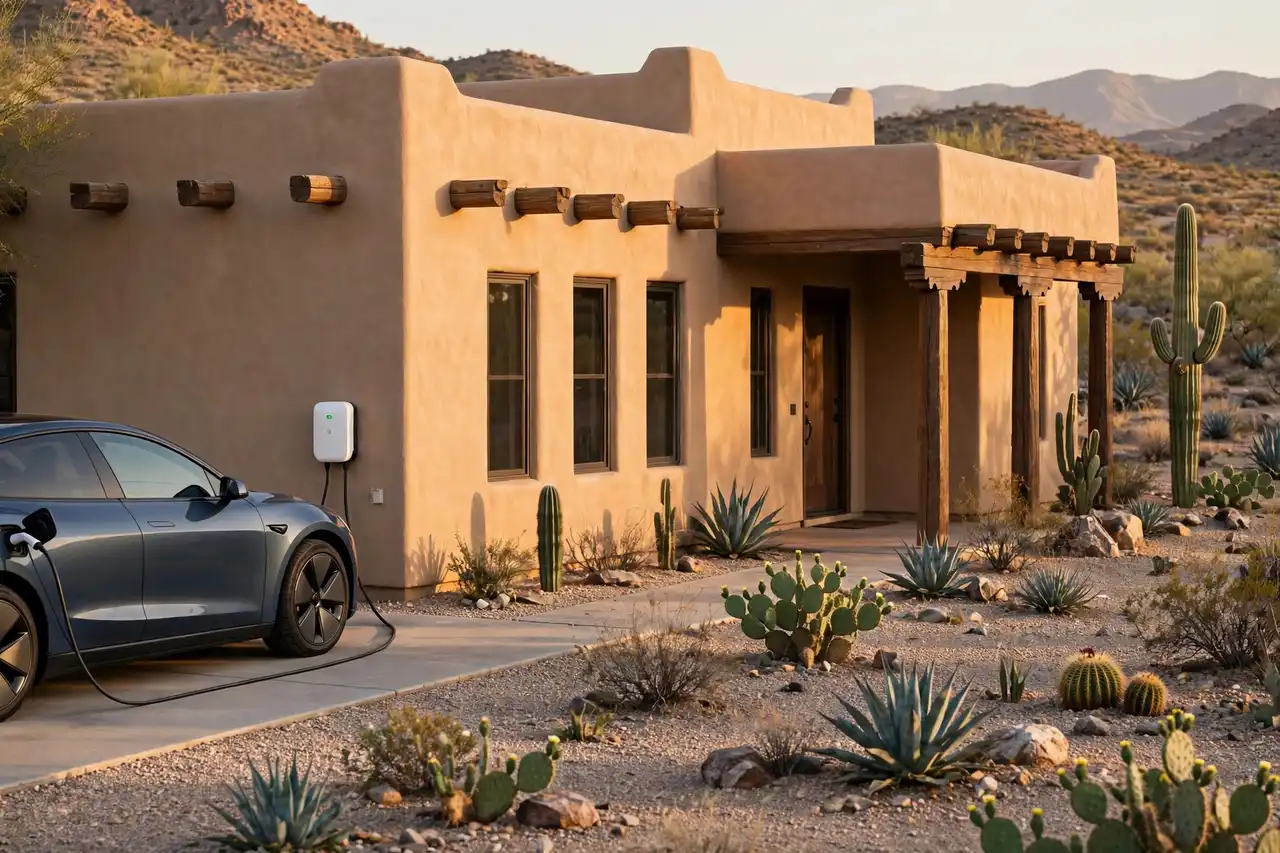
EV charging services in Tuscaloosa
An installer's work in Tuscaloosa usually starts with one of the three lead services below. The cards describe the job as it is actually scoped; the grid underneath carries the rest of the menu.
Home EV Charger Installation in Tuscaloosa
The residential standard: a station where the car sleeps, on a circuit of its own, installed under permit. Variations are all local — the panel's spare room, the run's route through the house's fabric, and the parking pattern the cable has to serve.
In Tuscaloosa: the install Tuscaloosa's new EV households book first, and the one the rest of this page keeps returning to.
Dedicated Circuit & Electrical Panel Upgrade in Tuscaloosa
The upgrade is unglamorous and transformative: a modern panel with honest capacity, labelled circuits, and room for the decade's next three electrical ideas after the charger. Houses rarely regret capacity; they regret its absence annually.
In Tuscaloosa: the capacity fix that lets the charger circuit go in without the rest of the house living at its limit.
Level 2 Charger Installation in Tuscaloosa
What is being bought is recovery rate. A Level 2 circuit returns in one overnight session what a household receptacle returns in a day and a half, and that margin is the difference between planning around the car and forgetting about it.
In Tuscaloosa: what most Tuscaloosa drivers mean when they say they want 'a real charger' — 240 volts, sized to the circuit.
Utility programs and electricity in Tuscaloosa
Electricity in Tuscaloosa comes from Alabama Power Co. Parts of the wider metro are served by Black Warrior Elec Member Corp. The utility matters twice over for a charger install: it sets the time-of-use rates that decide what overnight charging costs you, and it is the organisation that may — or may not — currently help pay for the equipment.
Frame the Tuscaloosa incentive question correctly and it answers itself. Three pots could in principle fund part of a home charger: a federal credit, a Alabama program, a Alabama Power Co rebate. The first ended on September 30, 2025. The second does not exist for typical home installs. The third, in the sources checked for this page, is not currently offered for residential customers. Zero plus zero plus zero is the honest budget line — and any future change will arrive through the utility's own program page, with dates, which is where this page will take it from.
If your service includes a demand component, the charger's start time matters more than its size: staggered against the house's other big loads, the same circuit costs noticeably less to run across a year.
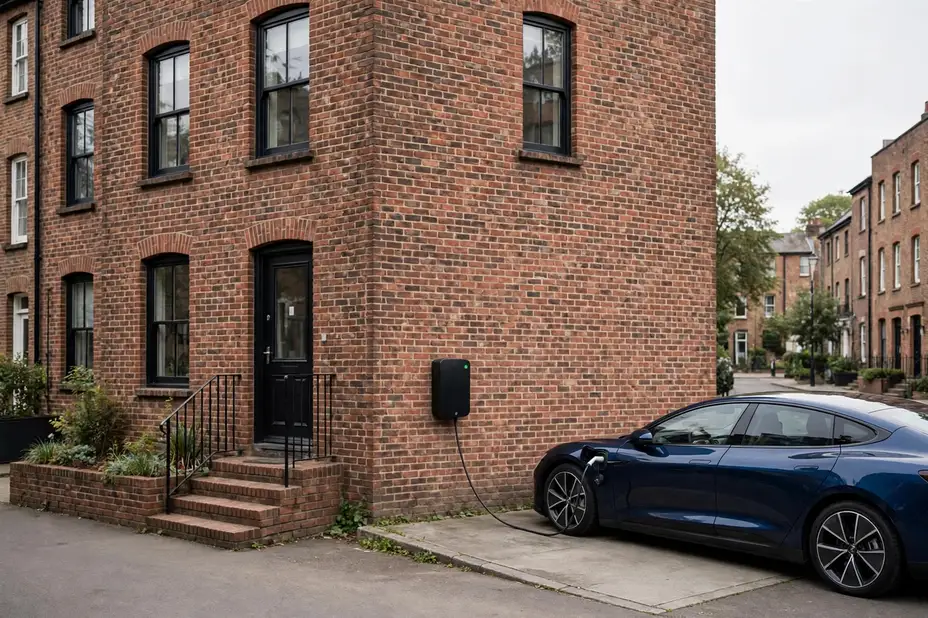
Condos, HOAs and the law in Alabama
There is no Alabama right-to-charge statute to lean on. Some national roundups list protection that does not exist in this state's code; the statute indexes checked for this page are clear. In Tuscaloosa, a condo or HOA charger is approved — or not — under the community's own documents, which makes the quality of your application the whole ballgame.
Metering is the objection that sinks more applications than any other, and it is the easiest to pre-empt: propose, in the application itself, how the electricity will be measured and paid for by you — a submeter, a separately metered circuit, or a flat arrangement the board can audit. Boards refuse ambiguity far more often than they refuse chargers.
Our condo and HOA guide was written for both kinds of state; the chapters on application packages, metering and cost allocation are the ones that matter in Tuscaloosa, where no statute does the persuading for you.
Climate, garages and charger placement
Heat also argues for headroom in the circuit decision. A car managing a hot battery after a hot commute draws on its own schedule; a generously sized circuit finishes the session inside the cool window instead of straddling the morning. It is a small thing, decided once, felt all summer.
Thermal habits separate durable installs from tired ones in this region: connectors holstered out of the sun, enclosures with room to breathe, and charge sessions pushed past midnight when the air gives the equipment its easiest working conditions of the day.

Permits and inspection in Tuscaloosa
Timelines are set by the city's counter, not the installer: the electrical work itself is typically a day, while permit issuance and the inspection visit follow the department's queue. A quote that promises a date should tell you which parts of that date the installer actually controls.

Neighbourhoods and ZIP codes served
The page covers 9 ZIP codes in and around Tuscaloosa — including 35401, 35402, 35403, 35404, 35405, 35406, 35407, 35486, 35487 — across Tuscaloosa. If your ZIP is not in the first set shown, ask anyway: installer coverage follows the metro, not a postcode fence.
The same working area takes in the neighbouring localities of Northport, Coker, Peterson, Samantha, Cottondale, Fosters, Buhl, Duncanville, Ralph, Coaling, Elrod, Echola, Brookwood, Vance — the county ring an installer based in Tuscaloosa actually drives. Requests from those communities route exactly as city requests do: same services, same permit discipline, same local facts where they differ.
Tuscaloosa County accounts for 27 of the ZIP codes and 17 named postal localities in the research file, the nearest of them Northport, Coker, Peterson, Samantha, Cottondale. The survey counts 237,552 residents in the county, with a median household income of $66,231 and a median home value of $248,700. Measured across its ZIP codes, the Tuscaloosa footprint runs about 10 miles north to south and 8 east to west, from ZIP 35401 to 35487 — the ground an installer based here actually covers in a working week.
Beyond the county seats, the working area takes in Northport, Coker, Peterson, Samantha, Cottondale, Fosters, Buhl, Duncanville, Ralph, Coaling, Elrod, Echola, Brookwood, Vance, Kellerman, Knoxville, Moundville, Gordo, Abernant, Woodstock, West Blocton, Green Pond, Akron, Brent, Reform, Mc Shan, Eutaw, Centreville, Clinton, Carrollton, Sawyerville, Greensboro, Aliceville, West Greene, Berry, Bankston, Belk, Kennedy, Fayette, Boligee, Ethelsville, Marion, Lawley, Gainesville, Randolph, Millport, Forkland, Columbus, Newbern — the named localities for which Tuscaloosa is the nearest metro in the network (neighbouring metros' pages cover their own ground), each routing to the same installer-matching service.
The wider working area also reaches Mc Calla, Adger, Bessemer, Brierfield, Oakman, Mulga, Helena, Goodsprings, Pleasant Grove, Maylene, Dolomite, Wilton, Montevallo, Birmingham, Parrish, Fairfield, Quinton, Shannon, Siluria, Watson, Alabaster, Adamsville, Docena, Saginaw, Panola, Burnwell, Pelham, Cordova, Calera — ground shared with neighbouring metros, where installers cross the same county lines in both directions.
ZIP codes in that shared ground include 35005, 35006, 35007, 35020, 35021, 35022, 35023, 35038, 35060, 35064, 35111, 35124, 35130, 35142, 35144, 35208, 35218, 35219, 35224, 35226, 35231, 35232, 35236, 35238, 35244, 35254, 35255, 35260, 35261, 35266, 35285, 35288, 35293, 35296, 35297, 35298, 35550, 35560, 35579, 35580.
The largest communities in that working area after Tuscaloosa itself, by the GeoNames populated-place file: Northport (population 24,772), Columbus (population 23,168), Brent (population 4,898), Winfield (population 4,570), Fayette (population 4,490), Holt (population 3,638), Marion (population 3,447), New Hope (population 3,193), Eutaw (population 2,766), Centreville (population 2,704), Moundville (population 2,460), Uniontown (population 2,415), Greensboro (population 2,387), Aliceville (population 2,381), Lake View (population 2,114), Brookwood (population 1,822), Gordo (population 1,687), Coaling (population 1,648), Reform (population 1,632), Woodstock (population 1,547). Charging demand follows those populations — the subdivisions and town centres where the next driveways, and the next panels, are.
Bibb County reaches into the working area with 22,130 residents, a median household income of $52,541 and a median home value of $145,700; its localities on this page include Woodstock, West Blocton, Green Pond, Brent, Centreville. Greene County reaches into the working area with 7,424 residents, a median household income of $29,200 and a median home value of $81,200; its localities on this page include Knoxville, Eutaw, Clinton, West Greene, Boligee. Pickens County reaches into the working area with 18,721 residents, a median household income of $46,274 and a median home value of $123,900; its localities on this page include Gordo, Reform, Mc Shan, Carrollton, Aliceville. Hale County reaches into the working area with 14,829 residents, a median household income of $39,250 and a median home value of $127,600; its localities on this page include Moundville, Akron, Sawyerville, Greensboro, Newbern. Fayette County reaches into the working area with 16,053 residents, a median household income of $49,488 and a median home value of $125,900; its localities on this page include Berry, Bankston, Belk, Fayette.
| ZIP | Locality | County |
|---|---|---|
| 35401 | Tuscaloosa | Tuscaloosa |
| 35486 | Tuscaloosa | Tuscaloosa |
| 35403 | Tuscaloosa | Tuscaloosa |
| 35476 | Northport | Tuscaloosa |
| 35405 | Tuscaloosa | Tuscaloosa |
| 35404 | Tuscaloosa | Tuscaloosa |
| 35473 | Northport | Tuscaloosa |
| 35406 | Tuscaloosa | Tuscaloosa |
| 35487 | Tuscaloosa | Tuscaloosa |
| 35452 | Coker | Tuscaloosa |
| 35402 | Tuscaloosa | Tuscaloosa |
| 35407 | Tuscaloosa | Tuscaloosa |
| 35478 | Peterson | Tuscaloosa |
| 35482 | Samantha | Tuscaloosa |
| 35453 | Cottondale | Tuscaloosa |
| 35463 | Fosters | Tuscaloosa |
| 35446 | Buhl | Tuscaloosa |
| 35456 | Duncanville | Tuscaloosa |
| 35480 | Ralph | Tuscaloosa |
| 35449 | Coaling | Tuscaloosa |
| 35458 | Elrod | Tuscaloosa |
| 35457 | Echola | Tuscaloosa |
| 35475 | Northport | Tuscaloosa |
| 35444 | Brookwood | Tuscaloosa |
| 35490 | Vance | Tuscaloosa |
| 35468 | Kellerman | Tuscaloosa |
| 35469 | Knoxville | Greene |
| 35474 | Moundville | Hale |
| 35466 | Gordo | Pickens |
| 35440 | Abernant | Tuscaloosa |
| 35188 | Woodstock | Bibb |
| 35184 | West Blocton | Bibb |
| 35074 | Green Pond | Bibb |
| 35441 | Akron | Hale |
| 35034 | Brent | Bibb |
| 35481 | Reform | Pickens |
| 35471 | Mc Shan | Pickens |
| 35462 | Eutaw | Greene |
| 35042 | Centreville | Bibb |
| 35448 | Clinton | Greene |
| 35447 | Carrollton | Pickens |
| 36776 | Sawyerville | Hale |
| 36744 | Greensboro | Hale |
| 35442 | Aliceville | Pickens |
| 35491 | West Greene | Greene |
| 35546 | Berry | Fayette |
| 35542 | Bankston | Fayette |
| 35545 | Belk | Fayette |
| 35574 | Kennedy | Lamar |
| 35555 | Fayette | Fayette |
| 35443 | Boligee | Greene |
| 35461 | Ethelsville | Pickens |
| 36756 | Marion | Perry |
| 36793 | Lawley | Bibb |
| 35464 | Gainesville | Sumter |
| 36792 | Randolph | Bibb |
| 35576 | Millport | Lamar |
| 36740 | Forkland | Greene |
| 39703 | Columbus | Lowndes |
| 36765 | Newbern | Hale |

Planning the install: from panel to parking
Homeowners sometimes ask why a job that looks like 'one outlet' needs a site visit at all. The visit exists because the three variables that set the scope — spare capacity, the run's route, and the property's approval layer — are all invisible from a photograph. In Tuscaloosa an experienced installer reads them in minutes, in the panel's directory card, the garage's geometry and the community's documents. The quote that follows a visit is a different species from the quote that precedes one: it can be held to.
Finally, photograph the finished work — station, nameplate, panel directory with the new breaker labelled — and file it with the inspection record. When the car changes, the house sells or a second station joins the first, that folder is the difference between a five-minute answer and an archaeological dig.
Home charging know-how for Tuscaloosa households
HOA rules and the single-family exterior
Owning the house does not always settle the charger's exterior chapter: architectural-approval clauses in many communities reach visible equipment, conduit runs on front elevations, and anything mounted streetside. The practical route is a five-minute check of the covenants before the install, and, where approval applies to exterior work, a small application — equipment photo, mounting position, conduit path — that reads as a courtesy because it is one. Interior garage installs in most single-family communities are entirely the owner's affair; it is the visible fraction that earns the paperwork.
Historic homes, modern loads
A house can be historically significant and electrically contemporary at once, but the marriage takes choreography: circuits routed through secondary spaces, equipment kept off protected fabric, the panel's growth planned where the preservation easement permits. The installers who do this work well treat the house's rules as a design brief rather than an obstacle, and the result — a period street front, a thoroughly modern garage — is the quiet norm in historic districts now.
What commissioning actually includes
Commissioning is the install's final examination, and it has a syllabus: torque verified on the terminations, the station's output configured to the circuit rather than the nameplate, the network connection and schedule set with the household present, a test session run and observed, the paperwork handed over. Households sometimes mistake it for ceremony. It is the opposite — it is the moment latent errors cost least to fix, with the installer still in the driveway and the tools still out.
The landlord's side of the charger
For a landlord, a charger circuit is an amenity with unusual arithmetic: it is visible in listings, filterable in searches, and durable across tenancies in a way paint is not. The questions that decide it are practical rather than visionary — whose meter the circuit hangs from, how the cost is recovered, what the end-of-tenancy position is — and each has a standard answer the multifamily sections of this site describe. Landlords who run the numbers tenant by tenant usually conclude the circuit earns its wall space.

Frequently asked questions
Is the federal charger tax credit still available in Tuscaloosa, AL?
Nothing is currently on offer that you should plan around. The federal 30C credit ended on September 30, 2025; Alabama operates no replacement for typical home installs; and the sources checked for this page showed no live residential rebate from Alabama Power Co. Programs do reopen — on the utility's own pages, with dates. Until one does, the install stands or falls on its own merits.
What can my HOA in Tuscaloosa, AL do about a charger install?
Legally, yes — and it is better to know that before you buy the car. Alabama has enacted no right-to-charge law, so an association in Tuscaloosa may refuse, condition or delay a charger under its covenants. The counterweight is a complete, documented application and, if refused, a written refusal citing the covenant — the record a future board or a future statute works from.
Does a Level 2 charger mean a panel upgrade for a Tuscaloosa, AL home?
Start from the median, then verify: the median Tuscaloosa home was built in 1986, and 43% of the stock predates 1980, so 100-amp panels are a normal sight here — and a normal candidate for either an upgrade or a load-management device. The load calculation distinguishes the two in one visit, and any quote that skips it is guessing with your money.
How much faster is Level 2 charging at home in Tuscaloosa, AL?
A Level 1 cord on a household outlet adds roughly 3–5 miles of range per hour; a Level 2 station on a 240-volt circuit typically adds about 25–40 miles per hour depending on the circuit's amperage and the vehicle. For most drivers that is the difference between rationing the battery and never thinking about it.
How does the installer matching on this page work?
Three steps: the request routes to installers who work Tuscaloosa, Alabama; one contacts you to walk the property; the walk produces the written quote. Everything on this page — the utility position, the law, the housing data — is yours to check that quote against.
Does Alabama Power Co offer a time-of-use rate for EV charging in Tuscaloosa?
Worth checking before the install, because it changes the setup rather than the circuit: if Alabama Power Co offers your address a time-of-use plan, the station's schedule is programmed to its overnight window at commissioning. The tariff pages or a call to the utility confirm your plan's windows; guessing from a neighbour's bill is how households end up charging at peak by default.
Nearby cities in Alabama
- EV charger installation in Birmingham — about 48 miles from Tuscaloosa, metro population 1,150,000
- EV charger installation in Montgomery — about 92 miles from Tuscaloosa, metro population 375,000
- EV charger installation in Anniston — about 100 miles from Tuscaloosa, metro population 115,000
- EV charger installation in Decatur — about 101 miles from Tuscaloosa, metro population 155,000
- EV charger installation in Gadsden — about 108 miles from Tuscaloosa, metro population 105,000
- EV charger installation in Florence — about 113 miles from Tuscaloosa, metro population 150,000
- EV charger installation in Meridian, MS — about 84 miles from Tuscaloosa, metro population 100,000
- EV charger installation in Tupelo, MS — about 97 miles from Tuscaloosa, metro population 140,000
- EV charger installation in Columbus, GA — about 151 miles from Tuscaloosa, metro population 335,000
Ready to charge at home in Tuscaloosa?
Tell us the job — service, ZIP and property type — and licensed local installers will take it from there.