EV Charger Installation in Florence, AL
Charging where you park, in Florence: the utility programs, state law, permit process and housing facts behind a home charger install, gathered in one place.
Every home charger installation is the same four decisions wearing local clothes: capacity in the panel, a route for the circuit, a position for the station, and paperwork that proves it was done properly. What changes from city to city is the content of those decisions — and in Florence the content is specific. Florence itself is home to about 41,701 people. Alabama's registered fleet stood at 24,400 battery-electric vehicles and 8,300 plug-in hybrids at the end of 2025, and this page works through the local version of each decision: your utility and its programs, your state's association law, your permit counter, and your housing stock's electrical habits.
How PlugReady USA works, in one breath: you describe the job once, licensed local installers who cover Florence receive it, and the conversations happen with them directly. The rest of this page exists so those conversations start from facts — yours about the house, ours about the metro — rather than from a sales script.
The demand picture for the Florence–Muscle Shoals metro, from the registration data this site is built on: TVA territory. Registration counts are the honest way to size a charging market — they count households, not headlines — and they are why Florence sits where it does in our build order (rank 244 of 300 metros, Tier C).
Read the survey numbers as an installer reads them. A median household income of $52,174 and an owner-occupation rate of 52% describe a city where most charger decisions are made by the person who owns the panel — no landlord layer, no board layer for the typical job. The 64% of homes that are single-unit detached are the straightforward installs: garage or driveway, one owner, one circuit.

The composite picture matters more than any single statistic. In Florence: an older housing fabric, where panel archaeology is a normal part of the first visit; a detached-house majority with a real attached and multifamily minority; buildings of five or more units hold a substantial share of homes, which keeps the multifamily sections of this page in daily use; meanwhile, owners hold a working majority, with renters a significant minority. A page that ignored that profile would give the same advice everywhere; this one is ordered by it.
Keep six figures and you keep Florence's whole electrical character: 20,139 housing units; 17,745 occupied homes; 9,239 owner-occupied; 12,946 detached houses; 12,376 pre-1980 homes; 4,642 homes in buildings of five or more units. Percentages elsewhere on this page are these numbers in disguise — the counts are the originals, and they are the numbers a local installer's experience is actually made of. The page's geography is equally concrete: 5 ZIP codes across Lauderdale, centred near 34.83 degrees north latitude. The city anchors the Florence–Muscle Shoals metropolitan area, home to roughly 150,000 people on the research file's metro estimate — the wider labour and housing market this page's installers work across.
The same survey release fills in the household economics around the housing stock: a median home value of $196,300, median gross rent of $820, per-capita income of $31,735, and a median resident age of 35. And the daily rhythms behind the housing numbers: 77% of Florence workers drive to work alone — the commute pattern home charging is built around; 9% work from home, a population whose cars charge on daytime and overnight schedules alike; 34% of adults hold a bachelor's degree or higher; 12% of housing units stood vacant at the survey. The survey's vehicle table is the one an EV page should quote first: 1,472 of Florence's households have no vehicle at all, while 9,560 have two or more — the multi-car households for whom the second circuit is a when, not an if.
Household structure, from the same release: 54% of Florence households are family households. The burden shares behind the housing stock: 35% of renting households are cost-burdened at the 30%-of-income line, as are 9% of mortgaged owners — context for why the overnight rate window, once set, is treated here as a household fixture rather than a hobby.
This is the context an installer works against, whether it is written down or not. Pre-war and immediate post-war streets dominate the map, and their electrical fabric is stratified — original services beneath mid-century additions beneath modern subpanels, an archaeology the load calculation reads layer by layer. Mixed form means mixed timelines: a homeowner's install is a fortnight's scheduling, a condo's is a season's governance; the metro's charging growth arrives on both clocks at once.
Where renting dominates, the successful install is a document before it is a device — installer licence, insurance, metering clarity, end-of-tenancy position — assembled to make a landlord's yes the path of least resistance. Budget discipline shapes the specification — the circuit sized exactly, the management device considered wherever it defers a service upgrade, every scope line asked to justify itself. City-owned power tends to publish its intentions plainly: programme pages, board minutes, rate cases on the record. Households who read them know what is coming a season before it arrives.
Early-market conditions have their own economics: fewer specialist installers, general electricians carrying the work, and a premium on the household arriving informed — which is the gap this page exists to close. The permit counter in a smaller city is a conversation, not a queue: applications are read by people who may know the street, and complete paperwork is remembered kindly. Without a state charging statute, shared-property approvals in this metro are won on paper quality: metering clarity, licensed installers, insurance, reversibility — the complete package the guides set out.
The electrical reality in Florence homes
Four numbers organise everything an installer expects in Florence: median build year 1973; 61% of units built before 1980; 64% of the stock detached; 52% of occupied homes owner-occupied. Capacity, circuit routes and approval layers all correlate with those four. The paragraphs below are their commentary. Age shows up electrically before it shows up anywhere else: services sized for a house with a third of today's appliances. Expect the first conversation to be about capacity — what the panel is, what it already feeds, and which of the three routes (circuit, management, upgrade) your numbers support. Owner-occupiers can plan on their own timeline; renters and condo owners have an extra approval layer, which the law section below covers for this state.
The fuel table adds one more local fact: 12,149 Florence homes — 68% of the stock — heat with electricity. Those households already think in kilowatts through the winter, their panels carry the load to prove it, and a charger's overnight appetite joins a system that is, in the useful sense, already electrified.
Renters are the other constituency in these numbers: about 8,506 of Florence's occupied homes are rented rather than owned. Their charging route runs through a landlord conversation instead of a panel they control — a different project, covered by the rentals guide and the law section below, but a routine one in a city with this many renting households.
And 23% of Florence's homes are in buildings with five or more units — apartments and condominiums where charging is a building decision before it is an electrical one. If that is your situation, the law and multifamily sections of this page are the ones written for you.
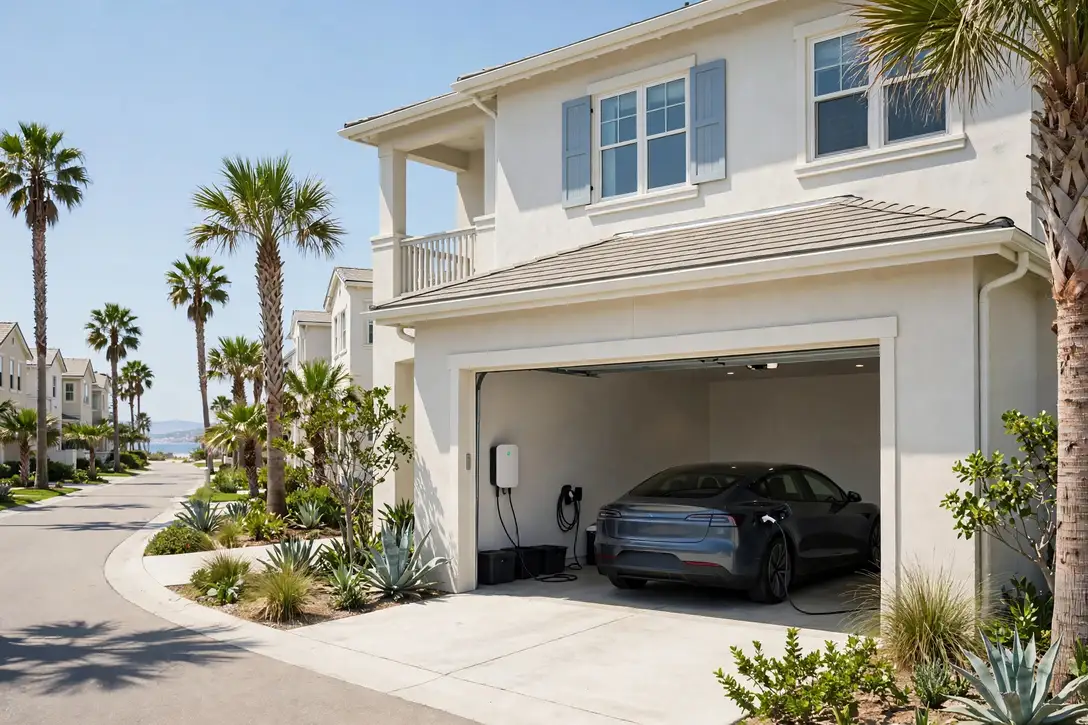
EV charging services in Florence
The full menu runs to ten services; the three cards at the top are the ones Florence's housing stock and state law push to the front. Everything links to its national service page for scope and process in full.
Home EV Charger Installation in Florence
Start to finish, the domestic install is a half-day of electrical work wrapped in a week of scheduling: the survey, the circuit, the mounting, the configuration, the inspection. What the household experiences is simpler — a car that is full every morning and a cable that lives where the car does.
In Florence: the install Florence's new EV households book first, and the one the rest of this page keeps returning to.
Dedicated Circuit & Electrical Panel Upgrade in Florence
Some homes meet the charger at the panel door: the service is already spoken for by cooking, heating and hot water. This service is the honest fix — capacity added properly, grounding brought current, and a panel schedule that finally matches the house it feeds.
In Florence: the capacity fix that lets the charger circuit go in without the rest of the house living at its limit.
Level 2 Charger Installation in Florence
What is being bought is time: the hours between arriving home and leaving again, converted into range at 240 volts. The conversion hardware is ordinary — breaker, conductor, station — and the design work is matching the three to the household's miles and the panel's arithmetic.
In Florence: the 240-volt step that turns overnight charging in Florence from a trickle into a full battery by morning.
Utility programs and electricity in Florence
Electricity in Florence comes from City of Florence. The utility matters twice over for a charger install: it sets the time-of-use rates that decide what overnight charging costs you, and it is the organisation that may — or may not — currently help pay for the equipment.
Why does this page labour the absence of a rebate? Because in Florence the phantom rebate is the most common distortion in charger quotes: a figure justified by money that is not, at present, claimable. The verified position: federal 30C ended September 30, 2025; no Alabama replacement for typical home installs; no City of Florence residential charger rebate in the sources checked. If someone quotes you a rebate, the follow-up is one sentence — show me the program page — and its answer decides the quote's credibility.
Net-metering households — rooftop solar is common across the metro — should tell the installer: charging schedules and load management are planned differently when the house generates as well as consumes.
Condos, HOAs and the law in Alabama
There is no Alabama right-to-charge statute to lean on. Some national roundups list protection that does not exist in this state's code; the statute indexes checked for this page are clear. In Florence, a condo or HOA charger is approved — or not — under the community's own documents, which makes the quality of your application the whole ballgame.
If the board says no, ask for the refusal in writing with the covenant cited. Rules change — several states added right-to-charge laws in 2025 alone — and a documented refusal is what a future rule change, or a future board, works from.
The negotiation playbook — application contents, metering options, the wording that answers boards' standard objections — is set out in our condo and HOA guide, read here as a persuasion manual rather than a rights manual.
Climate, garages and charger placement
Heat is the local design variable. A garage that bakes all afternoon asks more of a charging station than the nameplate assumes: electronics age faster, and a car that arrives hot from the road charges under the management of its own thermal system. Sensible installs here keep the station out of the direct sun line, favour walls with airflow, and leave the cable where it will not lie across sun-heated concrete all day.
Hurricane-season thinking reaches the garage in coastal hot metros: the station mounted above any plausible water line, the circuit's breaker labelled for fast isolation, the cable holstered high. None of it appears in the equipment brochure, and all of it belongs in a local install conversation.

Permits and inspection in Florence
Inspection day itself is undramatic by design: access to the panel and the station, the calculation on hand, the equipment's settings matching the circuit. Jobs fail inspection on paperwork mismatches far more often than on wiring — a fact that quietly grades installers.

Neighbourhoods and ZIP codes served
The page covers 5 ZIP codes in and around Florence — including 35630, 35631, 35632, 35633, 35634 — across Lauderdale. If your ZIP is not in the first set shown, ask anyway: installer coverage follows the metro, not a postcode fence.
The same working area takes in the neighbouring localities of Killen, Cloverdale, Lexington, Rogersville, Waterloo, Anderson — the county ring an installer based in Florence actually drives. Requests from those communities route exactly as city requests do: same services, same permit discipline, same local facts where they differ.
Lauderdale County accounts for 11 of the ZIP codes and 7 named postal localities in the research file, the nearest of them Killen, Cloverdale, Lexington, Rogersville, Waterloo. The survey counts 95,830 residents in the county, with a median household income of $62,649 and a median home value of $200,300. Measured across its ZIP codes, the Florence footprint runs about 6 miles north to south and 7 east to west, from ZIP 35630 to 35634 — the ground an installer based here actually covers in a working week.
Beyond the county seats, the working area takes in Muscle Shoals, Sheffield, Killen, Cloverdale, Tuscumbia, Leighton, Iron City, Saint Joseph, Lexington, Cypress Inn, Town Creek, Rogersville, Waterloo, Cherokee, Loretto, Westpoint, Anderson, Russellville, Collinwood, Lutts, Five Points, Mount Hope, Leoma, Spruce Pine, Iuka, Minor Hill, Lawrenceburg, Phil Campbell, Tishomingo, Waynesboro, Pickwick Dam, Goodspring, Burnsville, Olivehill, Hodges, Counce, Savannah, Ethridge, Hackleburg, Clifton, Haleyville, Glen — the named localities for which Florence is the nearest metro in the network (neighbouring metros' pages cover their own ground), each routing to the same installer-matching service.
The wider working area also reaches Courtland, Hillsboro, Lester, Moulton, Athens, Trinity, Dennis, Red Bay, Golden, Elkmont, Belmont, Prospect, Vina, Tanner, Decatur, Danville, Pulaski, Shiloh, Belle Mina — ground shared with neighbouring metros, where installers cross the same county lines in both directions.
ZIP codes in that shared ground include 35582, 35593, 35601, 35602, 35603, 35609, 35611, 35612, 35613, 35614, 35615, 35618, 35619, 35620, 35643, 35647, 35650, 35671, 35673, 35699, 38376, 38477, 38478, 38827, 38838, 38847.
The largest communities in that working area after Florence itself, by the GeoNames populated-place file: East Florence (population 35,733), Muscle Shoals (population 13,706), Lawrenceburg (population 10,569), Russellville (population 9,847), Sheffield (population 9,108), Tuscumbia (population 8,474), Haleyville (population 4,088), Hohenwald (population 3,667), Underwood-Petersville (population 3,247), Iuka (population 3,001), Clifton (population 2,663), Waynesboro (population 2,390), Farmington (population 2,194), Loretto (population 1,747), Hackleburg (population 1,486), Olivet (population 1,350), Phil Campbell (population 1,235), Rogersville (population 1,231), Town Creek (population 1,065), Bear Creek (population 1,047). Charging demand follows those populations — the subdivisions and town centres where the next driveways, and the next panels, are.
Lawrence County reaches into the working area with 33,276 residents, a median household income of $66,071 and a median home value of $172,300; its localities on this page include Iron City, Saint Joseph, Town Creek, Loretto, Westpoint. Colbert County reaches into the working area with 58,022 residents, a median household income of $60,628 and a median home value of $171,000; its localities on this page include Muscle Shoals, Sheffield, Tuscumbia, Leighton. Franklin County reaches into the working area with 31,966 residents, a median household income of $53,338 and a median home value of $136,000; its localities on this page include Russellville, Spruce Pine, Phil Campbell, Hodges. Marion County reaches into the working area with 29,184 residents, a median household income of $50,088 and a median home value of $106,600; its localities on this page include Hackleburg. Winston County reaches into the working area with 23,682 residents, a median household income of $57,256 and a median home value of $118,900; its localities on this page include Haleyville.
| ZIP | Locality | County |
|---|---|---|
| 35630 | Florence | Lauderdale |
| 35631 | Florence | Lauderdale |
| 35632 | Florence | Lauderdale |
| 35661 | Muscle Shoals | Colbert |
| 35660 | Sheffield | Colbert |
| 35633 | Florence | Lauderdale |
| 35662 | Muscle Shoals | Colbert |
| 35634 | Florence | Lauderdale |
| 35645 | Killen | Lauderdale |
| 35617 | Cloverdale | Lauderdale |
| 35674 | Tuscumbia | Colbert |
| 35646 | Leighton | Colbert |
| 38463 | Iron City | Lawrence |
| 38481 | Saint Joseph | Lawrence |
| 35648 | Lexington | Lauderdale |
| 38452 | Cypress Inn | Wayne |
| 35672 | Town Creek | Lawrence |
| 35652 | Rogersville | Lauderdale |
| 35677 | Waterloo | Lauderdale |
| 35616 | Cherokee | Colbert |
| 38469 | Loretto | Lawrence |
| 38486 | Westpoint | Lawrence |
| 35610 | Anderson | Lauderdale |
| 35653 | Russellville | Franklin |
| 38450 | Collinwood | Wayne |
| 38471 | Lutts | Wayne |
| 38457 | Five Points | Lawrence |
| 35654 | Russellville | Franklin |
| 35651 | Mount Hope | Lawrence |
| 38468 | Leoma | Lawrence |
| 35585 | Spruce Pine | Franklin |
| 38852 | Iuka | Tishomingo |
| 38473 | Minor Hill | Giles |
| 38464 | Lawrenceburg | Lawrence |
| 35581 | Phil Campbell | Franklin |
| 38873 | Tishomingo | Tishomingo |
| 38485 | Waynesboro | Wayne |
| 38365 | Pickwick Dam | Hardin |
| 38460 | Goodspring | Giles |
| 38833 | Burnsville | Tishomingo |
| 38475 | Olivehill | Hardin |
| 35571 | Hodges | Franklin |
| 38326 | Counce | Hardin |
| 38372 | Savannah | Hardin |
| 38456 | Ethridge | Lawrence |
| 35564 | Hackleburg | Marion |
| 38425 | Clifton | Wayne |
| 35565 | Haleyville | Winston |
| 38846 | Glen | Alcorn |

Planning the install: from panel to parking
The order of operations protects you. Load calculation before equipment choice, because the circuit sizes the station's settings. Route before purchase, because reach decides models. Permit before work, because inspection closes the file the insurer will one day read. In Florence the sequence is the same as everywhere — what varies is only how much of it your particular house asks for, and finding that out is the site visit's entire purpose.
Future-proofing, in this trade, is mostly conduit and capacity: an oversized conduit run costs little during the first install and everything later; a panel position reserved is a breaker that never has to move. If a second EV, a workshop or an electrified water heater is anywhere in your five-year picture, say so at the site visit.
Home charging know-how for Florence households
Chargers and the flood line
Some garages flood — not catastrophically, just historically: the spring inch, the storm drain's bad day. The charger belongs above the line the water has actually reached, a fact the house knows and the install conversation should ask about. Mounting height, conduit entry points and the station's own listing all have flood-aware versions, and in the streets that need them, local installers raise the subject before the homeowner does.
Surge protection and the connected house
A charging station is a computer that drinks from the service entrance, and it shares that entrance with everything else the house owns. Whole-home surge protection at the panel — increasingly a code expectation in new work — is the standard companion recommendation when a panel is opened for a charger circuit: one device, guarding the charger, the appliances and the electronics alike. In regions with serious lightning seasons the conversation is routine; everywhere, it is a small line item riding on work already happening, and installers raise it in that spirit.
Shutoffs and sensible safety
Every charger installation contains its own off switch: the breaker in the panel, and, on larger circuits, a disconnect within sight of the equipment that the code requires. Knowing where both are — and that the station itself stops the session when the connector is unlatched — is the whole safety briefing, and a good installer gives it unprompted at handover. The equipment is listed, protected and designed to be operated daily by non-electricians; the homeowner's part is simply to know the two switches and to treat any change in behaviour — heat, noise, repeated trips — as a reason to call rather than to reset.
A word about the word 'charger'
Strictly speaking, the charger lives in the car: the onboard unit that converts alternating current from the wall into the direct current the battery stores. The box on your wall is supply equipment — it negotiates, switches and protects, but the conversion happens in the vehicle. The distinction explains two practical things: why the car's acceptance rate caps every circuit conversation, and why the same wall equipment serves different cars at different speeds. Installers use 'charger' for the wall box anyway, as does this page — but the mental model is worth owning.

Frequently asked questions
Can I still get the federal tax credit for a home charger in Florence, AL?
Nothing is currently on offer that you should plan around. The federal 30C credit ended on September 30, 2025; Alabama operates no replacement for typical home installs; and the sources checked for this page showed no live residential rebate from City of Florence. Programs do reopen — on the utility's own pages, with dates. Until one does, the install stands or falls on its own merits.
What can my HOA in Florence, AL do about a charger install?
Legally, yes — and it is better to know that before you buy the car. Alabama has enacted no right-to-charge law, so an association in Florence may refuse, condition or delay a charger under its covenants. The counterweight is a complete, documented application and, if refused, a written refusal citing the covenant — the record a future board or a future statute works from.
Does a Level 2 charger mean a panel upgrade for a Florence, AL home?
The question has a correct instrument: the load calculation. It totals what your service already carries — with the code's demand factors, not nameplate panic — and sets the charger's continuous load against the remainder. In Florence, where the median home dates to 1973 and about 61% of units predate 1980, the answer splits by street: post-war and newer 200-amp homes usually proceed; older 100-amp homes choose between capacity work and load management. Anyone answering without the calculation is guessing in a uniform.
How much faster is Level 2 charging at home in Florence, AL?
Level 1 — the cord in the boot, on a normal outlet — returns about 3–5 miles of range an hour. Level 2 on its own 240-volt circuit returns roughly 25–40. A Florence commuter who parks at seven and leaves at seven stops doing battery arithmetic entirely.
What happens next after I send a request?
Three things happen, in order. Your request is routed to licensed installers who work in Florence; one of them contacts you to book a site visit; and the visit produces a written quote based on your actual panel and parking. PlugReady USA runs the matching, not the tools — the contractor on the job is the installer who visits.
Does City of Florence offer a time-of-use rate for EV charging in Florence?
Check your tariff before the install rather than after: time-of-use plans are common, and an overnight window changes nothing about the circuit but everything about what charging costs across a year. Your installer can set the station's schedule to the window during commissioning — after that the habit is automatic.
Nearby cities in Alabama
- EV charger installation in Decatur — about 40 miles from Florence, metro population 155,000
- EV charger installation in Huntsville — about 61 miles from Florence, metro population 525,000
- EV charger installation in Birmingham — about 102 miles from Florence, metro population 1,150,000
- EV charger installation in Gadsden — about 110 miles from Florence, metro population 105,000
- EV charger installation in Tuscaloosa — about 113 miles from Florence, metro population 250,000
- EV charger installation in Anniston — about 129 miles from Florence, metro population 115,000
- EV charger installation in Tupelo, MS — about 71 miles from Florence, metro population 140,000
- EV charger installation in Jackson, TN — about 84 miles from Florence, metro population 175,000
- EV charger installation in Nashville, TN — about 104 miles from Florence, metro population 2,050,000
Ready to charge at home in Florence?
Tell us the job — service, ZIP and property type — and licensed local installers will take it from there.