EV Charger Installation in Huntsville, AL
Charging where you park, in Huntsville: the utility programs, state law, permit process and housing facts behind a home charger install, gathered in one place.
Consider what a home charger actually replaces: the weekly detour, the public station's queue, the arithmetic of arriving home low. In Huntsville, the replacement project is well understood because the fleet is already here — 24,400 battery-electric vehicles and 8,300 plug-in hybrids registered across Alabama through 2025. Huntsville itself is home to about 230,157 people. This page is the project's local brief: your utility and its programs, your state's law, your city's permit process, and your housing stock's electrical character, each stated with its source.
PlugReady USA is a matching service, not the installer: you tell us the job, and we route the request to licensed local electricians and EV-installer companies who work in Huntsville. Use the local detail below to arrive at that conversation informed — the sections are ordered the way an installer will think about your project, from the panel outward.
Measured demand, not enthusiasm, put Huntsville in Tier B of this network: Defence/tech growth; AL's EV pocket. For a homeowner the useful translation is simpler — installers here do this work weekly, know the local permit counter, and have seen your housing stock before.
Three percentages describe the working conditions for charging in Huntsville: 58% owner-occupied, 65% single-unit detached, and a median household income of $83,235 standing behind both. Everything in the sections below — panels, permissions, metering — is commentary on those proportions.

Every city charges differently, and Huntsville's difference is legible in the data: a housing stock of mixed vintages, where both electrical eras appear on the same street; a detached-house majority with a real attached and multifamily minority; buildings of five or more units hold a substantial share of homes, which keeps the multifamily sections of this page in daily use; owners hold a working majority, with renters a significant minority. Read the sections below through that profile and the local advice resolves into specifics — which questions are routine here, and which are rare.
Keep six figures and you keep Huntsville's whole electrical character: 106,466 housing units; 96,802 occupied homes; 55,692 owner-occupied; 69,001 detached houses; 43,778 pre-1980 homes; 24,340 homes in buildings of five or more units. Percentages elsewhere on this page are these numbers in disguise — the counts are the originals, and they are the numbers a local installer's experience is actually made of. The page's geography is equally concrete: 24 ZIP codes across Madison, centred near 34.73 degrees north latitude. The city anchors the Huntsville metropolitan area, home to roughly 525,000 people on the research file's metro estimate — the wider labour and housing market this page's installers work across.
The same survey release fills in the household economics around the housing stock: a median home value of $293,600, median gross rent of $1,171, per-capita income of $46,854, and a median resident age of 37. How the city moves completes the picture: 76% of Huntsville workers drive to work alone — the commute pattern home charging is built around; 15% work from home, a population whose cars charge on daytime and overnight schedules alike; 0% commute by public transit; 47% of adults hold a bachelor's degree or higher. Vehicle ownership, from the same release: 57,060 households in Huntsville run two or more vehicles, and 5,441 run none — the two ends of the market this page serves and does not serve.
Household structure, from the same release: 54% of Huntsville households are family households. The burden shares behind the housing stock: 36% of renting households are cost-burdened at the 30%-of-income line, as are 0% of mortgaged owners — context for why the overnight rate window, once set, is treated here as a household fixture rather than a hobby.
Taken as one portrait, the numbers describe a specific charging market. Growth rings are the city's autobiography: each decade's standard — service size, wiring method, garage provision — survives intact in its ring, and the charger wave is now writing the next ring's standard. The built form refuses a single story: houses with garages on one side of the arterial, garden apartments and mid-rise condos on the other, each population charging by different rules.
The balance of tenure keeps both crafts alive locally: firms that run domestic circuits all week, and firms whose week is landlord letters and board packs — with the good ones fluent in both. Households at this band comparison-shop on scope rather than on slogans, which rewards the installer whose quote shows its working — the load study, the route, the permit, itemised. Municipal ownership also localises the expertise: the utility's own engineers, the city's inspectors and the installers work the same small circuit of relationships, and local knowledge compounds.
The state fleet is young, and Huntsville's charging story is being written by its first draft of households — the ones whose installs will be the precedents boards and neighbours cite for a decade. The diary economics differ from the biggest metros: good installers book in weeks, not months, and the household that calls in spring is rarely queueing behind a season of work. The association dimension here runs on persuasion rather than statute — no state charging law frames the application, so the complete, professional proposal carries the whole argument, as the law section above explains.
The electrical reality in Huntsville homes
Read the stock the way a panel schedule reads it. Median build year 1986 means half of Huntsville's homes were wired to codes of that era or earlier; 41% predate 1980 entirely. 65% of units are detached houses, and 58% of occupied homes are owned by their occupants — so most charger conversations here happen between a homeowner and an electrician, with no third party at the table. The metro's building booms left two electrical eras side by side. Post-1990s subdivisions were wired for modern loads and usually take a charger circuit directly; the established in-town stock asks harder questions of its panels. Knowing which era your street belongs to tells you most of what your site visit will conclude. Porches, carports and parking pads carry a real share of this city's charging, because the stock predates the two-car garage as a standard feature — outdoor-rated equipment is a local staple, not an edge case.
The fuel table adds one more local fact: 71,732 Huntsville homes — 75% of the stock — heat with electricity. Those households already think in kilowatts through the winter, their panels carry the load to prove it, and a charger's overnight appetite joins a system that is, in the useful sense, already electrified.
Renters are the other constituency in these numbers: about 41,110 of Huntsville's occupied homes are rented rather than owned. Their charging route runs through a landlord conversation instead of a panel they control — a different project, covered by the rentals guide and the law section below, but a routine one in a city with this many renting households.
One more structural fact shapes Huntsville's charging map: 23% of the city's housing units sit in buildings of five or more units. Those households cannot simply book a circuit — their charger runs through a building, a board and a shared electrical service, which is why the multifamily service and the law section below carry unusual weight on this page.
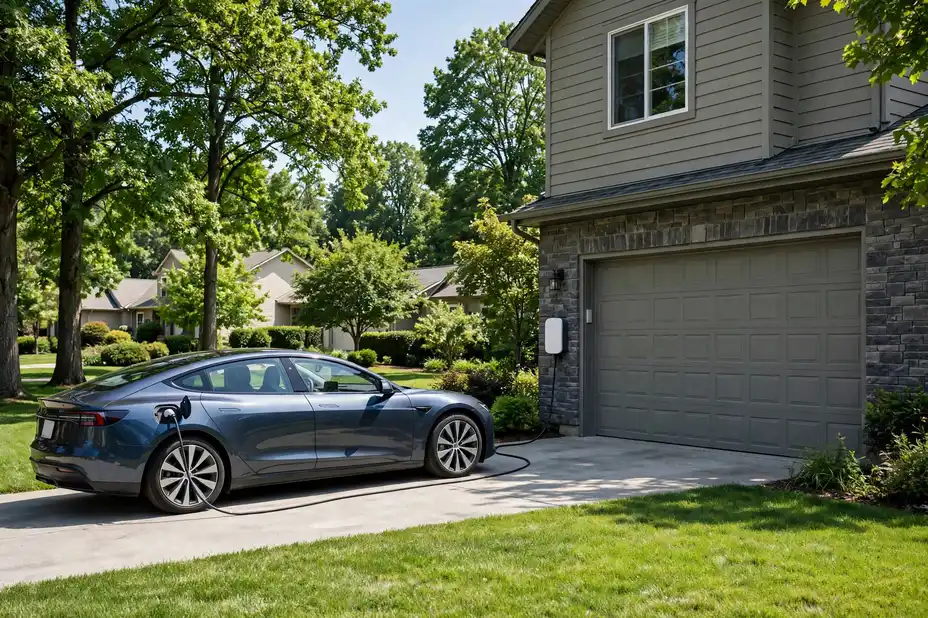
EV charging services in Huntsville
Ten services cover the work installers do in Huntsville. Three lead the list here because of what this city's housing and law actually look like — each links to its national service page, where scope and process are set out in full.
Home EV Charger Installation in Huntsville
The residential standard: a station where the car sleeps, on a circuit of its own, installed under permit. Variations are all local — the panel's spare room, the run's route through the house's fabric, and the parking pattern the cable has to serve.
In Huntsville: the core residential job in Huntsville: circuit, mounting, configuration and inspection in one visit pattern.
Dedicated Circuit & Electrical Panel Upgrade in Huntsville
The capacity project behind the charger project. A load calculation decides whether the answer is a service increase, a panel replacement, a subpanel or load management — and the work is sequenced with the utility and the inspector so the house is live again the same day in most cases.
In Huntsville: relevant in Huntsville wherever a 100-amp panel already carries cooking, heating and hot water before a charger asks for room.
Level 2 Charger Installation in Huntsville
The step from a household receptacle to a Level 2 circuit is the step from sipping to drinking: the car takes energy at the rate family life actually consumes it. The work is a breaker, a run of appropriately gauged conductor, and a connection made to torque — modest materials, permanent consequences.
In Huntsville: the upgrade from a wall outlet to a dedicated 240-volt circuit, and the end of range arithmetic at bedtime.
Utility programs and electricity in Huntsville
Electricity in Huntsville comes from City of Huntsville. The utility matters twice over for a charger install: it sets the time-of-use rates that decide what overnight charging costs you, and it is the organisation that may — or may not — currently help pay for the equipment.
The honest incentive position in Huntsville is: nothing verified to claim. The federal charger credit (30C) ended on September 30, 2025; Alabama runs no state replacement for typical home installs; and in the utility and state sources checked for this page, City of Huntsville had no active residential charger rebate to point to. Programs reopen — when one does, it will be on the utility's own site with terms and dates. Anything an installer describes without that paper trail should be treated as conversation, not money.
Net-metering households — rooftop solar is common across the metro — should tell the installer: charging schedules and load management are planned differently when the house generates as well as consumes.
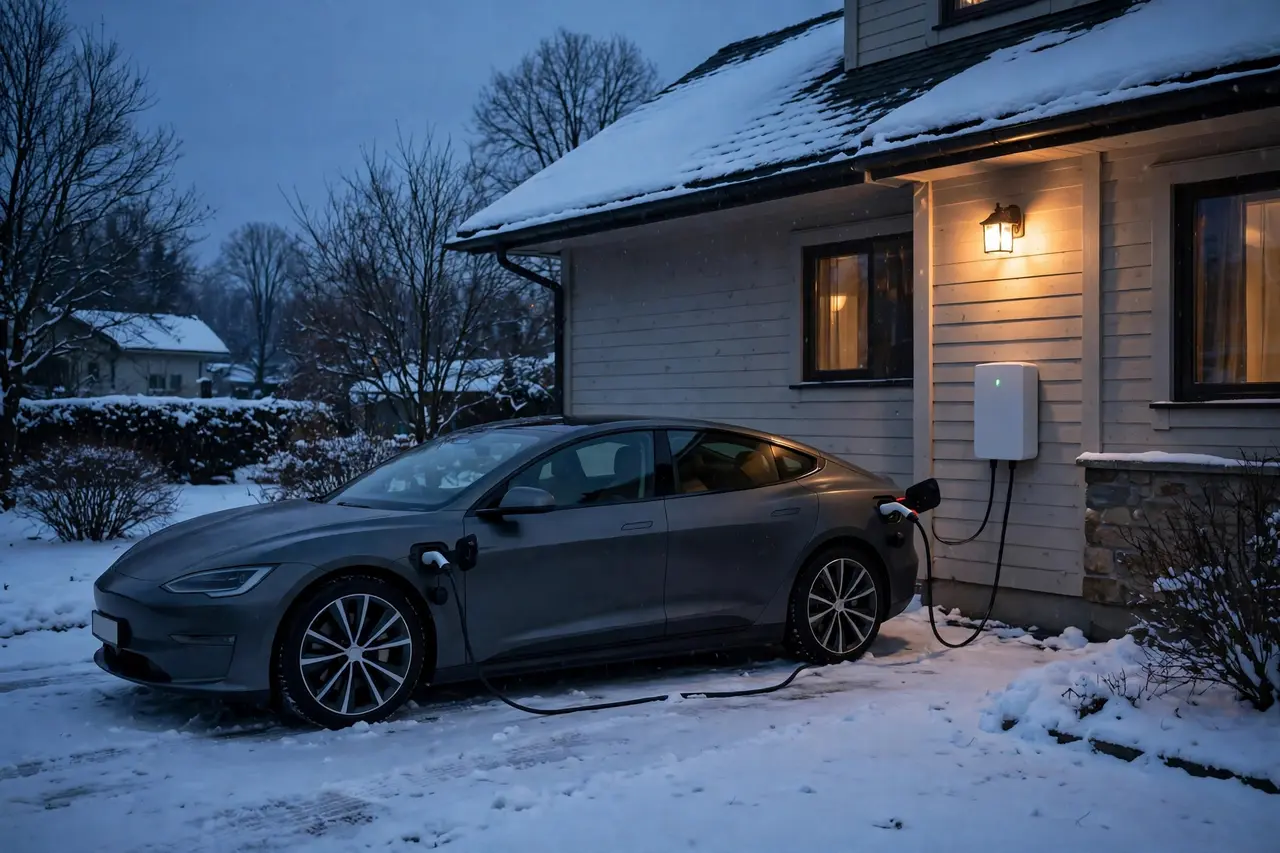
Condos, HOAs and the law in Alabama
Alabama has no statewide right-to-charge law. That needs saying plainly, because roundups on the internet sometimes claim otherwise: in the authoritative statute indexes checked for this page, no Alabama law prevents a homeowners association or condominium from refusing a charger in a common or assigned space. Your community's own covenants and board govern the question in Huntsville.
Metering is the objection that sinks more applications than any other, and it is the easiest to pre-empt: propose, in the application itself, how the electricity will be measured and paid for by you — a submeter, a separately metered circuit, or a flat arrangement the board can audit. Boards refuse ambiguity far more often than they refuse chargers.
The negotiation playbook — application contents, metering options, the wording that answers boards' standard objections — is set out in our condo and HOA guide, read here as a persuasion manual rather than a rights manual.
Climate, garages and charger placement
Afternoon is the design hour: a station, a cable and a car that all sit in the day's peak heat age on the local schedule, not the brochure's. West-facing walls are the last choice here; the shaded side of the garage, the eave's shadow and the overnight schedule are the three cheap protections every local installer reaches for.
Heat also argues for headroom in the circuit decision. A car managing a hot battery after a hot commute draws on its own schedule; a generously sized circuit finishes the session inside the cool window instead of straddling the morning. It is a small thing, decided once, felt all summer.

Permits and inspection in Huntsville
What the inspector is checking, in plain terms: conductor size against breaker size, the continuous-load calculation, terminations torqued, protection where the code wants it, and a station whose settings match the circuit it landed on. It is a short visit that validates everything you cannot see.

Neighbourhoods and ZIP codes served
The page covers 24 ZIP codes in and around Huntsville — including 35801, 35802, 35803, 35804, 35805, 35806, 35807, 35808, 35809, 35810, 35811, 35812, 35813, 35814, 35815, 35816, 35824, 35893, 35894, 35895, 35896, 35897, 35898, 35899 — across Madison. If your ZIP is not in the first set shown, ask anyway: installer coverage follows the metro, not a postcode fence.
The same working area takes in the neighbouring localities of Normal, Brownsboro, Ryland, Owens Cross Roads, Meridianville, Gurley, Madison, Harvest, New Market, Toney, Hazel Green, New Hope — the county ring an installer based in Huntsville actually drives. Requests from those communities route exactly as city requests do: same services, same permit discipline, same local facts where they differ.
Madison County accounts for 38 of the ZIP codes and 13 named postal localities in the research file, the nearest of them Normal, Brownsboro, Ryland, Owens Cross Roads, Meridianville. The survey counts 405,718 residents in the county, with a median household income of $86,499 and a median home value of $299,200. Measured across its ZIP codes, the Huntsville footprint runs about 11 miles north to south and 12 east to west, from ZIP 35801 to 35899 — the ground an installer based here actually covers in a working week.
Beyond the county seats, the working area takes in Normal, Brownsboro, Ryland, Owens Cross Roads, Meridianville, Gurley, Madison, Harvest, Capshaw, New Market, Valhermoso Springs, Paint Rock, Toney, Hazel Green, New Hope, Laceys Spring, Hollytree, Trenton, Woodville, Princeton, Union Grove, Taft, Ardmore, Grant, Scottsboro, Elora, Flintville, Estillfork, Kelso, Huntland, Arab, Langston, Elkton, Fayetteville, Dellrose, Joppa, Fackler, Mulberry, Hollywood, Section, Frankewing, Belvidere, Dutton, Lynchburg, Petersburg, Winchester, Pulaski, Estill Springs, Cornersville — the named localities for which Huntsville is the nearest metro in the network (neighbouring metros' pages cover their own ground), each routing to the same installer-matching service.
The wider working area also reaches Mooresville, Somerville, Decatur, Elkmont, Hartselle, Trinity, Guntersville, Baileyton, Falkville, Lester, Prospect, Hillsboro, Albertville, Groveoak, Holly Pond, Vinemont, Minor Hill, Moulton, Geraldine, Horton, Pisgah, Douglas, Fyffe, Stevenson, Goodspring, Courtland, Sherwood, Anderson, Boaz, Rogersville, Rainsville, Dawson, Cowan, Blountsville, Decherd — ground shared with neighbouring metros, where installers cross the same county lines in both directions.
ZIP codes in that shared ground include 35019, 35055, 35056, 35058, 35179, 35601, 35609, 35610, 35611, 35612, 35614, 35615, 35618, 35619, 35620, 35621, 35622, 35640, 35643, 35647, 35649, 35650, 35670, 35671, 35699, 35772, 35957, 35963, 35964, 35971, 35974, 35975, 35980, 35986, 37318, 37324, 37376, 38460, 38473, 38477.
The largest communities in that working area after Huntsville itself, by the GeoNames populated-place file: Madison (population 46,962), Tullahoma (population 19,128), Scottsboro (population 14,722), Winchester (population 8,539), Guntersville (population 8,385), Arab (population 8,295), Pulaski (population 7,617), Fayetteville (population 7,121), Lynchburg (population 6,132), Meridianville (population 6,021), Moores Mill (population 5,682), Harvest (population 5,281), Hazel Green (population 3,630), New Hope (population 2,800), Park City (population 2,442), Decherd (population 2,424), Brighton (population 2,328), Estill Springs (population 2,044), Redstone Arsenal (population 1,946), Owens Cross Roads (population 1,785). Charging demand follows those populations — the subdivisions and town centres where the next driveways, and the next panels, are.
Jackson County reaches into the working area with 53,053 residents, a median household income of $51,908 and a median home value of $159,500; its localities on this page include Paint Rock, Hollytree, Trenton, Woodville, Princeton. Marshall County reaches into the working area with 99,748 residents, a median household income of $62,571 and a median home value of $201,500; its localities on this page include Union Grove, Grant, Arab, Cornersville. Franklin County reaches into the working area with 31,966 residents, a median household income of $53,338 and a median home value of $136,000; its localities on this page include Huntland, Belvidere, Winchester, Estill Springs. Limestone County reaches into the working area with 111,233 residents, a median household income of $83,629 and a median home value of $281,000; its localities on this page include Capshaw, Ardmore. Morgan County reaches into the working area with 124,471 residents, a median household income of $68,845 and a median home value of $212,000; its localities on this page include Valhermoso Springs, Laceys Spring.
| ZIP | Locality | County |
|---|---|---|
| 35801 | Huntsville | Madison |
| 35804 | Huntsville | Madison |
| 35893 | Huntsville | Madison |
| 35895 | Huntsville | Madison |
| 35807 | Huntsville | Madison |
| 35809 | Huntsville | Madison |
| 35812 | Huntsville | Madison |
| 35813 | Huntsville | Madison |
| 35814 | Huntsville | Madison |
| 35815 | Huntsville | Madison |
| 35894 | Huntsville | Madison |
| 35897 | Huntsville | Madison |
| 35898 | Huntsville | Madison |
| 35805 | Huntsville | Madison |
| 35816 | Huntsville | Madison |
| 35811 | Huntsville | Madison |
| 35802 | Huntsville | Madison |
| 35810 | Huntsville | Madison |
| 35762 | Normal | Madison |
| 35899 | Huntsville | Madison |
| 35896 | Huntsville | Madison |
| 35741 | Brownsboro | Madison |
| 35808 | Huntsville | Madison |
| 35767 | Ryland | Madison |
| 35806 | Huntsville | Madison |
| 35803 | Huntsville | Madison |
| 35763 | Owens Cross Roads | Madison |
| 35759 | Meridianville | Madison |
| 35748 | Gurley | Madison |
| 35758 | Madison | Madison |
| 35824 | Huntsville | Madison |
| 35757 | Madison | Madison |
| 35749 | Harvest | Madison |
| 35742 | Capshaw | Limestone |
| 35761 | New Market | Madison |
| 35775 | Valhermoso Springs | Morgan |
| 35764 | Paint Rock | Jackson |
| 35773 | Toney | Madison |
| 35750 | Hazel Green | Madison |
| 35760 | New Hope | Madison |
| 35754 | Laceys Spring | Morgan |
| 35751 | Hollytree | Jackson |
| 35774 | Trenton | Jackson |
| 35776 | Woodville | Jackson |
| 35766 | Princeton | Jackson |
| 35175 | Union Grove | Marshall |
| 38488 | Taft | Lincoln |
| 35739 | Ardmore | Limestone |
| 35747 | Grant | Marshall |
| 35768 | Scottsboro | Jackson |
| 37328 | Elora | Lincoln |
| 37335 | Flintville | Lincoln |
| 35745 | Estillfork | Jackson |
| 37348 | Kelso | Lincoln |
| 37345 | Huntland | Franklin |
| 35016 | Arab | Marshall |
| 35755 | Langston | Jackson |
| 38449 | Ardmore | Giles |
| 38455 | Elkton | Giles |
| 35769 | Scottsboro | Jackson |
| 37334 | Fayetteville | Lincoln |
| 38453 | Dellrose | Lincoln |
| 35087 | Joppa | Cullman |
| 35746 | Fackler | Jackson |
| 37359 | Mulberry | Lincoln |
| 35752 | Hollywood | Jackson |
| 35771 | Section | Jackson |
| 38459 | Frankewing | Giles |
| 37306 | Belvidere | Franklin |
| 35744 | Dutton | Jackson |
| 37352 | Lynchburg | Moore |
| 37144 | Petersburg | Lincoln |
| 37398 | Winchester | Franklin |
| 38478 | Pulaski | Giles |
| 37330 | Estill Springs | Franklin |
| 37047 | Cornersville | Marshall |
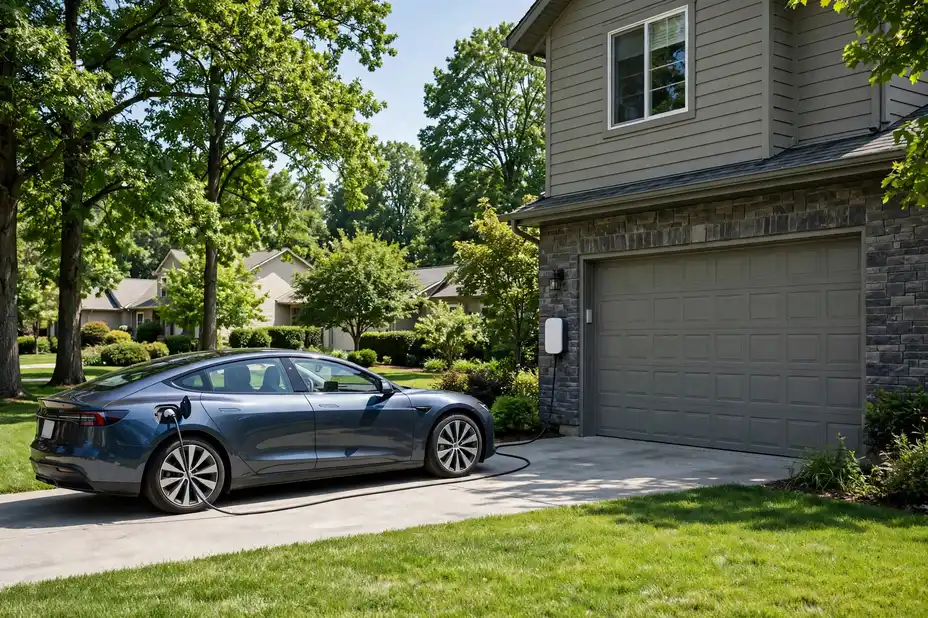
Planning the install: from panel to parking
Experienced Huntsville installers talk about 'the tell': the small observation that predicts the job. A panel directory in pencil with three generations of handwriting. A garage converted, then converted back. A charger-shaped hole in the household's plans — the second car already ordered. Mention your own tells at the visit; they are scope information, and scope named early is scope settled fairly.
One more piece of sequencing advice Huntsville installers give consistently: if the panel is being opened anyway, settle the other electrical maybes in the same visit — the circuit you will want next year costs least while the permit and the electrician are already in the house.
Home charging know-how for Huntsville households
Homework that sharpens the site visit
You can cut a site visit's uncertainty in half with a phone camera. Photograph the panel — door open, directory card legible, the rating label in frame — plus the wall where the station would go and the car's parking position with the port side visible. Send them with the request. The installer arrives already knowing the panel's make and spare spaces, the run's likely route, and which questions remain live ones. Quotes get firmer, visits get shorter, and nobody discovers the decisive fact at the door.
Selling a house that charges
A documented charger has become a listing fact: the housing market's filters increasingly include charging, and the buyers behind them read a permitted, inspected installation as maintained infrastructure. The operative word is documented. The permit and inspection record, the panel schedule showing the circuit, and the station's manual together convert the charger from a question a buyer's inspector raises into a feature the listing can name. If a sale is anywhere on the horizon, the paperwork conversation with your installer is worth having at install time, while it is free.
The charger among workshop loads
Garages that double as workshops put the charger in interesting company: welders, compressors, dust collectors — loads with appetites and opinions. The load calculation for such a house reads the whole tenancy, and the honest conversation includes which loads genuinely coincide. A station scheduled into the workshop's quiet hours lives peacefully; one competing with the table saw's startup surge teaches the household about breaker curves the experiential way.
How rebate paperwork usually works
Where a utility program does exist, its money moves on paperwork rails: pre-approval before purchase in some programmes, photographs and the inspection record after installation, deadlines measured in weeks. The practical lesson travels even to cities without a current program — keep everything. The permit, the passed inspection, the equipment invoice with model and serial, photographs of the finished work: filed together, they are the application for any programme that opens later, and the file costs nothing to keep.
HOA rules and the single-family exterior
Owning the house does not always settle the charger's exterior chapter: architectural-approval clauses in many communities reach visible equipment, conduit runs on front elevations, and anything mounted streetside. The practical route is a five-minute check of the covenants before the install, and, where approval applies to exterior work, a small application — equipment photo, mounting position, conduit path — that reads as a courtesy because it is one. Interior garage installs in most single-family communities are entirely the owner's affair; it is the visible fraction that earns the paperwork.

Frequently asked questions
Is the federal charger tax credit still available in Huntsville, AL?
You cannot — it no longer exists. The 30C credit closed to equipment placed in service after September 30, 2025, and no Alabama program replaced it for home installs. Nor did the sources checked for this page show a live City of Huntsville residential rebate. Treat any 'credit' mentioned in a quote as a request for paperwork.
What can my HOA in Huntsville, AL do about a charger install?
In Huntsville, they can — there is no Alabama statute stopping them. Right-to-charge protection simply has not been enacted here, so the board's own rules decide. Owners do still get approved regularly: the applications that succeed answer the board's concerns (metering, insurance, restoration, a licensed installer) before the meeting, in writing.
Panel upgrade or not — how do Huntsville, AL homeowners find out?
Sometimes — and Huntsville's housing stock is exactly why the question is worth asking properly. With a median build year of 1986 and roughly 41% of homes predating 1980, plenty of local panels are 100-amp units already carrying a full modern load. Those homes choose between an upgrade and load management; newer 200-amp homes usually just add the circuit. The site visit's load calculation is the decider.
How quickly will a Level 2 charger fill my car in Huntsville, AL?
A Level 1 cord on a household outlet adds roughly 3–5 miles of range per hour; a Level 2 station on a 240-volt circuit typically adds about 25–40 miles per hour depending on the circuit's amperage and the vehicle. For most drivers that is the difference between rationing the battery and never thinking about it.
What happens next after I send a request?
Three things happen, in order. Your request is routed to licensed installers who work in Huntsville; one of them contacts you to book a site visit; and the visit produces a written quote based on your actual panel and parking. PlugReady USA runs the matching, not the tools — the contractor on the job is the installer who visits.
Do installers cover the communities around Huntsville, AL?
Yes — an installer's working area is the county ring, not the city limit. From this page the same request flow covers Normal, Brownsboro, Ryland, Owens Cross Roads, Meridianville and the rest of Huntsville's surrounding localities, under the same permit discipline and the same local facts where they differ.
Nearby cities in Alabama
- EV charger installation in Decatur — about 25 miles from Huntsville, metro population 155,000
- EV charger installation in Gadsden — about 59 miles from Huntsville, metro population 105,000
- EV charger installation in Florence — about 61 miles from Huntsville, metro population 150,000
- EV charger installation in Birmingham — about 84 miles from Huntsville, metro population 1,150,000
- EV charger installation in Anniston — about 84 miles from Huntsville, metro population 115,000
- EV charger installation in Tuscaloosa — about 119 miles from Huntsville, metro population 250,000
- EV charger installation in Chattanooga, TN — about 73 miles from Huntsville, metro population 575,000
- EV charger installation in Rome, GA — about 85 miles from Huntsville, metro population 100,000
- EV charger installation in Dalton, GA — about 88 miles from Huntsville, metro population 145,000
Ready to charge at home in Huntsville?
Two minutes of form, and the request is in front of licensed installers who cover this city — quotes follow site visits, in writing.