EV Charger Installation in Cheyenne, WY
Charging where you park, in Cheyenne: the utility programs, state law, permit process and housing facts behind a home charger install, gathered in one place.
The overnight plug is the least glamorous and most consequential part of owning an electric car, and Cheyenne households have been adopting it at pace: 1,900 battery-electric vehicles and 1,200 plug-in hybrids were registered across Wyoming by the end of 2025. Cheyenne itself is home to about 65,698 people. What follows is the local field guide — utility programs as they actually stand, the association law as it actually reads, the permit as it is actually filed, and the housing numbers that predict your install before anyone opens the panel.
How this page is organised matters less than what is in it: verified local facts, stated with their sources, so you can check them yourself. PlugReady USA matches homeowners in Cheyenne with licensed local installers; the detail below is the homework we would want done before anyone quotes the job.
What the Experian and AFDC registration data say about Cheyenne: WY capital. Translated out of market language: your neighbours are already charging at home, the permit office already knows the paperwork, and the installers already know the housing stock.
The same survey puts median household income in Cheyenne at $79,813, with 62% of occupied homes owner-occupied and 62% of the housing stock single-unit detached. For charging, those are the operative facts: owners can approve their own electrical work, and detached homes put the car, the panel and the parking under one roof.

The composite picture matters more than any single statistic. In Cheyenne: an older housing fabric, where panel archaeology is a normal part of the first visit; a detached-house majority with a real attached and multifamily minority; buildings of five or more units are a visible minority of the stock; meanwhile, owners hold a working majority, with renters a significant minority. A page that ignored that profile would give the same advice everywhere; this one is ordered by it.
Keep six figures and you keep Cheyenne's whole electrical character: 31,337 housing units; 30,677 occupied homes; 19,100 owner-occupied; 19,421 detached houses; 19,105 pre-1980 homes; 4,627 homes in buildings of five or more units. Percentages elsewhere on this page are these numbers in disguise — the counts are the originals, and they are the numbers a local installer's experience is actually made of. The page's geography is equally concrete: 8 ZIP codes across Laramie, centred near 41.14 degrees north latitude. The city anchors the Cheyenne metropolitan area, home to roughly 100,000 people on the research file's metro estimate — the wider labour and housing market this page's installers work across.
The same survey release fills in the household economics around the housing stock: a median home value of $333,700, median gross rent of $1,118, per-capita income of $43,625, and a median resident age of 39. How the city moves completes the picture: 81% of Cheyenne workers drive to work alone — the commute pattern home charging is built around; 8% work from home, a population whose cars charge on daytime and overnight schedules alike; 0% commute by public transit; 34% of adults hold a bachelor's degree or higher. Vehicle ownership, from the same release: 18,680 households in Cheyenne run two or more vehicles, and 1,703 run none — the two ends of the market this page serves and does not serve.
The cost-burden lines say who feels housing costs most in Cheyenne: 45% of renters spend 30% or more of income on rent, and 0% of owners with mortgages spend the same share on housing costs. Family households are 55% of all households — the two-car, school-run demographic whose charging patterns this page's planning sections keep circling back to.
This is the context an installer works against, whether it is written down or not. The oldest housing throws the longest shadows over an install: knob-and-tube remnants in the attic, ungrounded receptacles, services sized for iceboxes and radios that now feed induction ranges and heat pumps. Installers here run two trades in one van — domestic circuits in the morning, a building's shared-service design in the afternoon — and the city's pages, this one included, have to serve both readers.
The balance also shapes the housing-turnover effect: chargers installed by owners stay as amenities, chargers negotiated by tenants test what the tenancy paperwork said, and both patterns are live here. Value engineering is the local dialect: load management weighed against panel work on merit, quotes compared line by line, the site visit treated as the moment the scope becomes honest. Scale brings a call centre, but it also brings published everything — interconnection standards, programme terms, complaint statistics — and the published page, not the phone call, is where this utility is most honest.
The state fleet is young, and Cheyenne's charging story is being written by its first draft of households — the ones whose installs will be the precedents boards and neighbours cite for a decade. At this scale the page's role sharpens — in a market without a crowd of specialists to interview, the household's own preparation carries more of the project's quality. Without a state charging statute, shared-property approvals in this metro are won on paper quality: metering clarity, licensed installers, insurance, reversibility — the complete package the guides set out.
The electrical reality in Cheyenne homes
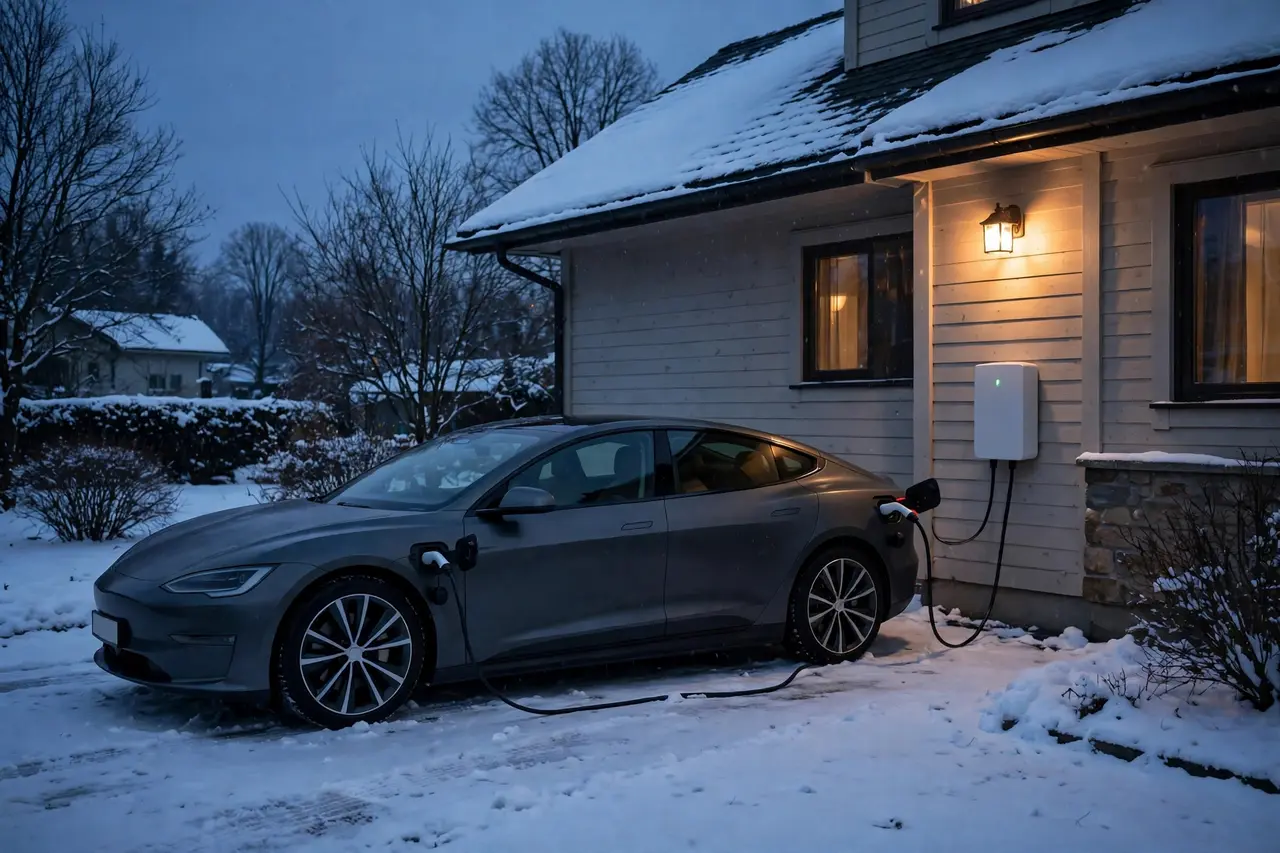
Four numbers organise everything an installer expects in Cheyenne: median build year 1972; 61% of units built before 1980; 62% of the stock detached; 62% of occupied homes owner-occupied. Capacity, circuit routes and approval layers all correlate with those four. The paragraphs below are their commentary. A housing stock this age leans on smaller electrical services — 100-amp panels are common, and fuse-era equipment still turns up in the oldest streets. For many of those homes the honest answer is a panel upgrade or a load-management device before the charger circuit goes in, and a good installer will show you the load calculation rather than asking you to take it on faith. Attics, basements and interior panel locations are common in this vintage of stock, which is why the run's route gets its own line in any serious quote: distance and finish decide labour more than the charger does.
The fuel table adds one more local fact: 6,698 Cheyenne homes — 23% of the stock — heat with electricity. Those households already think in kilowatts through the winter, their panels carry the load to prove it, and a charger's overnight appetite joins a system that is, in the useful sense, already electrified.
The tenure split cuts the other way too: roughly 11,577 occupied homes in Cheyenne are rented. For those households the charger question is a negotiation with a property owner — written proposal, licensed installer, metering clarity — and it succeeds often enough that installers here keep the pattern ready.
And 15% of Cheyenne's homes are in buildings with five or more units — apartments and condominiums where charging is a building decision before it is an electrical one. If that is your situation, the law and multifamily sections of this page are the ones written for you.
EV charging services in Cheyenne
Three of the network's services lead this page because local conditions put them first; the remaining seven are one click away and equally available here. Each card states what the service involves — the matching itself is free of obligation until you accept an installer's quote.
Home EV Charger Installation in Cheyenne
The core service, stated plainly: a dedicated 240-volt circuit run from your panel to your parking place, a station mounted and configured to that circuit, and the paperwork closed out with the permit office. Everything else in this section of the site exists to support or unblock this one job.
In Cheyenne: where most Cheyenne projects start and finish: one circuit, one station, one inspection.
Dedicated Circuit & Electrical Panel Upgrade in Cheyenne
Some homes meet the charger at the panel door: the service is already spoken for by cooking, heating and hot water. This service is the honest fix — capacity added properly, grounding brought current, and a panel schedule that finally matches the house it feeds.
In Cheyenne: the job that surfaces wherever housing is older — and Cheyenne's stock makes it a routine conversation, settled by a load calculation.
Level 2 Charger Installation in Cheyenne
Level 2 earns its keep on the worst week of the year: the cold snap, the back-to-back long days, the evening the car comes home empty with a dawn departure. A circuit sized for those weeks makes the ordinary ones invisible.
In Cheyenne: the 240-volt step that turns overnight charging in Cheyenne from a trickle into a full battery by morning.
Utility programs and electricity in Cheyenne
Electricity in Cheyenne comes from Cheyenne Light Fuel & Power. Parts of the wider metro are served by High West Energy, Inc, WAPA-- Western Area Power Administration, Wheatland Rural Elec Assn, Inc. The utility matters twice over for a charger install: it sets the time-of-use rates that decide what overnight charging costs you, and it is the organisation that may — or may not — currently help pay for the equipment.
There is a strategic consequence to the empty incentive shelf in Cheyenne: the install decision reduces to the work itself and the tariff it runs on. With no rebate distorting the comparison, quotes compete on scope, licensing and the load calculation's honesty — which is the competition homeowners should want. And the overnight rate window, where Cheyenne Light Fuel & Power offers one, quietly returns more over the car's life than most one-off rebates ever did.
Net-metering households — rooftop solar is common across the metro — should tell the installer: charging schedules and load management are planned differently when the house generates as well as consumes.
Condos, HOAs and the law in Wyoming
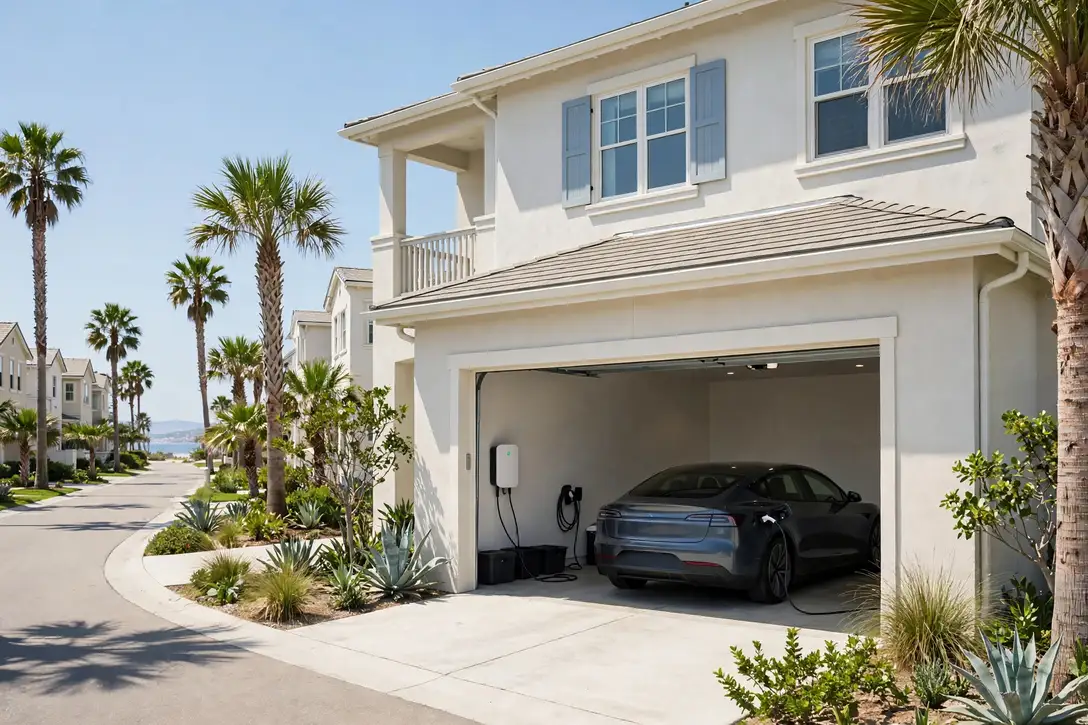
There is no Wyoming right-to-charge statute to lean on. Some national roundups list protection that does not exist in this state's code; the statute indexes checked for this page are clear. In Cheyenne, a condo or HOA charger is approved — or not — under the community's own documents, which makes the quality of your application the whole ballgame.
Strategy, then, is the local substitute for statute. In Cheyenne the applications that succeed tend to share a shape: they arrive before the meeting rather than at it, they answer metering and insurance in the first paragraph, and they offer the board a design it can approve once and reuse for the next owner who asks.
The general process, minus the statute, is still covered in our guide to installing an EV charger in a condo or HOA community — most of its application-package advice applies in Cheyenne exactly as written.
Climate, garages and charger placement
The first cold morning is the audit: cable flexibility, connector seating with gloved hands, the holster reachable without crossing the ice zone by the door. Installs designed in spring are graded in January, and local installers design for the grade.
The plugged-in car is the winter-ready car: battery held at a kinder temperature by the wall, cabin preconditioned without draining the pack, departure on schedule regardless of the night's low. Households in cold metros describe the home charger less as fuelling than as winter equipment outright.

Permits and inspection in Cheyenne
Expect the permit to name the circuit, the breaker and the equipment. An installer who suggests skipping it is saving an afternoon by spending your liability; the inspection is also your independent check that the continuous-load sizing was done properly.

Neighbourhoods and ZIP codes served
The page covers 8 ZIP codes in and around Cheyenne — including 82001, 82002, 82003, 82006, 82007, 82008, 82009, 82010 — across Laramie. If your ZIP is not in the first set shown, ask anyway: installer coverage follows the metro, not a postcode fence.
The same working area takes in the neighbouring localities of Fe Warren Afb, Hillsdale, Granite Canon, Burns, Horse Creek, Carpenter, Meriden, Pine Bluffs, Albin — the county ring an installer based in Cheyenne actually drives. Requests from those communities route exactly as city requests do: same services, same permit discipline, same local facts where they differ.
Laramie County accounts for 17 of the ZIP codes and 10 named postal localities in the research file, the nearest of them Fe Warren Afb, Hillsdale, Granite Canon, Burns, Horse Creek. The survey counts 101,060 residents in the county, with a median household income of $80,173 and a median home value of $348,700. Measured across its ZIP codes, the Cheyenne footprint runs about 8 miles north to south and 8 east to west, from ZIP 82001 to 82010 — the ground an installer based here actually covers in a working week.
Beyond the county seats, the working area takes in Fe Warren Afb, Hillsdale, Carr, Granite Canon, Burns, Horse Creek, Buford, Hereford, Carpenter, Grover, Tie Siding, Meriden, Pine Bluffs, Albin, Chugwater, Laramie, Briggsdale, Lagrange, Bushnell, Hawk Springs, Bosler, Yoder, New Raymer, Veteran, Kimball, Wheatland, Huntley, Harrisburg, Centennial, Lyman, Stoneham, Torrington, Dix, Lingle, Morrill, Fort Laramie, Rock River, Guernsey, Gering, Mitchell, Scottsbluff — the named localities for which Cheyenne is the nearest metro in the network (neighbouring metros' pages cover their own ground), each routing to the same installer-matching service.
The wider working area also reaches Nunn, Pierce, Livermore, Fort Collins, Eaton, Severance, Timnath, Galeton, Lucerne, Gill, Greeley, Loveland, Estes Park, Johnstown, Milliken, Drake, Gilcrest, Glen Haven, Berthoud, Mead, Platteville, Orchard, Longmont, Weldona, Hygiene, Fort Lupton, Firestone, Frederick, Niwot, Hudson, Erie, Jamestown, Roggen, Boulder, Wiggins — ground shared with neighbouring metros, where installers cross the same county lines in both directions.
ZIP codes in that shared ground include 80301, 80455, 80501, 80503, 80504, 80511, 80514, 80515, 80520, 80521, 80522, 80524, 80525, 80526, 80527, 80528, 80530, 80532, 80534, 80535, 80536, 80537, 80544, 80545, 80547, 80549, 80550, 80553, 80610, 80621, 80622, 80623, 80624, 80633, 80645, 80649, 80650, 80652, 80653, 80654.
The largest communities in that working area after Cheyenne itself, by the GeoNames populated-place file: Laramie (population 32,158), Scottsbluff (population 14,802), Sterling (population 14,104), Gering (population 8,334), Torrington (population 6,669), Ranchettes (population 5,798), South Greeley (population 4,217), Wheatland (population 3,659), Fox Farm-College (population 3,647), Kimball (population 2,405), Mitchell (population 1,666), Guernsey (population 1,195), Terrytown (population 1,172), Bayard (population 1,148), Pine Bluffs (population 1,146), Morrill (population 912), Minatare (population 800), Harrisburg (population 100). Charging demand follows those populations — the subdivisions and town centres where the next driveways, and the next panels, are.
Albany County reaches into the working area with 38,249 residents, a median household income of $61,917 and a median home value of $333,000; its localities on this page include Buford, Tie Siding, Laramie. Platte County reaches into the working area with 8,612 residents, a median household income of $67,718 and a median home value of $297,900; its localities on this page include Chugwater, Wheatland, Guernsey.
| ZIP | Locality | County |
|---|---|---|
| 82001 | Cheyenne | Laramie |
| 82002 | Cheyenne | Laramie |
| 82006 | Cheyenne | Laramie |
| 82008 | Cheyenne | Laramie |
| 82010 | Cheyenne | Laramie |
| 82007 | Cheyenne | Laramie |
| 82009 | Cheyenne | Laramie |
| 82005 | Fe Warren Afb | Laramie |
| 82003 | Cheyenne | Laramie |
| 82060 | Hillsdale | Laramie |
| 80612 | Carr | Weld |
| 82059 | Granite Canon | Laramie |
| 82053 | Burns | Laramie |
| 82061 | Horse Creek | Laramie |
| 82052 | Buford | Albany |
| 80732 | Hereford | Weld |
| 82054 | Carpenter | Laramie |
| 80729 | Grover | Weld |
| 82084 | Tie Siding | Albany |
| 82081 | Meriden | Laramie |
| 82082 | Pine Bluffs | Laramie |
| 82050 | Albin | Laramie |
| 82210 | Chugwater | Platte |
| 82072 | Laramie | Albany |
| 80611 | Briggsdale | Weld |
| 82071 | Laramie | Albany |
| 82073 | Laramie | Albany |
| 82221 | Lagrange | Goshen |
| 69128 | Bushnell | Kimball |
| 82217 | Hawk Springs | Goshen |
| 82051 | Bosler | Albany |
| 82244 | Yoder | Goshen |
| 82070 | Laramie | Albany |
| 80742 | New Raymer | Weld |
| 82243 | Veteran | Goshen |
| 69145 | Kimball | Kimball |
| 82201 | Wheatland | Platte |
| 82218 | Huntley | Goshen |
| 69345 | Harrisburg | Banner |
| 82055 | Centennial | Albany |
| 69352 | Lyman | Scotts Bluff |
| 80754 | Stoneham | Weld |
| 82240 | Torrington | Goshen |
| 69133 | Dix | Kimball |
| 82223 | Lingle | Goshen |
| 69358 | Morrill | Scotts Bluff |
| 82212 | Fort Laramie | Goshen |
| 82083 | Rock River | Albany |
| 82214 | Guernsey | Platte |
| 69341 | Gering | Scotts Bluff |
| 69357 | Mitchell | Scotts Bluff |
| 69363 | Scottsbluff | Scotts Bluff |

Planning the install: from panel to parking
Think of the project as a chain with four links: capacity, route, placement, paperwork. Capacity is the load calculation. Route is the path copper takes from panel to parking — through a shared wall if you are lucky, across a ceiling or a trench if you are not. Placement is the unglamorous decision that governs daily life with the car for a decade: reach, cable slack, and which side the port is on. Paperwork is the permit and the passed inspection, the proof that outlives the installer's visit.
Plan for the household you will be, not just the car you have. A second EV is the most common reason a charger circuit gets revisited, and the cheap moment to prepare for it — conduit sized up, panel capacity reserved, station placement that serves two bays — is during the first install, while the permit is open and the electrician is already in the panel.
Home charging know-how for Cheyenne households
Breaker spaces are not capacity
Two different shortages hide inside the phrase 'my panel is full'. A panel can run out of breaker spaces while its service still has honest capacity — answered with a subpanel or, where the listing permits, tandem breakers. Or it can run out of capacity while spaces remain — answered with a service increase or a management system. The load calculation distinguishes the two in minutes, and the distinction is worth real scope: one answer is an afternoon's work, the other is a project. Any quote that treats them as the same problem has skipped the arithmetic.
Homework that sharpens the site visit
You can cut a site visit's uncertainty in half with a phone camera. Photograph the panel — door open, directory card legible, the rating label in frame — plus the wall where the station would go and the car's parking position with the port side visible. Send them with the request. The installer arrives already knowing the panel's make and spare spaces, the run's likely route, and which questions remain live ones. Quotes get firmer, visits get shorter, and nobody discovers the decisive fact at the door.
Two-storey houses and the vertical run
In a two-storey house the panel often lives in a utility room, a laundry or a ground-floor wall far from the garage, and the circuit's path becomes a vertical problem: chases, soffits and floor cavities are the route's vocabulary. Experienced installers read a house's structure the way a plumber does — where the stacked walls are, which cavities run uninterrupted — and the quote follows that reading. Expect the site visit to include a look upstairs; the ceiling above the garage is part of the job.
How rebate paperwork usually works
Where a utility program does exist, its money moves on paperwork rails: pre-approval before purchase in some programmes, photographs and the inspection record after installation, deadlines measured in weeks. The practical lesson travels even to cities without a current program — keep everything. The permit, the passed inspection, the equipment invoice with model and serial, photographs of the finished work: filed together, they are the application for any programme that opens later, and the file costs nothing to keep.

Frequently asked questions
Can I still get the federal tax credit for a home charger in Cheyenne, WY?
The honest ledger for Cheyenne reads: federal credit, ended September 30, 2025; state program, none for typical home installs; Cheyenne Light Fuel & Power residential rebate, none verified in the sources checked. If a salesperson's quote leans on any of the three, the correct response is a request for the program's published page.
What can my HOA in Cheyenne, WY do about a charger install?
In Cheyenne the honest answer is yes, they can refuse: Wyoming gives owners no statutory charging right, so the board's discretion governs. What changes outcomes is the quality of the file in front of them — drawings, metering, insurance, a named licensed installer — and a growing number of boards here approve exactly that file.
Does a Level 2 charger mean a panel upgrade for a Cheyenne, WY home?
Start from the median, then verify: the median Cheyenne home was built in 1972, and 61% of the stock predates 1980, so 100-amp panels are a normal sight here — and a normal candidate for either an upgrade or a load-management device. The load calculation distinguishes the two in one visit, and any quote that skips it is guessing with your money.
How much faster is Level 2 charging at home in Cheyenne, WY?
A Level 1 cord on a household outlet adds roughly 3–5 miles of range per hour; a Level 2 station on a 240-volt circuit typically adds about 25–40 miles per hour depending on the circuit's amperage and the vehicle. For most drivers that is the difference between rationing the battery and never thinking about it.
What happens after I request an installer through this page?
Send the request and it is matched against installers covering Cheyenne — your service, ZIP, property type and timing travel with it. An installer then arranges the site visit and quotes in writing. Our role ends at the introduction; your contract, permit and paperwork are with the installer.
Does Cheyenne Light Fuel & Power offer a time-of-use rate for EV charging in Cheyenne?
Many utilities do — a tariff where overnight energy carries a lower rate, designed for exactly this load. Whether your current plan includes such a window is a two-minute check on your tariff or the utility's rate pages. If it does, the charger's schedule is set once, at commissioning, and the saving runs itself from then on.
Nearby cities in Wyoming
- EV charger installation in Casper — about 144 miles from Cheyenne, metro population 80,000
- EV charger installation in Fort Collins, CO — about 42 miles from Cheyenne, metro population 375,000
- EV charger installation in Boulder, CO — about 79 miles from Cheyenne, metro population 330,000
- EV charger installation in Denver, CO — about 98 miles from Cheyenne, metro population 3,000,000
Ready to charge at home in Cheyenne?
Send the essentials — what you need, where, and what kind of property — and a licensed local installer will pick it up from there.