EV Charger Installation in Casper, WY
Home Level 2 charging, panel upgrades and condo installs in Casper — matched to licensed local installers, with the local facts that shape the job set out below.
The economics of home charging are made in two places: the tariff you charge on, and the circuit you charge through. Both are decided locally, and both are decided before the hardware is chosen. Casper itself is home to about 58,839 people; Wyoming counted 1,900 battery-electric vehicles and 1,200 plug-in hybrids by the end of 2025, and the metro's households are making these two decisions every week. Below: the utility position for Casper as verified, the state law on association charging, the permit route, and the housing-stock numbers that tell you how much panel conversation to expect at your own address.
How this page is organised matters less than what is in it: verified local facts, stated with their sources, so you can check them yourself. PlugReady USA matches homeowners in Casper with licensed local installers; the detail below is the homework we would want done before anyone quotes the job.
Why Casper ranks 282 in this network's 300-metro build order: WY No. 2. Those are registration figures, not projections, and they translate directly into installation work — every newly registered plug-in vehicle is a household deciding where it will charge.
Three survey lines do most of the predictive work on this page. Income — a median of $70,218 per household — tracks the pace at which Casper households adopt EVs at all. Tenure — 70% owner-occupied — decides whose signature the work needs. And structure — 70% single-unit detached — decides how often the answer is a simple garage circuit rather than a building negotiation.

Put the survey together and Casper's charging profile reads like this: an older housing fabric, where panel archaeology is a normal part of the first visit; overwhelmingly a detached-house city, so most installs are the simple garage pattern; buildings of five or more units are a visible minority of the stock; and owner-occupiers dominate, so most readers can approve their own electrical work outright. That combination — more than any single number — is what the installers working here plan around, and it is the lens for everything on this page.
In absolute terms, the survey counts 27,746 housing units in Casper — 25,565 occupied, 17,852 of them by their owners. The stock resolves into 19,502 single-unit detached houses, 16,644 homes standing since before 1980, and 4,851 units in larger buildings. Those six counts are the city's charging map drawn without percentages, and every section of this page is a consequence of one of them. The page's geography is equally concrete: 5 ZIP codes across Natrona, centred near 42.85 degrees north latitude. The city anchors the Casper metropolitan area, home to roughly 80,000 people on the research file's metro estimate — the wider labour and housing market this page's installers work across.
The same survey release fills in the household economics around the housing stock: a median home value of $260,400, median gross rent of $1,009, per-capita income of $42,613, and a median resident age of 37. And the daily rhythms behind the housing numbers: 78% of Casper workers drive to work alone — the commute pattern home charging is built around; 10% work from home, a population whose cars charge on daytime and overnight schedules alike; 1% commute by public transit; 30% of adults hold a bachelor's degree or higher. Vehicle ownership, from the same release: 15,643 households in Casper run two or more vehicles, and 1,338 run none — the two ends of the market this page serves and does not serve.
Two burden statistics frame the economics: in Casper, 44% of renters and 0% of mortgage-holding owners are housing-cost burdened at the standard 30% threshold. And 58% of households are family households, the segment most likely to run the two-vehicle, two-schedule pattern the second-vehicle planning notes address.
What follows is the city read as an electrical place rather than a dot on a map. Pre-war and immediate post-war streets dominate the map, and their electrical fabric is stratified — original services beneath mid-century additions beneath modern subpanels, an archaeology the load calculation reads layer by layer. Detached stock also spreads the work out: longer driveways, detached garages at the lot's far corner, panel-to-parking distances that make the route, not the circuit, the engineering.
The tenure profile quietly predicts the second-car pattern too: owners with garages and long horizons are the households that come back for the second circuit. Here the tariff conversation is a budget conversation: the overnight window's arithmetic, done honestly once, pays out every night of the car's life without further attention. Investor-owned utility territory runs on published tariffs and regulator-approved programmes: everything material about charging economics here exists in a filed document with an effective date, findable by anyone who reads filings.
Youth in the fleet also means the used-EV wave has not arrived; adoption here is new-car led, and charging installs follow the dealer map more than the classifieds. Smaller metros adopt on their own clock: the fleet follows the dealers and the demographics, and each install is a visible event a street notices. Boards here decide without a statutory script, which makes precedent the currency: the first well-built application in a community quietly writes the policy for everyone after it.
The electrical reality in Casper homes
Casper's housing, in Census Bureau survey numbers: a median build year of 1975, 60% of units predating 1980, a stock that is 70% single-unit detached, and 70% of occupied homes owned by their occupants. Everything in this section is commentary on those four facts. A housing stock this age leans on smaller electrical services — 100-amp panels are common, and fuse-era equipment still turns up in the oldest streets. For many of those homes the honest answer is a panel upgrade or a load-management device before the charger circuit goes in, and a good installer will show you the load calculation rather than asking you to take it on faith. Housing age also tracks wire-run reality: older homes more often place the panel in a basement or interior wall far from the garage, and distance is copper, conduit and labour.
One further survey line belongs in any Casper install conversation: 22% of the city's homes heat with electricity — 5,634 households whose panels already carry a major winter load before a charger is contemplated. Electric heat and EV charging are the two largest discretionary loads a house can host, and where they coincide, the load calculation stops being a formality.
One further split matters for how this page is organised: about 7,713 of Casper's occupied homes are renter-occupied. Everything above assumes you can approve your own electrical work; where you cannot, the approval layer — landlord or association — becomes part of the job, which is why the law section carries unusual weight here.
One more structural fact shapes Casper's charging map: 17% of the city's housing units sit in buildings of five or more units. Those households cannot simply book a circuit — their charger runs through a building, a board and a shared electrical service, which is why the multifamily service and the law section below carry unusual weight on this page.
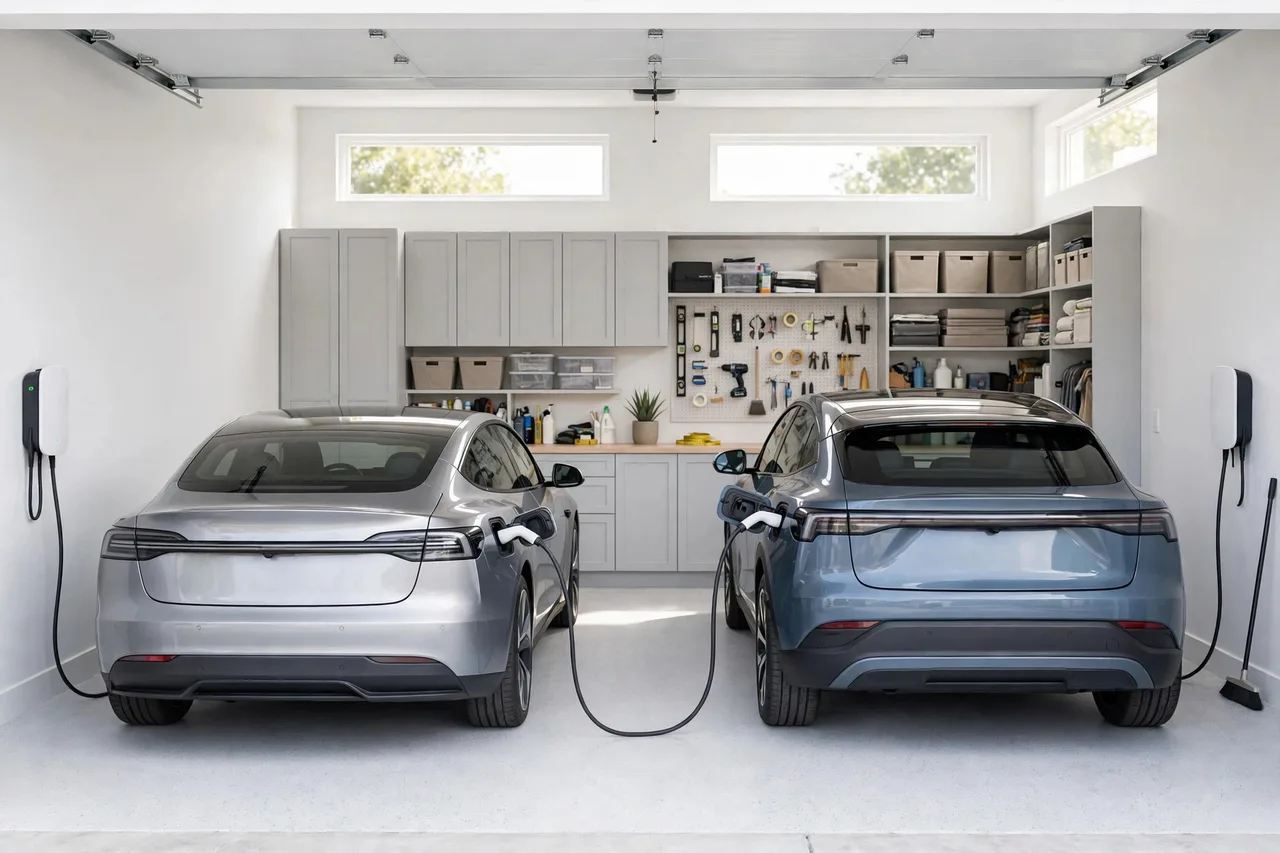
EV charging services in Casper
The services below are ordered by what Casper households most often need first, judged from the housing and fleet facts on this page. The full menu follows in the grid — every service is offered in this metro.
Home EV Charger Installation in Casper
The core service, stated plainly: a dedicated 240-volt circuit run from your panel to your parking place, a station mounted and configured to that circuit, and the paperwork closed out with the permit office. Everything else in this section of the site exists to support or unblock this one job.
In Casper: where most Casper projects start and finish: one circuit, one station, one inspection.
Dedicated Circuit & Electrical Panel Upgrade in Casper
The capacity project behind the charger project. A load calculation decides whether the answer is a service increase, a panel replacement, a subpanel or load management — and the work is sequenced with the utility and the inspector so the house is live again the same day in most cases.
In Casper: the capacity fix that lets the charger circuit go in without the rest of the house living at its limit.
Level 2 Charger Installation in Casper
The step from a household receptacle to a Level 2 circuit is the step from sipping to drinking: the car takes energy at the rate family life actually consumes it. The work is a breaker, a run of appropriately gauged conductor, and a connection made to torque — modest materials, permanent consequences.
In Casper: what most Casper drivers mean when they say they want 'a real charger' — 240 volts, sized to the circuit.
Utility programs and electricity in Casper
Electricity in Casper comes from PacifiCorp. Parts of the wider metro are served by High Plains Power Inc, WAPA-- Western Area Power Administration. The utility matters twice over for a charger install: it sets the time-of-use rates that decide what overnight charging costs you, and it is the organisation that may — or may not — currently help pay for the equipment.
Rebate status in Casper: none verified. The utility and state sources checked for this page list no active residential charger rebate from PacifiCorp, no Wyoming replacement program for home installs, and the federal 30C credit ended on September 30, 2025. When a funded round opens it appears on the utility's own program pages with terms and dates; until one does, the honest budget for a charger install here is the install itself.
Solar households should read the export terms alongside the charging ones: the pair decides whether midday charging on home-working days beats the overnight window, and the answer is written in your tariff, not in general advice.
Condos, HOAs and the law in Wyoming
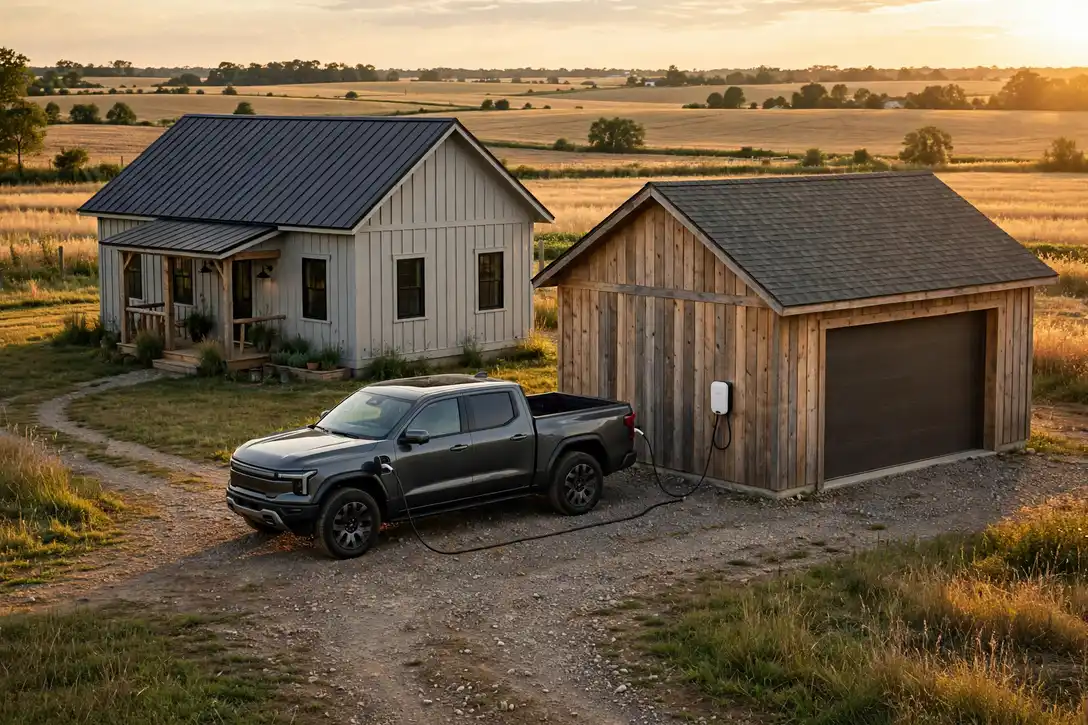
Wyoming has no statewide right-to-charge law. That needs saying plainly, because roundups on the internet sometimes claim otherwise: in the authoritative statute indexes checked for this page, no Wyoming law prevents a homeowners association or condominium from refusing a charger in a common or assigned space. Your community's own covenants and board govern the question in Casper.
Owners of single-family homes in HOA communities should also check the covenants before assuming the driveway is uncomplicated: exterior-equipment and architectural-approval clauses can apply to a visible wall-mounted station even where the garage interior is entirely the owner's business.
Our condo and HOA guide covers both kinds of state; in Casper the chapters on complete applications and cost allocation are the operative ones.
Climate, garages and charger placement
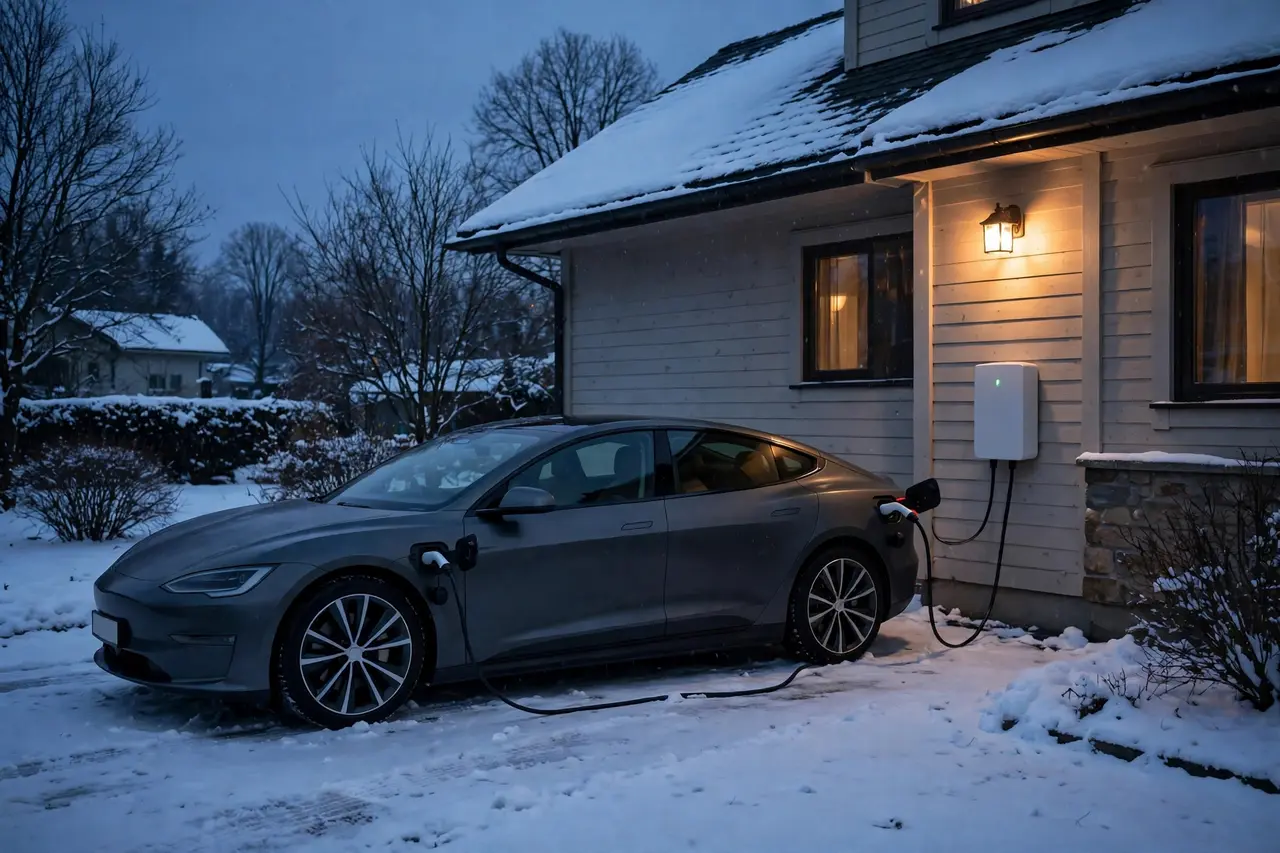
Cold rewrites the charging routine in this part of the country. Batteries accept charge more slowly when they are cold, range falls, and the car's own systems spend energy on warmth — so the overnight window matters more, not less. A Level 2 circuit sized generously is the household's answer: it restores the day's driving with hours to spare even in the slow weeks of January.
Ice discipline is the third local habit: a cable route that never crosses the shovelled path's landing zone, a holster at a height the snowbank does not reach, and a station position the roof does not shed onto. Winter rewards the installs that were designed in it.

Permits and inspection in Casper
Expect the permit to name the circuit, the breaker and the equipment. An installer who suggests skipping it is saving an afternoon by spending your liability; the inspection is also your independent check that the continuous-load sizing was done properly.

Neighbourhoods and ZIP codes served
The page covers 5 ZIP codes in and around Casper — including 82601, 82602, 82604, 82605, 82609 — across Natrona. If your ZIP is not in the first set shown, ask anyway: installer coverage follows the metro, not a postcode fence.
The same working area takes in the neighbouring localities of Mills, Evansville, Natrona, Alcova, Edgerton, Midwest, Powder River, Arminto, Hiland — the county ring an installer based in Casper actually drives. Requests from those communities route exactly as city requests do: same services, same permit discipline, same local facts where they differ.
Natrona County accounts for 14 of the ZIP codes and 10 named postal localities in the research file, the nearest of them Mills, Evansville, Natrona, Alcova, Edgerton. The survey counts 79,977 residents in the county, with a median household income of $72,156 and a median home value of $273,000. Measured across its ZIP codes, the Casper footprint runs about 4 miles north to south and 6 east to west, from ZIP 82601 to 82609 — the ground an installer based here actually covers in a working week.
Beyond the county seats, the working area takes in Mills, Evansville, Glenrock, Natrona, Alcova, Edgerton, Midwest, Powder River, Linch, Douglas, Garrett, Arminto, Hiland, Kaycee, Medicine Bow, Hanna, Shawnee, Glendo, Wright, Elk Mountain, Walcott, Lysite, Bairoil, Lost Springs, Sinclair, Gillette, Shirley Basin, Jeffrey City, Rawlins, Manville, Lance Creek, Saratoga, Ten Sleep — the named localities for which Casper is the nearest metro in the network (neighbouring metros' pages cover their own ground), each routing to the same installer-matching service.
The wider working area also reaches Rock River, Wheatland, Hartville, Guernsey, Bosler — ground shared with neighbouring metros, where installers cross the same county lines in both directions.
The largest communities in that working area after Casper itself, by the GeoNames populated-place file: Rawlins (population 9,040), Douglas (population 6,531), Mills (population 3,785), Evansville (population 2,931), Bar Nunn (population 2,820), Glenrock (population 2,598), Wright (population 1,862), Saratoga (population 1,677), Vista West (population 951), Hanna (population 814), Hartrandt (population 693). Charging demand follows those populations — the subdivisions and town centres where the next driveways, and the next panels, are.
Carbon County reaches into the working area with 14,463 residents, a median household income of $70,511 and a median home value of $222,700; its localities on this page include Medicine Bow, Hanna, Elk Mountain, Walcott, Sinclair. Converse County reaches into the working area with 13,762 residents, a median household income of $81,558 and a median home value of $292,700; its localities on this page include Glenrock, Douglas, Shawnee, Lost Springs. Johnson County reaches into the working area with 8,686 residents, a median household income of $64,871 and a median home value of $326,800; its localities on this page include Linch, Kaycee. Campbell County reaches into the working area with 47,240 residents, a median household income of $89,869 and a median home value of $279,100; its localities on this page include Wright, Gillette. Fremont County reaches into the working area with 39,533 residents, a median household income of $64,904 and a median home value of $268,800; its localities on this page include Lysite, Jeffrey City.
| ZIP | Locality | County |
|---|---|---|
| 82601 | Casper | Natrona |
| 82605 | Casper | Natrona |
| 82609 | Casper | Natrona |
| 82644 | Mills | Natrona |
| 82602 | Casper | Natrona |
| 82604 | Casper | Natrona |
| 82636 | Evansville | Natrona |
| 82637 | Glenrock | Converse |
| 82646 | Natrona | Natrona |
| 82620 | Alcova | Natrona |
| 82635 | Edgerton | Natrona |
| 82643 | Midwest | Natrona |
| 82648 | Powder River | Natrona |
| 82640 | Linch | Johnson |
| 82633 | Douglas | Converse |
| 82058 | Garrett | Albany |
| 82630 | Arminto | Natrona |
| 82638 | Hiland | Natrona |
| 82639 | Kaycee | Johnson |
| 82329 | Medicine Bow | Carbon |
| 82327 | Hanna | Carbon |
| 82229 | Shawnee | Converse |
| 82213 | Glendo | Platte |
| 82732 | Wright | Campbell |
| 82324 | Elk Mountain | Carbon |
| 82335 | Walcott | Carbon |
| 82642 | Lysite | Fremont |
| 82322 | Bairoil | Sweetwater |
| 82224 | Lost Springs | Converse |
| 82334 | Sinclair | Carbon |
| 82718 | Gillette | Campbell |
| 82615 | Shirley Basin | Carbon |
| 82310 | Jeffrey City | Fremont |
| 82301 | Rawlins | Carbon |
| 82227 | Manville | Niobrara |
| 82222 | Lance Creek | Niobrara |
| 82331 | Saratoga | Carbon |
| 82442 | Ten Sleep | Washakie |
Planning the install: from panel to parking
Homeowners sometimes ask why a job that looks like 'one outlet' needs a site visit at all. The visit exists because the three variables that set the scope — spare capacity, the run's route, and the property's approval layer — are all invisible from a photograph. In Casper an experienced installer reads them in minutes, in the panel's directory card, the garage's geometry and the community's documents. The quote that follows a visit is a different species from the quote that precedes one: it can be held to.
One more piece of sequencing advice Casper installers give consistently: if the panel is being opened anyway, settle the other electrical maybes in the same visit — the circuit you will want next year costs least while the permit and the electrician are already in the house.
Home charging know-how for Casper households
Getting onto the board's agenda
Association decisions happen inside a procedure, and the procedure has a door: the agenda. Applications that miss the submission deadline wait a full cycle regardless of merit, so the first question for any board is clerical — when do items close for the next meeting, and in what format. Arrive inside the procedure with a complete package and the discussion is about your design; arrive outside it and the discussion is about process, and process always wins the evening. Property managers, asked politely, will tell you the format they prefer applications in.
Workplace charging as a policy, not a perk war
Workplace stations fail socially before they fail electrically: the same cars parked all day, visitors boxed out, no rule for the growing queue. The installs that work pair the hardware with a light policy from the start — session lengths matched to the shift, access that distinguishes staff from guests, and pricing or etiquette that keeps a full battery from squatting until six. The electrical design and the policy design are one conversation, because the dwell pattern the policy sets is the load pattern the circuit must serve.
Light, reach and the midnight plug-in
Most charging happens in the dark, in winter clothes, carrying something. The installations that feel effortless share three traits: light where the connector lives, a mounting height that asks no stretching or crouching, and a cable path with nothing to trip over between the car door and the wall. Households with mobility limits in the family should say so at the site visit — height, reach and holster style are all adjustable at install time and awkward afterwards. Design for the worst trip, not the easiest one.
Long runs and voltage drop
Distance taxes a circuit twice: in materials, and in voltage. A long run at charging currents loses voltage along its length, and the code's remedy is conductor sized a step beyond the minimum so the station at the far end still receives what it expects. This is one of the reasons a detached structure or a far-corner panel turns a simple circuit into a designed one — the arithmetic is easy, but it has to be done, and it is invisible in any quote that scopes the job from the charger box alone. The site visit is where the tape measure settles it.

Frequently asked questions
Is the federal charger tax credit still available in Casper, WY?
Nothing is currently on offer that you should plan around. The federal 30C credit ended on September 30, 2025; Wyoming operates no replacement for typical home installs; and the sources checked for this page showed no live residential rebate from PacifiCorp. Programs do reopen — on the utility's own pages, with dates. Until one does, the install stands or falls on its own merits.
Can my association in Casper, WY say no to a home charger?
They hold the stronger hand in Wyoming: with no right-to-charge statute on the books, a Casper association's covenants are the law of the car park. The applications that succeed anyway share a shape — owner-funded, licensed installer, metered energy, insured, reversible — because they answer the board's risk questions in advance and in writing.
Does a Level 2 charger mean a panel upgrade for a Casper, WY home?
The answer lives in your panel's directory and its arithmetic, not in the car's requirements. With 60% of Casper's homes predating 1980 (median build 1975), local installers see both situations weekly: the 200-amp panel that takes the circuit directly, and the full 100-amp service that needs capacity work first. The site visit exists to sort your house into one of those two piles, on numbers.
How much faster is Level 2 charging at home in Casper, WY?
Think of it in parked hours. Level 1 gives you back 3–5 miles for each of them; Level 2 gives back about 25–40, set by the circuit's amperage and what the car can accept. Overnight, that is the gap between 'enough for tomorrow' and 'full, every morning'.
What happens after I request an installer through this page?
Your request — service, Casper ZIP, property type and timing — goes to licensed local installers who cover Casper. They contact you directly to arrange a site visit and quote. PlugReady USA is the matching service, not the installer, and the sections above exist so you can judge any quote against the local facts.
Does PacifiCorp offer a time-of-use rate for EV charging in Casper?
Worth checking before the install, because it changes the setup rather than the circuit: if PacifiCorp offers your address a time-of-use plan, the station's schedule is programmed to its overnight window at commissioning. The tariff pages or a call to the utility confirm your plan's windows; guessing from a neighbour's bill is how households end up charging at peak by default.
Nearby cities in Wyoming
- EV charger installation in Cheyenne — about 144 miles from Casper, metro population 100,000
- EV charger installation in Fort Collins, CO — about 170 miles from Casper, metro population 375,000
- EV charger installation in Rapid City, SD — about 194 miles from Casper, metro population 145,000
- EV charger installation in Boulder, CO — about 202 miles from Casper, metro population 330,000
Ready to charge at home in Casper?
Tell us the job — service, ZIP and property type — and licensed local installers will take it from there.