EV Charger Installation in Wilmington, NC
Charging where you park, in Wilmington: the utility programs, state law, permit process and housing facts behind a home charger install, gathered in one place.
Homeowners in Wilmington tend to research the charger first and the circuit second; installers work the other way round. The circuit is the project — its capacity, its route, its paperwork — and the station is the appliance that hangs off the end of it. Wilmington itself is home to about 125,267 people, and North Carolina's roads carried 121,000 battery-electric vehicles and 35,500 plug-in hybrids by the end of 2025. This page is organised the installer's way: panel and housing realities first, then the utility's programs and tariffs, the law for shared properties, climate placement, and the permit that closes the job out properly.
A word on how to use the page: each section answers one of the questions an installer will ask you anyway — panel, utility, property rules, permits — with Wilmington's actual answers. Read the two that apply to your house and you will start the quoting conversation several steps ahead.
The registration ledger for the Wilmington metro reads: Duke Energy Progress coast. Ledgers like this are what installer rounds are built from — they show where the cars already are, which is where the circuits get requested, permitted and inspected week after week.
Survey context for Wilmington, in the three lines installers actually use: median household income $63,165; owner-occupation at 48%; single-unit detached homes at 52%. Income tracks adoption pace, tenure decides whose signature a job needs, and structure decides whether the answer is a garage circuit or a building negotiation.

Every city charges differently, and Wilmington's difference is legible in the data: a housing stock of mixed vintages, where both electrical eras appear on the same street; a detached-house majority with a real attached and multifamily minority; buildings of five or more units hold a substantial share of homes, which keeps the multifamily sections of this page in daily use; renters form a large share of households, so the landlord conversation is a first-class topic here. Read the sections below through that profile and the local advice resolves into specifics — which questions are routine here, and which are rare.
The counts behind the percentages, for the record: Wilmington has 67,186 housing units on the survey's count, 61,531 of them occupied, and 29,467 owner-occupied households making their own electrical decisions. Detached houses number 34,731; homes built before 1980 number 26,074; units in buildings of five or more number 20,924. An installer's week in this city is a walk through exactly that distribution. The page's geography is equally concrete: 12 ZIP codes across Brunswick, New Hanover, centred near 34.23 degrees north latitude. The city anchors the Wilmington metropolitan area, home to roughly 470,000 people on the research file's metro estimate — the wider labour and housing market this page's installers work across.
The same survey release fills in the household economics around the housing stock: a median home value of $383,800, median gross rent of $1,395, per-capita income of $49,405, and a median resident age of 37. How the city moves completes the picture: 70% of Wilmington workers drive to work alone — the commute pattern home charging is built around; 19% work from home, a population whose cars charge on daytime and overnight schedules alike; 0% commute by public transit; 47% of adults hold a bachelor's degree or higher. Vehicle ownership, from the same release: 31,479 households in Wilmington run two or more vehicles, and 4,142 run none — the two ends of the market this page serves and does not serve.
Household structure, from the same release: 46% of Wilmington households are family households. The burden shares behind the housing stock: 58% of renting households are cost-burdened at the 30%-of-income line, as are 0% of mortgaged owners — context for why the overnight rate window, once set, is treated here as a household fixture rather than a hobby.
This is the context an installer works against, whether it is written down or not. Era boundaries here run down the middle of streets: a block of sixties ranches facing a row of 2000s builds, the panel stock changing allegiance house by house. Installers quote after looking, not after assuming, because the city's average describes no individual driveway. Shared form means shared infrastructure decisions: a building that solves charging solves it for a generation of residents, which raises the stakes of the first design and the value of getting the metering right.
Property managers are the metro's charging gatekeepers at this tenure mix, and the installers who thrive are the ones whose proposals arrive manager-shaped: standardised, insured, reversible on paper. Middle-income arithmetic governs the metro's installs: the circuit specced to the need, the schedule set to the overnight window, the tariff read carefully because the monthly difference is real money over a car's life. Investor-owned utility territory runs on published tariffs and regulator-approved programmes: everything material about charging economics here exists in a filed document with an effective date, findable by anyone who reads filings.
A fleet this size changes the questions at the kerb: not whether the neighbours approve of EVs, but whose installer did their circuit and whether the panel needed work — consumer intelligence, traded over fences. Smaller metros adopt on their own clock: the fleet follows the dealers and the demographics, and each install is a visible event a street notices. The association dimension here runs on persuasion rather than statute — no state charging law frames the application, so the complete, professional proposal carries the whole argument, as the law section above explains.
The electrical reality in Wilmington homes
Four numbers organise everything an installer expects in Wilmington: median build year 1990; 39% of units built before 1980; 52% of the stock detached; 48% of occupied homes owner-occupied. Capacity, circuit routes and approval layers all correlate with those four. The paragraphs below are their commentary. A mixed-age stock like this splits installs into two camps: newer subdivisions where a 200-amp panel usually has planned capacity, and established neighbourhoods where the panel conversation comes first. Neither is a problem — but they are different jobs, and the estimate you get should say which camp your home falls into and why. Owner-occupiers can plan on their own timeline; renters and condo owners have an extra approval layer, which the law section below covers for this state.
One further survey line belongs in any Wilmington install conversation: 84% of the city's homes heat with electricity — 51,599 households whose panels already carry a major winter load before a charger is contemplated. Electric heat and EV charging are the two largest discretionary loads a house can host, and where they coincide, the load calculation stops being a formality.
The tenure split cuts the other way too: roughly 32,064 occupied homes in Wilmington are rented. For those households the charger question is a negotiation with a property owner — written proposal, licensed installer, metering clarity — and it succeeds often enough that installers here keep the pattern ready.
And 31% of Wilmington's homes are in buildings with five or more units — apartments and condominiums where charging is a building decision before it is an electrical one. If that is your situation, the law and multifamily sections of this page are the ones written for you.
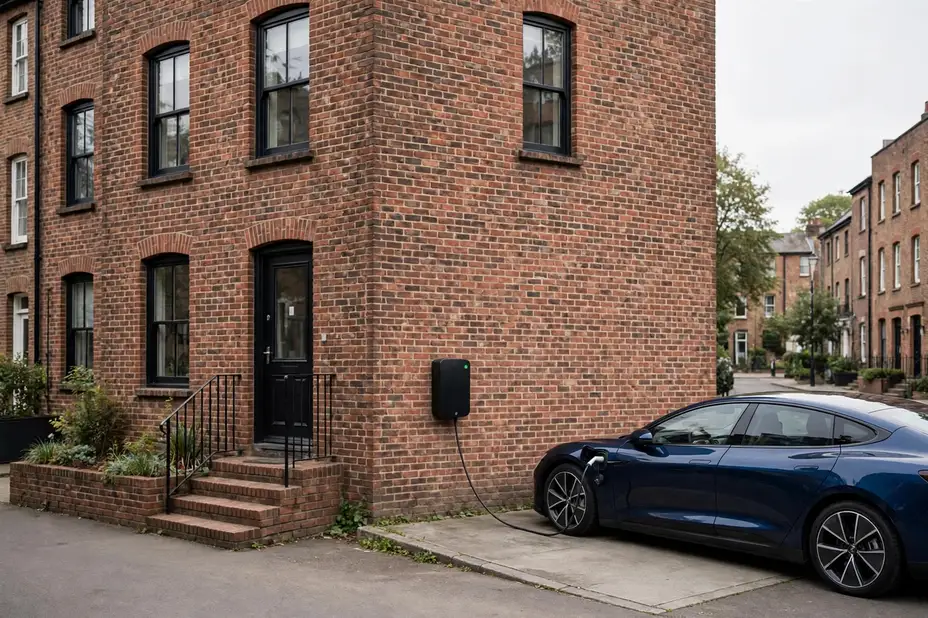
EV charging services in Wilmington
Three of the network's services lead this page because local conditions put them first; the remaining seven are one click away and equally available here. Each card states what the service involves — the matching itself is free of obligation until you accept an installer's quote.
Home EV Charger Installation in Wilmington
One circuit, one station, one inspection: the residential install in its usual form. An installer sizes the circuit to the household's driving, mounts the station where the cable reaches the port without drama, sets its output to the circuit it landed on, and leaves the paperwork filed with the house.
In Wilmington: the default first install for Wilmington's EV households — a station where the car already parks.
Dedicated Circuit & Electrical Panel Upgrade in Wilmington
When the arithmetic says the service is full, this is the enabling job: a larger panel, or a new dedicated circuit with capacity planned in, done under the same permit umbrella as the charger it feeds. It is also the upgrade the rest of the house quietly benefits from for decades.
In Wilmington: the capacity fix that lets the charger circuit go in without the rest of the house living at its limit.
Level 2 Charger Installation in Wilmington
What is being bought is time: the hours between arriving home and leaving again, converted into range at 240 volts. The conversion hardware is ordinary — breaker, conductor, station — and the design work is matching the three to the household's miles and the panel's arithmetic.
In Wilmington: the upgrade from a wall outlet to a dedicated 240-volt circuit, and the end of range arithmetic at bedtime.
Utility programs and electricity in Wilmington
Electricity in Wilmington comes from Duke Energy Progress. Parts of the wider metro are served by Virginia Electric & Power Co, Brunswick Electric Member Corp, City of Southport. The utility matters twice over for a charger install: it sets the time-of-use rates that decide what overnight charging costs you, and it is the organisation that may — or may not — currently help pay for the equipment.
Plan on no rebate in Wilmington at the moment. In the sources checked for this page, Duke Energy Progress publishes no residential charger rebate, North Carolina runs no state scheme for typical home installs, and the federal credit that once filled this gap closed on September 30, 2025. Installers quote the work; utilities fund programs; the second list is currently empty here, and any quote that implies otherwise should come with the program's published terms attached.
Solar households should read the export terms alongside the charging ones: the pair decides whether midday charging on home-working days beats the overnight window, and the answer is written in your tariff, not in general advice.
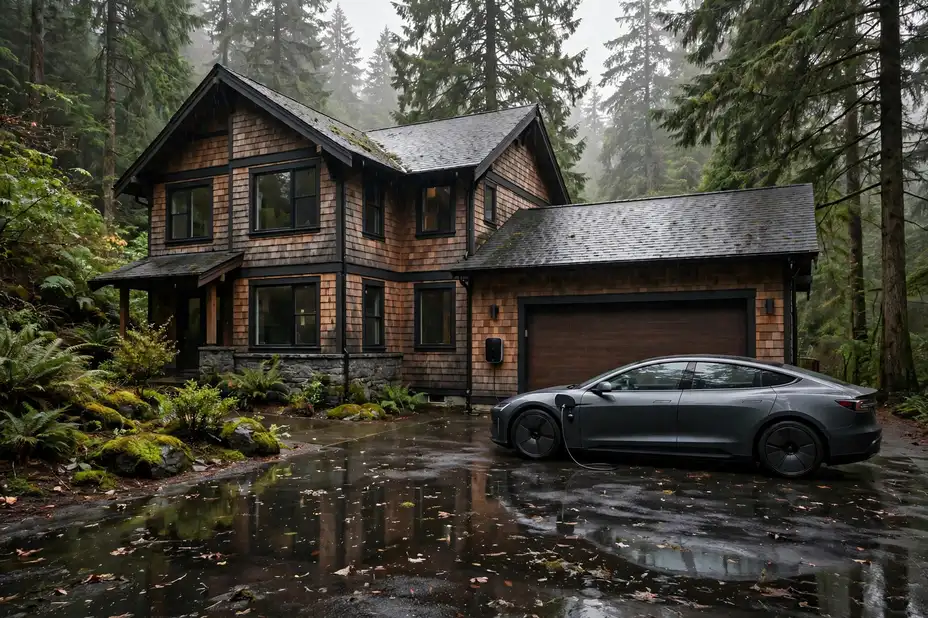
Condos, HOAs and the law in North Carolina
There is no North Carolina right-to-charge statute to lean on. Some national roundups list protection that does not exist in this state's code; the statute indexes checked for this page are clear. In Wilmington, a condo or HOA charger is approved — or not — under the community's own documents, which makes the quality of your application the whole ballgame.
There is also a longer game available to Wilmington owners: associations revise their documents, boards turn over, and state legislatures have been adding right-to-charge laws year after year. A written application — and, if it comes to it, a written refusal — is the record that each of those futures works from.
Our condo and HOA guide was written for both kinds of state; the chapters on application packages, metering and cost allocation are the ones that matter in Wilmington, where no statute does the persuading for you.
Climate, garages and charger placement
Sea-breeze evenings are the coast's natural charging window: the car cools, the grid exhales after the afternoon peak, and the household's own routine is home. Matching the schedule to that rhythm is a settings-screen decision, made once.
Salt air is the local fact: connectors, enclosures and fixings near the coast weather on a faster clock, and outdoor equipment earns its rating here. Stations belong in the most sheltered position the parking allows, terminals and connections get their protective treatment at install, and a yearly glance at the connector's contacts is a habit worth adopting from the start.

Permits and inspection in Wilmington
What the inspector is checking, in plain terms: conductor size against breaker size, the continuous-load calculation, terminations torqued, protection where the code wants it, and a station whose settings match the circuit it landed on. It is a short visit that validates everything you cannot see.

Neighbourhoods and ZIP codes served
The page covers 12 ZIP codes in and around Wilmington — including 28401, 28402, 28403, 28404, 28405, 28406, 28407, 28408, 28409, 28410, 28411, 28412 — across Brunswick, New Hanover. If your ZIP is not in the first set shown, ask anyway: installer coverage follows the metro, not a postcode fence.
The same working area takes in the neighbouring localities of Leland, Castle Hayne, Winnabow, Wrightsville Beach, Carolina Beach, Kure Beach, Bolivia, Southport, Supply, Oak Island, Shallotte, Ash, Ocean Isle Beach, Longwood — the county ring an installer based in Wilmington actually drives. Requests from those communities route exactly as city requests do: same services, same permit discipline, same local facts where they differ.
New Hanover County accounts for 15 of the ZIP codes and 5 named postal localities in the research file, the nearest of them Castle Hayne, Wrightsville Beach, Carolina Beach, Kure Beach. The survey counts 235,229 residents in the county, with a median household income of $75,166 and a median home value of $387,800. Brunswick County accounts for 14 of the ZIP codes and 13 named postal localities in the research file, the nearest of them Leland, Winnabow, Bolivia, Southport, Supply. The survey counts 152,568 residents in the county, with a median household income of $77,024 and a median home value of $349,800. Measured across its ZIP codes, the Wilmington footprint runs about 17 miles north to south and 8 east to west, from ZIP 28401 to 28412 — the ground an installer based here actually covers in a working week.
Beyond the county seats, the working area takes in Leland, Castle Hayne, Winnabow, Wrightsville Beach, Carolina Beach, Rocky Point, Kure Beach, Currie, Delco, Bolivia, Southport, Hampstead, Riegelwood, Burgaw, Bolton, Supply, Oak Island, Atkinson, Kelly, Holly Ridge, Council, Ivanhoe, Willard, Lake Waccamaw, Maple Hill, Harrells, Wallace, Hallsboro, Sneads Ferry, Teachey, Camp Lejeune, Rose Hill, Chinquapin, Jacksonville, Mccutcheon Field — the named localities for which Wilmington is the nearest metro in the network (neighbouring metros' pages cover their own ground), each routing to the same installer-matching service.
The wider working area also reaches Shallotte, Ash, Ocean Isle Beach, Longwood, Sunset Beach, Nakina, Calabash, Brunswick, Clarkton, Whiteville — ground shared with neighbouring metros, where installers cross the same county lines in both directions.
ZIP codes in that shared ground include 28420, 28424, 28433, 28452, 28455, 28459, 28467, 28468, 28469, 28470, 28472.
The largest communities in that working area after Wilmington itself, by the GeoNames populated-place file: Jacksonville (population 67,357), New Bern (population 30,070), Havelock (population 20,364), Leland (population 17,924), Masonboro (population 14,826), Murraysville (population 14,215), Piney Green (population 13,293), Morehead City (population 9,347), Myrtle Grove (population 8,875), Half Moon (population 8,352), Kings Grant (population 8,278), Oak Island (population 7,507), Ogden (population 6,766), Carolina Beach (population 6,137), James City (population 5,899), Boiling Spring Lakes (population 5,789), Long Beach (population 5,618), Silver Lake (population 5,598), Wrightsboro (population 4,896), Newport (population 4,723). Charging demand follows those populations — the subdivisions and town centres where the next driveways, and the next panels, are.
Pender County reaches into the working area with 65,550 residents, a median household income of $80,396 and a median home value of $299,000; its localities on this page include Rocky Point, Currie, Hampstead, Burgaw, Atkinson. Onslow County reaches into the working area with 207,906 residents, a median household income of $68,148 and a median home value of $236,400; its localities on this page include Holly Ridge, Sneads Ferry, Camp Lejeune, Jacksonville. Columbus County reaches into the working area with 50,140 residents, a median household income of $49,442 and a median home value of $146,000; its localities on this page include Delco, Riegelwood, Bolton, Lake Waccamaw, Hallsboro. Duplin County reaches into the working area with 49,335 residents, a median household income of $55,148 and a median home value of $137,400; its localities on this page include Wallace, Teachey, Rose Hill, Chinquapin. Bladen County reaches into the working area with 29,566 residents, a median household income of $42,422 and a median home value of $135,100; its localities on this page include Kelly, Council.
| ZIP | Locality | County |
|---|---|---|
| 28404 | Wilmington | Brunswick |
| 28401 | Wilmington | New Hanover |
| 28408 | Wilmington | New Hanover |
| 28403 | Wilmington | New Hanover |
| 28412 | Wilmington | New Hanover |
| 28405 | Wilmington | New Hanover |
| 28409 | Wilmington | New Hanover |
| 28451 | Leland | Brunswick |
| 28429 | Castle Hayne | New Hanover |
| 28479 | Winnabow | Brunswick |
| 28402 | Wilmington | New Hanover |
| 28480 | Wrightsville Beach | New Hanover |
| 28411 | Wilmington | New Hanover |
| 28406 | Wilmington | New Hanover |
| 28407 | Wilmington | New Hanover |
| 28410 | Wilmington | New Hanover |
| 28428 | Carolina Beach | New Hanover |
| 28457 | Rocky Point | Pender |
| 28449 | Kure Beach | New Hanover |
| 28435 | Currie | Pender |
| 28436 | Delco | Columbus |
| 28422 | Bolivia | Brunswick |
| 28461 | Southport | Brunswick |
| 28443 | Hampstead | Pender |
| 28456 | Riegelwood | Columbus |
| 28425 | Burgaw | Pender |
| 28423 | Bolton | Columbus |
| 28462 | Supply | Brunswick |
| 28465 | Oak Island | Brunswick |
| 28421 | Atkinson | Pender |
| 28448 | Kelly | Bladen |
| 28445 | Holly Ridge | Onslow |
| 28434 | Council | Bladen |
| 28447 | Ivanhoe | Sampson |
| 28478 | Willard | Pender |
| 28450 | Lake Waccamaw | Columbus |
| 28454 | Maple Hill | Pender |
| 28444 | Harrells | Sampson |
| 28466 | Wallace | Duplin |
| 28442 | Hallsboro | Columbus |
| 28460 | Sneads Ferry | Onslow |
| 28464 | Teachey | Duplin |
| 28542 | Camp Lejeune | Onslow |
| 28458 | Rose Hill | Duplin |
| 28521 | Chinquapin | Duplin |
| 28540 | Jacksonville | Onslow |
| 28541 | Jacksonville | Onslow |
| 28545 | Mccutcheon Field | Onslow |

Planning the install: from panel to parking
Think of the project as a chain with four links: capacity, route, placement, paperwork. Capacity is the load calculation. Route is the path copper takes from panel to parking — through a shared wall if you are lucky, across a ceiling or a trench if you are not. Placement is the unglamorous decision that governs daily life with the car for a decade: reach, cable slack, and which side the port is on. Paperwork is the permit and the passed inspection, the proof that outlives the installer's visit.
Plan for the household you will be, not just the car you have. A second EV is the most common reason a charger circuit gets revisited, and the cheap moment to prepare for it — conduit sized up, panel capacity reserved, station placement that serves two bays — is during the first install, while the permit is open and the electrician is already in the panel.
Home charging know-how for Wilmington households
The insurance conversation
A permitted charger installation is a short conversation with your insurer, and it is worth having before rather than after. The documented install — permit, inspection, listed equipment, licensed electrician — is the version insurers process without friction, because every question they ask is answered by the file. Undocumented electrical work is where claims go to become arguments. Tell the insurer the circuit exists, keep the paperwork with the policy documents, and the charger's insurance chapter closes in one phone call.
The driveway is shared infrastructure
In households where the charger serves a shared driveway, the install acquires a social protocol alongside its electrical one: whose night, which side, how the cable crosses, what happens when guests park across the route. The designs that work settle the protocol physically — a station reachable from both bays, a cable path that crosses no one's door swing — rather than relying on nightly negotiation. Infrastructure that requires diplomacy every evening was under-designed in the morning.
The school-run charge window
Households organised around school runs live on a distinctive charge curve: two short hops, a long parked day, an afternoon of activities. The car sits at home for the middle of the day — which, for solar households, is precisely the generation window, and for everyone else makes the overnight session almost an afterthought. Scheduling follows the family's actual day, not the tariff's assumption of one, and the installer who asks about the school run is designing, not chatting.
The charger and the home network
A networked station asks one thing of the house: a wireless signal that actually reaches the garage. Exterior walls, metal cladding and distance tax domestic Wi-Fi exactly where chargers live, and the household that checks signal strength at the mounting position before install day avoids the dead-zone discovery afterwards. Where the signal will not reach, the honest options are a network extension, a station chosen for offline competence, or cellular-connected equipment — decided in advance, not improvised on the day.

Frequently asked questions
Is the federal charger tax credit still available in Wilmington, NC?
Checked and dated: in the sources reviewed for this page, Duke Energy Progress runs no residential charger rebate, North Carolina runs no home-charger programme, and the federal credit that once filled the gap ended on September 30, 2025. If a salesperson's spreadsheet shows a rebate line for a Wilmington install, the published programme page is the only acceptable evidence.
What can my HOA in Wilmington, NC do about a charger install?
In Wilmington the honest answer is yes, they can refuse: North Carolina gives owners no statutory charging right, so the board's discretion governs. What changes outcomes is the quality of the file in front of them — drawings, metering, insurance, a named licensed installer — and a growing number of boards here approve exactly that file.
Panel upgrade or not — how do Wilmington, NC homeowners find out?
The question has a correct instrument: the load calculation. It totals what your service already carries — with the code's demand factors, not nameplate panic — and sets the charger's continuous load against the remainder. In Wilmington, where the median home dates to 1990 and about 39% of units predate 1980, the answer splits by street: post-war and newer 200-amp homes usually proceed; older 100-amp homes choose between capacity work and load management. Anyone answering without the calculation is guessing in a uniform.
Level 1 or Level 2 in Wilmington, NC — what is the real difference?
Think of it in parked hours. Level 1 gives you back 3–5 miles for each of them; Level 2 gives back about 25–40, set by the circuit's amperage and what the car can accept. Overnight, that is the gap between 'enough for tomorrow' and 'full, every morning'.
What happens after I request an installer through this page?
Your request is matched to licensed installers covering Wilmington, North Carolina — service, ZIP, property type and timing travel with it. The installer who takes it arranges the site visit and quotes in writing; PlugReady USA's part is the research on this page and the introduction, and your contract is with the installer throughout.
Do installers cover the communities around Wilmington, NC?
Yes — an installer's working area is the county ring, not the city limit. From this page the same request flow covers Leland, Castle Hayne, Winnabow, Wrightsville Beach, Carolina Beach and the rest of Wilmington's surrounding localities, under the same permit discipline and the same local facts where they differ.
Nearby cities in North Carolina
- EV charger installation in Fayetteville — about 78 miles from Wilmington, metro population 525,000
- EV charger installation in Raleigh — about 113 miles from Wilmington, metro population 1,500,000
- EV charger installation in Durham — about 133 miles from Wilmington, metro population 600,000
- EV charger installation in Greensboro — about 162 miles from Wilmington, metro population 800,000
- EV charger installation in Charlotte — about 173 miles from Wilmington, metro population 2,900,000
- EV charger installation in Winston-Salem — about 181 miles from Wilmington, metro population 700,000
- EV charger installation in Myrtle Beach, SC — about 57 miles from Wilmington, metro population 550,000
- EV charger installation in Florence, SC — about 101 miles from Wilmington, metro population 200,000
- EV charger installation in Sumter, SC — about 135 miles from Wilmington, metro population 110,000
Ready to charge at home in Wilmington?
Send the essentials — what you need, where, and what kind of property — and a licensed local installer will pick it up from there.