EV Charger Installation in Raleigh, NC
Everything a Raleigh homeowner needs before booking a charger install — the panel question, the utility's current programs, the HOA law and the permit — sourced, dated and local.
Every home charger installation is the same four decisions wearing local clothes: capacity in the panel, a route for the circuit, a position for the station, and paperwork that proves it was done properly. What changes from city to city is the content of those decisions — and in Raleigh the content is specific. Raleigh itself is home to about 499,637 people. North Carolina's registered fleet stood at 121,000 battery-electric vehicles and 35,500 plug-in hybrids at the end of 2025, and this page works through the local version of each decision: your utility and its programs, your state's association law, your permit counter, and your housing stock's electrical habits.
How to read this page in four minutes: the data band tells you what kind of housing city Raleigh is; the utility section tells you whether money is on the table; the law section tells you whether permission is a process or a negotiation; and the permit section tells you what proof the finished job leaves behind. The rest is elaboration.
Measured demand, not enthusiasm, put Raleigh in Tier A of this network: Research Triangle incomes + Duke Prep Credit; NC 121K BEVs. For a homeowner the useful translation is simpler — installers here do this work weekly, know the local permit counter, and have seen your housing stock before.
Three survey lines do most of the predictive work on this page. Income — a median of $85,060 per household — tracks the pace at which Raleigh households adopt EVs at all. Tenure — 50% owner-occupied — decides whose signature the work needs. And structure — 44% single-unit detached — decides how often the answer is a simple garage circuit rather than a building negotiation.

Every city charges differently, and Raleigh's difference is legible in the data: a comparatively young housing fabric, where modern services are the default; a genuinely mixed city — houses, townhouses and larger buildings all carry weight; buildings of five or more units hold a substantial share of homes, which keeps the multifamily sections of this page in daily use; renters form a large share of households, so the landlord conversation is a first-class topic here. Read the sections below through that profile and the local advice resolves into specifics — which questions are routine here, and which are rare.
Keep six figures and you keep Raleigh's whole electrical character: 234,750 housing units; 219,004 occupied homes; 108,529 owner-occupied; 104,054 detached houses; 52,749 pre-1980 homes; 83,399 homes in buildings of five or more units. Percentages elsewhere on this page are these numbers in disguise — the counts are the originals, and they are the numbers a local installer's experience is actually made of. The page's geography is equally concrete: 44 ZIP codes across Wake, centred near 35.77 degrees north latitude. The city anchors the Raleigh–Cary metropolitan area, home to roughly 1,500,000 people on the research file's metro estimate — the wider labour and housing market this page's installers work across.
The same survey release fills in the household economics around the housing stock: a median home value of $450,300, median gross rent of $1,661, per-capita income of $55,401, and a median resident age of 34. How the city moves completes the picture: 66% of Raleigh workers drive to work alone — the commute pattern home charging is built around; 22% work from home, a population whose cars charge on daytime and overnight schedules alike; 2% commute by public transit; 56% of adults hold a bachelor's degree or higher. And the fleet in the driveways: 89,173 households in Raleigh have exactly one vehicle, 115,460 have two or more, and 14,371 have none.
The cost-burden lines say who feels housing costs most in Raleigh: 52% of renters spend 30% or more of income on rent, and 0% of owners with mortgages spend the same share on housing costs. Family households are 52% of all households — the two-car, school-run demographic whose charging patterns this page's planning sections keep circling back to.
This is the context an installer works against, whether it is written down or not. Where the stock is this new, the city's charging story is a volume story — street after street of similar houses taking similar circuits, and installer pricing sharpened by repetition. Shared form means shared infrastructure decisions: a building that solves charging solves it for a generation of residents, which raises the stakes of the first design and the value of getting the metering right.
High renter share also means charging follows the lease cycle: applications cluster at move-in, installations at renewal leverage, and the whole market breathes on the rental calendar. Here the tariff conversation is a budget conversation: the overnight window's arithmetic, done honestly once, pays out every night of the car's life without further attention. A large utility's scale cuts both ways — programme budgets that dwarf a small co-op's, and call-centre distance between a household and anyone who can decide anything. The published page rules; keep it bookmarked.
Households here are rarely the first on their street; the local knowledge pool — which installer, which tariff, which board precedent — is deep and shared freely. In a market this size the matching problem inverts: not finding an installer, but filtering — licence, charging specialism, diary, and references from your own quadrant of the metro. Boards here decide without a statutory script, which makes precedent the currency: the first well-built application in a community quietly writes the policy for everyone after it.
The electrical reality in Raleigh homes
Four numbers organise everything an installer expects in Raleigh: median build year 1999; 22% of units built before 1980; 44% of the stock detached; 50% of occupied homes owner-occupied. Capacity, circuit routes and approval layers all correlate with those four. The paragraphs below are their commentary. A comparatively young housing stock works in a charger's favour: most homes here were built with 200-amp service and modern panels, so the circuit itself is usually the whole job. The questions that remain are placement, wire-run length and whether the garage layout suits a wall-mounted station or a pedestal. Detached houses matter for a practical reason: a garage or driveway on your own lot means the charger, the car and the circuit are all under one roof and one owner's control, which is the simplest configuration there is.
The fuel table adds one more local fact: 130,227 Raleigh homes — 60% of the stock — heat with electricity. Those households already think in kilowatts through the winter, their panels carry the load to prove it, and a charger's overnight appetite joins a system that is, in the useful sense, already electrified.
The tenure split cuts the other way too: roughly 110,475 occupied homes in Raleigh are rented. For those households the charger question is a negotiation with a property owner — written proposal, licensed installer, metering clarity — and it succeeds often enough that installers here keep the pattern ready.
And 36% of Raleigh's homes are in buildings with five or more units — apartments and condominiums where charging is a building decision before it is an electrical one. If that is your situation, the law and multifamily sections of this page are the ones written for you.
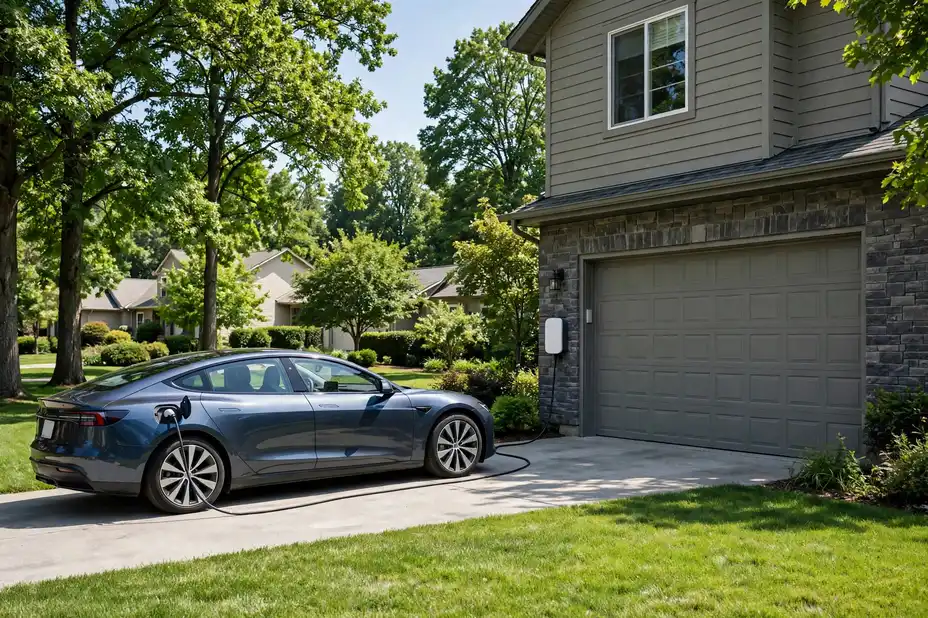
EV charging services in Raleigh
Three of the network's services lead this page because local conditions put them first; the remaining seven are one click away and equally available here. Each card states what the service involves — the matching itself is free of obligation until you accept an installer's quote.
Home EV Charger Installation in Raleigh
Think of it as plumbing for electrons, done once: capacity checked, circuit run, station mounted and configured, inspection passed. The households that report the smoothest projects describe the same shape — a visit that measured, a quote that itemised, and a car that simply charged from the first night.
In Raleigh: the default first install for Raleigh's EV households — a station where the car already parks.
Level 2 Charger Installation in Raleigh
Level 2 is where home charging becomes effortless: a dedicated 240-volt circuit returning a full battery overnight instead of a partial one by morning. The installer's work is the circuit itself — breaker, conductor, connection type — and the station's settings matched to it.
In Raleigh: 240 volts, sized honestly — the working definition of home charging in Raleigh.
Load Management & Smart Charging Setup in Raleigh
Smart scheduling pairs with smart limiting here — charge inside the cheap rate window, at whatever rate the house can spare at that moment. For many homes it converts an upgrade-sized problem into a device-sized one, with the same full battery by morning.
In Raleigh: letting a full Raleigh panel tell the truth about its valleys.
Utility programs and electricity in Raleigh
Electricity in Raleigh comes from Duke Energy Carolinas, LLC. Parts of the wider metro are served by Duke Energy Progress, Wake Electric Membership Corp, Town of Apex. The utility matters twice over for a charger install: it sets the time-of-use rates that decide what overnight charging costs you, and it is the organisation that may — or may not — currently help pay for the equipment.
Why does this page labour the absence of a rebate? Because in Raleigh the phantom rebate is the most common distortion in charger quotes: a figure justified by money that is not, at present, claimable. The verified position: federal 30C ended September 30, 2025; no North Carolina replacement for typical home installs; no Duke Energy Carolinas, LLC residential charger rebate in the sources checked. If someone quotes you a rebate, the follow-up is one sentence — show me the program page — and its answer decides the quote's credibility.
Before the install, it is worth a two-minute look at your tariff. Many Duke Energy Carolinas, LLC customers can move to a time-of-use plan where overnight energy is charged at a lower rate, and a scheduled charger makes that saving automatic.
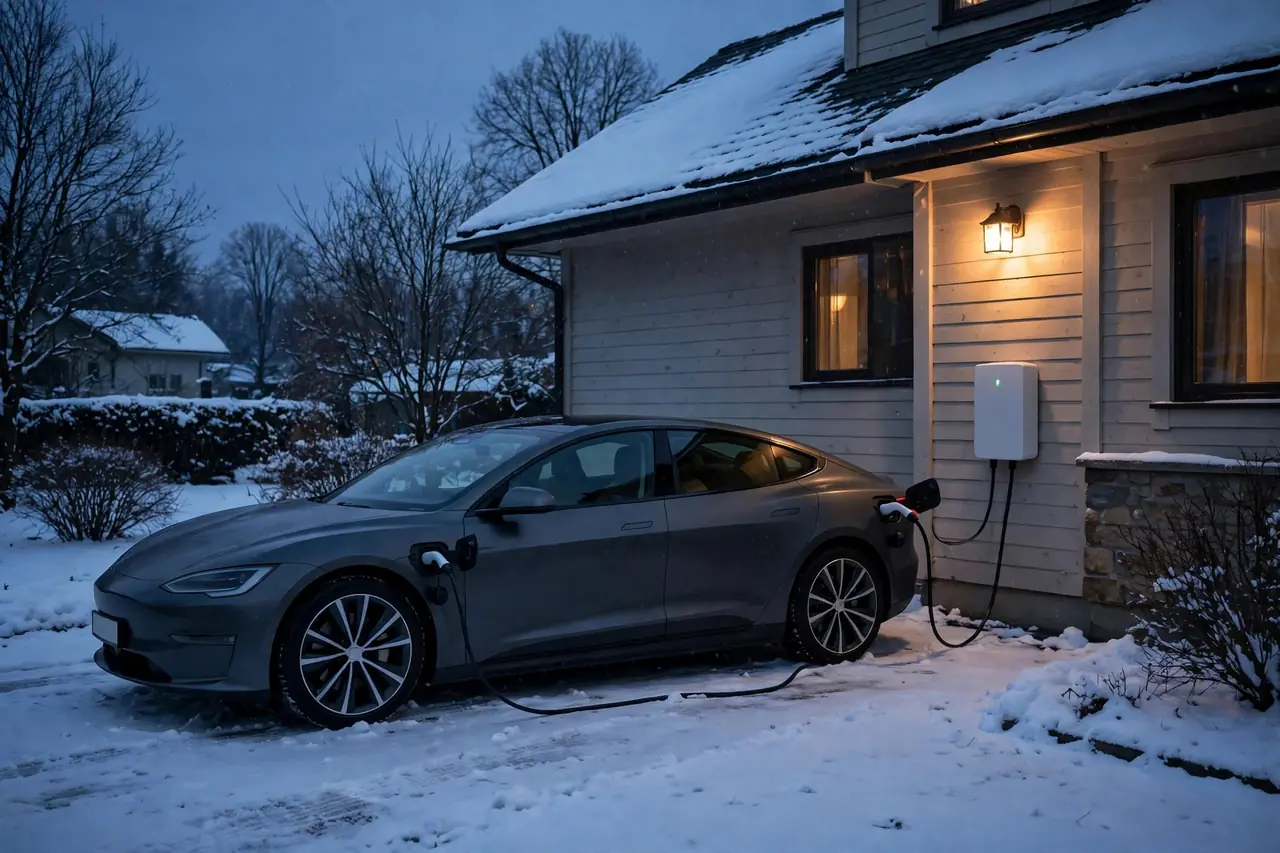
Condos, HOAs and the law in North Carolina
North Carolina has no statewide right-to-charge law. That needs saying plainly, because roundups on the internet sometimes claim otherwise: in the authoritative statute indexes checked for this page, no North Carolina law prevents a homeowners association or condominium from refusing a charger in a common or assigned space. Your community's own covenants and board govern the question in Raleigh.
No law does not mean no path. Boards approve chargers every week when the proposal answers their real concerns in advance: a licensed installer, a dedicated circuit that touches nothing shared, metering that keeps the electricity cost on the owner, insurance, and a commitment to restore the space on removal. Bring that package, in writing, before the meeting — not during it.
For the full playbook — application contents, metering designs, the questions boards ask — see the condo and HOA charging guide. In Raleigh it should be read as a negotiation manual, because negotiation is what the absence of a statute leaves you.
Climate, garages and charger placement
Charging through hurricane season is mostly a paperwork virtue: the documented, inspected install is the one insurers process without argument afterwards. It is one more reason the permit file matters more on this coastline than the equipment's colour does.
Humidity works on connections slowly and then all at once, which is why coastal installs are inspected with the terminations in mind: torqued at the visit, protected in the enclosure, and on the list for the occasional check. None of it adds drama to the job — it is simply the local version of doing it once and doing it right.

Permits and inspection in Raleigh
The normal sequence is the same across the metro: the installer files the electrical permit, installs to the current National Electrical Code (a charger is a continuous load, so the circuit is sized at 125% of the draw), and the city inspects before the job is signed off. Keep the passed inspection record — insurers, future buyers and warranty claims all ask for it.

Neighbourhoods and ZIP codes served
The page covers 44 ZIP codes in and around Raleigh — including 27601, 27602, 27603, 27604, 27605, 27606, 27607, 27608, 27609, 27610, 27611, 27612, 27613, 27614, 27615, 27616, 27617, 27619, 27620, 27621, 27622, 27623, 27624, 27625, 27626, 27627, 27628, 27629, 27634, 27635, 27636, 27640, 27650, 27656, 27658, 27661, 27668, 27675, 27676, 27690, 27695, 27697, 27698, 27699 — across Wake. If your ZIP is not in the first set shown, ask anyway: installer coverage follows the metro, not a postcode fence.
The same working area takes in the neighbouring localities of Garner, Knightdale, Cary, Apex, Morrisville, Wendell, Rolesville, Wake Forest, Holly Springs, Willow Spring, Fuquay Varina, Zebulon, New Hill — the county ring an installer based in Raleigh actually drives. Requests from those communities route exactly as city requests do: same services, same permit discipline, same local facts where they differ.
Wake County accounts for 64 of the ZIP codes and 14 named postal localities in the research file, the nearest of them Garner, Knightdale, Cary, Apex, Morrisville. The survey counts 1,178,653 residents in the county, with a median household income of $105,768 and a median home value of $461,300. Measured across its ZIP codes, the Raleigh footprint runs about 16 miles north to south and 12 east to west, from ZIP 27601 to 27699 — the ground an installer based here actually covers in a working week.
Beyond the county seats, the working area takes in Garner, Knightdale, Cary, Apex, Clayton, Wendell, Rolesville, Wake Forest, Holly Springs, Willow Spring, Fuquay Varina, Zebulon, New Hill, Youngsville, Wilsons Mills, Angier, Kipling, Middlesex, Smithfield, Franklinton, Bunn, Coats, Selma, Benson, Moncure, Micro, Pine Level, Four Oaks, Louisburg, Kenly, Bailey, Sims, Spring Hope, Princeton, Lucama, Wilson, Castalia, Black Creek, Nashville, Fremont, Goldsboro, Pikeville, Elm City, Sharpsburg, Red Oak — the named localities for which Raleigh is the nearest metro in the network (neighbouring metros' pages cover their own ground), each routing to the same installer-matching service.
The wider working area also reaches Morrisville, Durham, Buies Creek, Mamers, Stem, Pittsboro, Erwin, Kittrell, Hillsborough, Broadway, Bunnlevel, Lillington, Rougemont, Cumnock, Efland, Oxford, Gulf, Linden, Timberlake, Godwin, Falcon, Newton Grove, Saxapahaw, Henderson, Lemon Springs, Hurdle Mills, Goldston, Cedar Grove, Mebane, Bear Creek, Wade, Swepsonville, Bonlee, Snow Camp, Spring Lake — ground shared with neighbouring metros, where installers cross the same county lines in both directions.
ZIP codes in that shared ground include 27213, 27228, 27231, 27237, 27278, 27330, 27332, 27349, 27359, 27503, 27509, 27510, 27514, 27515, 27516, 27519, 27522, 27541, 27544, 27546, 27560, 27565, 27583, 27704, 27705, 27706, 27708, 27711, 27712, 27713, 27715, 27717, 28323, 28339, 28344, 28355, 28356, 28366, 28368, 28395.
The largest communities in that working area after Raleigh itself, by the GeoNames populated-place file: West Raleigh (population 338,759), Cary (population 159,769), Greenville (population 90,597), Rocky Mount (population 55,806), Wilson (population 49,643), Apex (population 45,585), Wake Forest (population 38,199), Goldsboro (population 35,826), Holly Springs (population 31,377), Garner (population 28,053), Fuquay-Varina (population 23,907), Morrisville (population 23,820), Kinston (population 21,337), Clayton (population 19,304), Roanoke Rapids (population 15,345), Knightdale (population 14,256), Smithfield (population 12,022), Tarboro (population 11,164), Washington (population 9,788), Winterville (population 9,464). Charging demand follows those populations — the subdivisions and town centres where the next driveways, and the next panels, are.
Johnston County reaches into the working area with 234,263 residents, a median household income of $83,384 and a median home value of $305,600; its localities on this page include Clayton, Wilsons Mills, Middlesex, Smithfield, Selma. Franklin County reaches into the working area with 74,386 residents, a median household income of $74,240 and a median home value of $284,300; its localities on this page include Youngsville, Franklinton, Bunn, Louisburg. Harnett County reaches into the working area with 139,150 residents, a median household income of $71,287 and a median home value of $246,200; its localities on this page include Angier, Kipling, Coats. Granville County reaches into the working area with 60,877 residents, a median household income of $71,111 and a median home value of $247,700; its localities on this page include Clayton. Chatham County reaches into the working area with 80,151 residents, a median household income of $94,317 and a median home value of $446,200; its localities on this page include Moncure.
| ZIP | Locality | County |
|---|---|---|
| 27601 | Raleigh | Wake |
| 27697 | Raleigh | Wake |
| 27605 | Raleigh | Wake |
| 27611 | Raleigh | Wake |
| 27620 | Raleigh | Wake |
| 27621 | Raleigh | Wake |
| 27622 | Raleigh | Wake |
| 27623 | Raleigh | Wake |
| 27624 | Raleigh | Wake |
| 27625 | Raleigh | Wake |
| 27626 | Raleigh | Wake |
| 27627 | Raleigh | Wake |
| 27628 | Raleigh | Wake |
| 27634 | Raleigh | Wake |
| 27635 | Raleigh | Wake |
| 27636 | Raleigh | Wake |
| 27640 | Raleigh | Wake |
| 27650 | Raleigh | Wake |
| 27656 | Raleigh | Wake |
| 27658 | Raleigh | Wake |
| 27661 | Raleigh | Wake |
| 27668 | Raleigh | Wake |
| 27675 | Raleigh | Wake |
| 27676 | Raleigh | Wake |
| 27690 | Raleigh | Wake |
| 27695 | Raleigh | Wake |
| 27698 | Raleigh | Wake |
| 27699 | Raleigh | Wake |
| 27610 | Raleigh | Wake |
| 27602 | Raleigh | Wake |
| 27608 | Raleigh | Wake |
| 27607 | Raleigh | Wake |
| 27606 | Raleigh | Wake |
| 27603 | Raleigh | Wake |
| 27604 | Raleigh | Wake |
| 27609 | Raleigh | Wake |
| 27629 | Raleigh | Wake |
| 27619 | Raleigh | Wake |
| 27612 | Raleigh | Wake |
| 27529 | Garner | Wake |
| 27545 | Knightdale | Wake |
| 27615 | Raleigh | Wake |
| 27511 | Cary | Wake |
| 27518 | Cary | Wake |
| 27616 | Raleigh | Wake |
| 27513 | Cary | Wake |
| 27613 | Raleigh | Wake |
| 27512 | Cary | Wake |
| 27614 | Raleigh | Wake |
| 27502 | Apex | Wake |
| 27523 | Apex | Wake |
| 27539 | Apex | Wake |
| 27528 | Clayton | Granville |
| 27591 | Wendell | Wake |
| 27571 | Rolesville | Wake |
| 27520 | Clayton | Johnston |
| 27587 | Wake Forest | Wake |
| 27540 | Holly Springs | Wake |
| 27592 | Willow Spring | Wake |
| 27527 | Clayton | Granville |
| 27526 | Fuquay Varina | Wake |
| 27588 | Wake Forest | Wake |
| 27597 | Zebulon | Wake |
| 27562 | New Hill | Wake |
| 27596 | Youngsville | Franklin |
| 27593 | Wilsons Mills | Johnston |
| 27501 | Angier | Harnett |
| 27543 | Kipling | Harnett |
| 27557 | Middlesex | Johnston |
| 27577 | Smithfield | Johnston |
| 27525 | Franklinton | Franklin |
| 27508 | Bunn | Franklin |
| 27521 | Coats | Harnett |
| 27576 | Selma | Johnston |
| 27504 | Benson | Johnston |
| 27559 | Moncure | Chatham |
| 27555 | Micro | Johnston |
| 27568 | Pine Level | Johnston |
| 27524 | Four Oaks | Johnston |
| 27549 | Louisburg | Franklin |
| 27542 | Kenly | Johnston |
| 27807 | Bailey | Nash |
| 27880 | Sims | Wilson |
| 27882 | Spring Hope | Nash |
| 27569 | Princeton | Johnston |
| 27851 | Lucama | Wilson |
| 27896 | Wilson | Wilson |
| 27816 | Castalia | Nash |
| 27895 | Wilson | Wilson |
| 27893 | Wilson | Wilson |

Planning the install: from panel to parking
A useful way to read any Raleigh quote is to ask which of three jobs it describes. Job one: the panel has room and the run is short — a circuit and a station. Job two: the panel is full — capacity work joins the quote, as an upgrade or as load management. Job three: the property adds people — an HOA, a landlord, a building's shared service — and the approvals timeline joins the electrical one. None of the three is a bad job; they are simply different scopes, and a clear quote says which one you are in.
Plan for the household you will be, not just the car you have. A second EV is the most common reason a charger circuit gets revisited, and the cheap moment to prepare for it — conduit sized up, panel capacity reserved, station placement that serves two bays — is during the first install, while the permit is open and the electrician is already in the panel.
Home charging know-how for Raleigh households
Charging while you travel
Cars left for weeks prefer a middle state of charge and a quiet life: plugged in, scheduled modestly, neither brimmed nor starved. The home station makes this effortless — the car sips as it wants, the household returns to a vehicle that is ready rather than recovered. Tell a housesitter nothing at all; there is nothing to do. It is one of home charging's under-sold virtues: the car manages its own storage, from your wall, while the house is empty.
Bidirectional charging, honestly framed
Vehicles that can return energy to a house or the grid exist, and the standards enabling them are settling — but for most households today it is a horizon technology, not a purchase category: it needs a compatible vehicle, bidirectional equipment, utility interconnection approval and a tariff that rewards it. None of that changes today's installation advice, except in one detail: conduit and panel capacity installed generously now are the same provisions a future bidirectional setup would want. Buy for the car you have; leave room for the one the industry is promising.
After the power comes back
Outages end untidily: a surge as the grid re-energises, a station mid-session interrupted, a car that resumes charging on its own schedule or waits for instruction depending on its settings. The household habits are minimal — know what your car and station each do on restoration, let the first post-outage session be a watched one, and treat any new tripping afterwards as information rather than nuisance. Equipment that rode out a storm badly usually says so promptly.
The insurance conversation
A permitted charger installation is a short conversation with your insurer, and it is worth having before rather than after. The documented install — permit, inspection, listed equipment, licensed electrician — is the version insurers process without friction, because every question they ask is answered by the file. Undocumented electrical work is where claims go to become arguments. Tell the insurer the circuit exists, keep the paperwork with the policy documents, and the charger's insurance chapter closes in one phone call.
The landlord's side of the charger
For a landlord, a charger circuit is an amenity with unusual arithmetic: it is visible in listings, filterable in searches, and durable across tenancies in a way paint is not. The questions that decide it are practical rather than visionary — whose meter the circuit hangs from, how the cost is recovered, what the end-of-tenancy position is — and each has a standard answer the multifamily sections of this site describe. Landlords who run the numbers tenant by tenant usually conclude the circuit earns its wall space.

Frequently asked questions
Can I still get the federal tax credit for a home charger in Raleigh, NC?
You cannot — it no longer exists. The 30C credit closed to equipment placed in service after September 30, 2025, and no North Carolina program replaced it for home installs. Nor did the sources checked for this page show a live Duke Energy Carolinas, LLC residential rebate. Treat any 'credit' mentioned in a quote as a request for paperwork.
Can my HOA or condo board in Raleigh, NC refuse my charger?
They hold the stronger hand, and it is better to plan with that admitted. North Carolina has enacted no right-to-charge law, so in Raleigh the covenants and the board govern. Owners who treat the application as a design submission — circuit, metering, insurance, restoration — rather than a request for a favour are the ones charging by the following quarter.
Panel upgrade or not — how do Raleigh, NC homeowners find out?
It hinges on two numbers you cannot read off the panel door: the service's rating, and what the load calculation says it already carries. The vintage of Raleigh's stock — median build year 1999, about 22% of homes from before 1980 — means both answers are common here. The charger enters the arithmetic at 125% of its draw; whatever room survives that entry decides between a circuit, a management device, and an upgrade.
How quickly will a Level 2 charger fill my car in Raleigh, NC?
Level 2 is several-fold faster in the only unit that matters — miles back per hour parked: roughly 25–40 against Level 1's 3–5. The exact figure follows the circuit: a 40-amp circuit and a 60-amp circuit are both Level 2, and the car's onboard limit may sit below either. Your installer matches the three numbers at the site visit.
What happens next after I send a request?
Three steps: the request routes to installers who work Raleigh, North Carolina; one contacts you to walk the property; the walk produces the written quote. Everything on this page — the utility position, the law, the housing data — is yours to check that quote against.
Does Duke Energy Carolinas, LLC offer a time-of-use rate for EV charging in Raleigh?
Check your tariff before the install rather than after: time-of-use plans are common, and an overnight window changes nothing about the circuit but everything about what charging costs across a year. Your installer can set the station's schedule to the window during commissioning — after that the habit is automatic.
Nearby cities in North Carolina
- EV charger installation in Durham — about 21 miles from Raleigh, metro population 600,000
- EV charger installation in Fayetteville — about 50 miles from Raleigh, metro population 525,000
- EV charger installation in Greensboro — about 66 miles from Raleigh, metro population 800,000
- EV charger installation in Winston-Salem — about 91 miles from Raleigh, metro population 700,000
- EV charger installation in Wilmington — about 113 miles from Raleigh, metro population 470,000
- EV charger installation in Charlotte — about 125 miles from Raleigh, metro population 2,900,000
- EV charger installation in Lynchburg, VA — about 113 miles from Raleigh, metro population 265,000
- EV charger installation in Florence, SC — about 126 miles from Raleigh, metro population 200,000
- EV charger installation in Roanoke, VA — about 127 miles from Raleigh, metro population 325,000
Ready to charge at home in Raleigh?
Two minutes of form, and the request is in front of licensed installers who cover this city — quotes follow site visits, in writing.