EV Charger Installation in Spokane, WA
Home Level 2 charging, panel upgrades and condo installs in Spokane — matched to licensed local installers, with the local facts that shape the job set out below.
Consider what a home charger actually replaces: the weekly detour, the public station's queue, the arithmetic of arriving home low. In Spokane, the replacement project is well understood because the fleet is already here — 236,400 battery-electric vehicles and 57,100 plug-in hybrids registered across Washington through 2025. Spokane itself is home to about 230,604 people. This page is the project's local brief: your utility and its programs, your state's law, your city's permit process, and your housing stock's electrical character, each stated with its source.
A note on what PlugReady USA is and is not: we publish the local research and run the matching; the installation itself belongs to licensed electricians and installer companies working in Spokane. Everything below is written so you can hold your own in that conversation — numbers first, sales language nowhere.
What the Experian and AFDC registration data say about Spokane–Spokane Valley: WA stock east of Cascades. Translated out of market language: your neighbours are already charging at home, the permit office already knows the paperwork, and the installers already know the housing stock.
Context from the Census Bureau's survey of Spokane: median household income $78,583; 60% of occupied homes are owner-occupied; 64% of housing units are single-unit detached houses. It is the profile of a city where the typical charger job is a homeowner job — scoped by the panel and the wire run, not by permissions.

Every city charges differently, and Spokane's difference is legible in the data: an older housing fabric, where panel archaeology is a normal part of the first visit; a detached-house majority with a real attached and multifamily minority; buildings of five or more units hold a substantial share of homes, which keeps the multifamily sections of this page in daily use; owners hold a working majority, with renters a significant minority. Read the sections below through that profile and the local advice resolves into specifics — which questions are routine here, and which are rare.
Keep six figures and you keep Spokane's whole electrical character: 104,627 housing units; 99,109 occupied homes; 59,065 owner-occupied; 67,440 detached houses; 70,285 pre-1980 homes; 23,844 homes in buildings of five or more units. Percentages elsewhere on this page are these numbers in disguise — the counts are the originals, and they are the numbers a local installer's experience is actually made of. The page's geography is equally concrete: 28 ZIP codes across Spokane, centred near 47.67 degrees north latitude. The city anchors the Spokane–Spokane Valley metropolitan area, home to roughly 600,000 people on the research file's metro estimate — the wider labour and housing market this page's installers work across.
The same survey release fills in the household economics around the housing stock: a median home value of $379,300, median gross rent of $1,341, per-capita income of $40,880, and a median resident age of 37. The movement data matters as much as the money data: 70% of Spokane workers drive to work alone — the commute pattern home charging is built around; 11% work from home, a population whose cars charge on daytime and overnight schedules alike; 3% commute by public transit; 36% of adults hold a bachelor's degree or higher. Vehicle ownership, from the same release: 56,350 households in Spokane run two or more vehicles, and 8,054 run none — the two ends of the market this page serves and does not serve.
Two burden statistics frame the economics: in Spokane, 45% of renters and 0% of mortgage-holding owners are housing-cost burdened at the standard 30% threshold. And 57% of households are family households, the segment most likely to run the two-vehicle, two-schedule pattern the second-vehicle planning notes address.
Read together, the local facts draw a recognisable picture. Pre-war and immediate post-war streets dominate the map, and their electrical fabric is stratified — original services beneath mid-century additions beneath modern subpanels, an archaeology the load calculation reads layer by layer. Mixed form means mixed timelines: a homeowner's install is a fortnight's scheduling, a condo's is a season's governance; the metro's charging growth arrives on both clocks at once.
Neither side dominates, so neither side's pattern sets the norm: the local market's standard documents include both the homeowner work order and the tenant proposal, kept in the same drawer. The specification pattern at this income band is disciplined: capacity for today's car and a conduit sized for tomorrow's, the upgrade deferred until the load calculation insists. Scale brings a call centre, but it also brings published everything — interconnection standards, programme terms, complaint statistics — and the published page, not the phone call, is where this utility is most honest.
At this volume the binding constraints move upstream — panel capacity in older districts, transformer headroom on particular streets, the diary of the good installer rather than the existence of one. At this scale the city's charging infrastructure is legible — a household can learn the whole local system, its programmes, precedents and people, in an evening's reading. This page is most of that evening. Shared-property households here work with a written legal position rather than a board's mood, which changes the application from a petition into a procedure.
The electrical reality in Spokane homes
Start with the survey's three operative figures for Spokane: median build year 1961; 67% of housing units standing since before 1980; 64% of the stock in single-unit detached houses, with 60% of occupied homes owner-occupied. Between them, they sketch the electrical city an installer works in. Age shows up electrically before it shows up anywhere else: services sized for a house with a third of today's appliances. Expect the first conversation to be about capacity — what the panel is, what it already feeds, and which of the three routes (circuit, management, upgrade) your numbers support. Owner-occupiers can plan on their own timeline; renters and condo owners have an extra approval layer, which the law section below covers for this state.
Heating fuel is the survey's quiet clue to panel life: in Spokane, 42% of homes heat electrically (41,832 households), against 55% heating with gas. A house already heating electrically has a service sized with that load in its history; a gas-heated house may have capacity to spare — either way the fuel mix is part of what the installer is reading.
Renters are the other constituency in these numbers: about 40,044 of Spokane's occupied homes are rented rather than owned. Their charging route runs through a landlord conversation instead of a panel they control — a different project, covered by the rentals guide and the law section below, but a routine one in a city with this many renting households.
The city's stock is not all houses: 23% of units are in structures of five or more. Shared buildings mean shared panels, assigned parking and association process — the substance of the multifamily sections below.
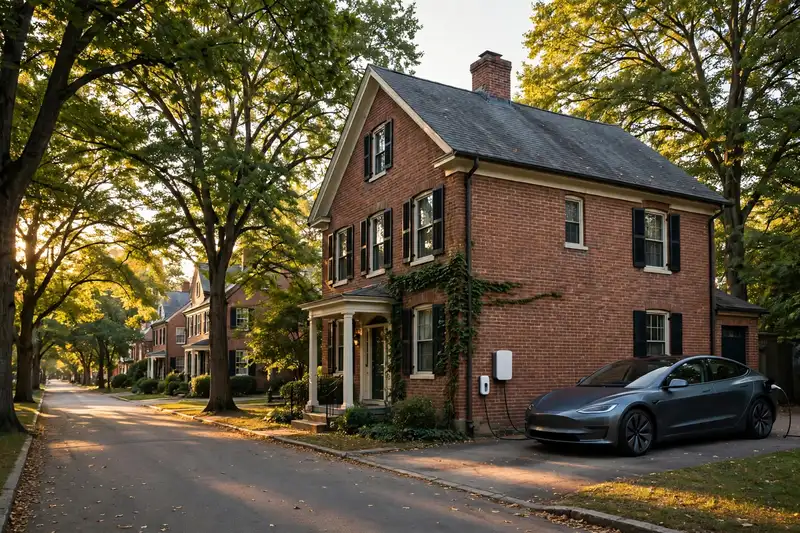
EV charging services in Spokane
An installer's work in Spokane usually starts with one of the three lead services below. The cards describe the job as it is actually scoped; the grid underneath carries the rest of the menu.
Home EV Charger Installation in Spokane
The standard first install: a dedicated circuit from the panel to the parking space, a station mounted and configured to that circuit, and a passed inspection to close it out. What changes from house to house is never the recipe — it is the panel's spare capacity, the length of the run, and how the car actually parks.
In Spokane: the install Spokane's new EV households book first, and the one the rest of this page keeps returning to.
Dedicated Circuit & Electrical Panel Upgrade in Spokane
Panel work is the one part of a charger project that outlives the car, the station and possibly the household's tenure. Specified generously and documented properly, it is less an expense than a permanent alteration in what the house can do.
In Spokane: service work that turns 'no room' into a circuit with headroom in Spokane homes.
Multifamily & Condo EV Charging in Spokane
In shared buildings the deliverable is a system, not a socket: an approved application, a metering design the treasurer can audit, capacity shared by rule rather than by argument, and only then conduit and copper. Firms fluent in the sequence are worth their diary time.
In Spokane: the route from board agenda to working charger in Spokane's communities.
Utility programs and electricity in Spokane
Electricity in Spokane comes from Avista Corp. Parts of the wider metro are served by Inland Power & Light Company, Vera Irrigation District #15, Modern Electric Water Company. The utility matters twice over for a charger install: it sets the time-of-use rates that decide what overnight charging costs you, and it is the organisation that may — or may not — currently help pay for the equipment.
Rebate status in Spokane: none verified. The utility and state sources checked for this page list no active residential charger rebate from Avista Corp, no Washington replacement program for home installs, and the federal 30C credit ended on September 30, 2025. When a funded round opens it appears on the utility's own program pages with terms and dates; until one does, the honest budget for a charger install here is the install itself.
While you are in the tariff pages, look at how the plan values the evening ramp — the hours when cooking, cooling and charging would otherwise stack. A charger that starts after the ramp is the simplest scheduling decision in home charging, and it is set once.
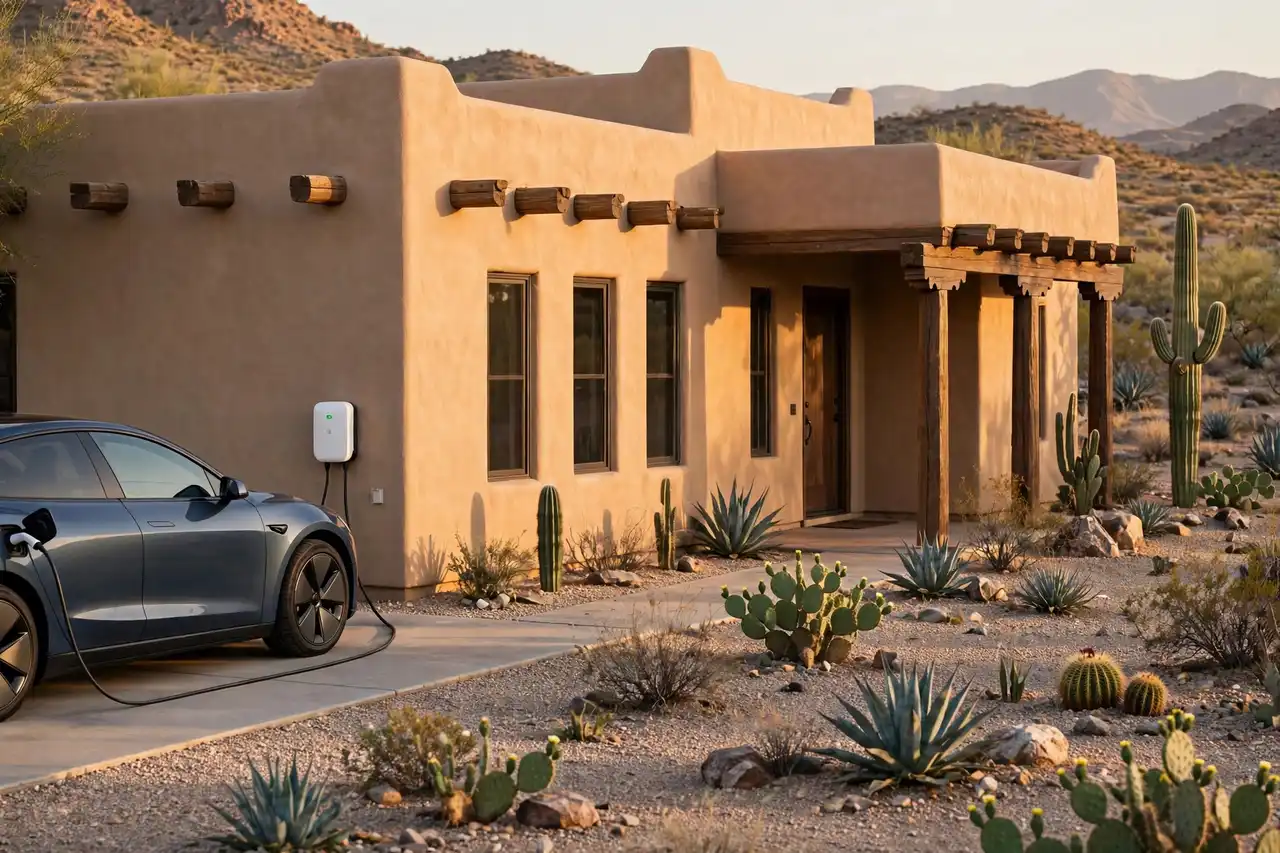
Condos, HOAs and the law in Washington
An association in Washington cannot simply say no. The right-to-charge law recorded for this state (RCW 64.90.510 and related association statutes) entitles an owner to install charging equipment for their own vehicle in their own parking space, subject to reasonable association conditions on placement, insurance and eventual restoration. For a Spokane owner, the practical consequence is that the application is a compliance exercise — equipment, circuit, paperwork — rather than a popularity contest at a board meeting.
If your board is stalling, the sequence that works in Spokane is boring and effective: cite the statute, submit a complete application (equipment, circuit, installer licence, insurance), and keep everything in writing.
The step-by-step version lives in our guide to installing an EV charger in a condo or HOA community — the application sequence, the metering designs and the questions boards ask, in order.
Climate, garages and charger placement
The first cold morning is the audit: cable flexibility, connector seating with gloved hands, the holster reachable without crossing the ice zone by the door. Installs designed in spring are graded in January, and local installers design for the grade.
Preconditioning is the cold-climate feature owners actually use: the car warms its battery and cabin from the wall while it is still plugged in, leaving with a full battery instead of spending the first miles on heat. It only works if the car is connected overnight — which is the whole argument for a home circuit that is effortless to use in gloves, in the dark, in February.

Permits and inspection in Spokane
Bring the panel schedule up to date while the electrician is in it — the new circuit labelled, in the directory, in pen. Inspectors notice; future electricians bless you for it; and the load calculation for any second circuit starts from that card.

Neighbourhoods and ZIP codes served
The page covers 28 ZIP codes in and around Spokane — including 99201, 99202, 99203, 99204, 99205, 99206, 99207, 99208, 99209, 99210, 99211, 99212, 99213, 99214, 99215, 99216, 99217, 99218, 99219, 99220, 99223, 99224, 99228, 99251, 99252, 99256, 99258, 99260 — across Spokane. If your ZIP is not in the first set shown, ask anyway: installer coverage follows the metro, not a postcode fence.
The same working area takes in the neighbouring localities of Marshall, Airway Heights, Mead, Four Lakes, Fairchild Air Force Base, Colbert, Nine Mile Falls, Valleyford, Veradale, Cheney, Medical Lake, Greenacres, Spangle, Mica — the county ring an installer based in Spokane actually drives. Requests from those communities route exactly as city requests do: same services, same permit discipline, same local facts where they differ.
Spokane County accounts for 53 of the ZIP codes and 26 named postal localities in the research file, the nearest of them Marshall, Airway Heights, Mead, Four Lakes, Fairchild Air Force Base. The survey counts 549,056 residents in the county, with a median household income of $78,582 and a median home value of $410,700. Measured across its ZIP codes, the Spokane footprint runs about 10 miles north to south and 15 east to west, from ZIP 99201 to 99260 — the ground an installer based here actually covers in a working week.
Beyond the county seats, the working area takes in Marshall, Airway Heights, Mead, Four Lakes, Fairchild Air Force Base, Colbert, Nine Mile Falls, Valleyford, Veradale, Cheney, Medical Lake, Greenacres, Spangle, Mica, Chattaroy, Deer Park, Rockford, Fairfield, Tumtum, Reardan, Clayton, Waverly, Elk, Ford, Edwall, Latah, Malden, Loon Lake, Rosalia, Springdale, Wellpinit, Valley, Thornton, Newport, Sprague, Oakesdale, Davenport, Lamont, Saint John, Belmont, Usk, Farmington — the named localities for which Spokane is the nearest metro in the network (neighbouring metros' pages cover their own ground), each routing to the same installer-matching service.
The wider working area also reaches Otis Orchards, Liberty Lake, Newman Lake, Post Falls, Rathdrum, Worley, Blanchard, Coeur d'Alene, Tekoa, Spirit Lake, Plummer, Hayden, Harrison, Oldtown, Athol — ground shared with neighbouring metros, where installers cross the same county lines in both directions.
ZIP codes in that shared ground include 83801, 83804, 83814, 83815, 83816, 83822, 83833, 83835, 83851, 83854, 83858, 83869, 83876, 83877, 99019, 99025, 99027, 99033.
The largest communities in that working area after Spokane itself, by the GeoNames populated-place file: Spokane Valley (population 94,919), Pullman (population 32,816), Opportunity (population 25,877), Cheney (population 11,534), Veradale (population 9,991), Dishman (population 9,978), Liberty Lake (population 8,906), Fairwood (population 7,905), Clarkston (population 7,317), Mead (population 7,275), Airway Heights (population 6,639), Clarkston Heights-Vineland (population 6,326), Country Homes (population 5,841), West Clarkston-Highland (population 5,261), Medical Lake (population 4,942), Town and Country (population 4,857), Colville (population 4,719), Trentwood (population 4,450), Deer Park (population 3,941), Colfax (population 2,870). Charging demand follows those populations — the subdivisions and town centres where the next driveways, and the next panels, are.
Whitman County reaches into the working area with 47,003 residents, a median household income of $55,406 and a median home value of $359,600; its localities on this page include Malden, Rosalia, Thornton, Oakesdale, Lamont. Stevens County reaches into the working area with 48,067 residents, a median household income of $69,327 and a median home value of $350,600; its localities on this page include Tumtum, Clayton, Ford, Loon Lake, Springdale. Lincoln County reaches into the working area with 11,489 residents, a median household income of $71,512 and a median home value of $292,800; its localities on this page include Edwall, Sprague, Davenport. Pend Oreille County reaches into the working area with 14,050 residents, a median household income of $67,436 and a median home value of $367,900; its localities on this page include Newport, Usk.
| ZIP | Locality | County |
|---|---|---|
| 99201 | Spokane | Spokane |
| 99209 | Spokane | Spokane |
| 99210 | Spokane | Spokane |
| 99211 | Spokane | Spokane |
| 99214 | Spokane | Spokane |
| 99215 | Spokane | Spokane |
| 99219 | Spokane | Spokane |
| 99220 | Spokane | Spokane |
| 99228 | Spokane | Spokane |
| 99251 | Spokane | Spokane |
| 99252 | Spokane | Spokane |
| 99256 | Spokane | Spokane |
| 99258 | Spokane | Spokane |
| 99260 | Spokane | Spokane |
| 99204 | Spokane | Spokane |
| 99205 | Spokane | Spokane |
| 99203 | Spokane | Spokane |
| 99202 | Spokane | Spokane |
| 99207 | Spokane | Spokane |
| 99208 | Spokane | Spokane |
| 99223 | Spokane | Spokane |
| 99218 | Spokane | Spokane |
| 99224 | Spokane | Spokane |
| 99212 | Spokane | Spokane |
| 99020 | Marshall | Spokane |
| 99213 | Spokane | Spokane |
| 99001 | Airway Heights | Spokane |
| 99206 | Spokane | Spokane |
| 99217 | Spokane | Spokane |
| 99021 | Mead | Spokane |
| 99014 | Four Lakes | Spokane |
| 99216 | Spokane | Spokane |
| 99011 | Fairchild Air Force Base | Spokane |
| 99005 | Colbert | Spokane |
| 99026 | Nine Mile Falls | Spokane |
| 99036 | Valleyford | Spokane |
| 99037 | Veradale | Spokane |
| 99004 | Cheney | Spokane |
| 99022 | Medical Lake | Spokane |
| 99016 | Greenacres | Spokane |
| 99031 | Spangle | Spokane |
| 99023 | Mica | Spokane |
| 99003 | Chattaroy | Spokane |
| 99006 | Deer Park | Spokane |
| 99030 | Rockford | Spokane |
| 99012 | Fairfield | Spokane |
| 99034 | Tumtum | Stevens |
| 99029 | Reardan | Spokane |
| 99110 | Clayton | Stevens |
| 99039 | Waverly | Spokane |
| 99009 | Elk | Spokane |
| 99013 | Ford | Stevens |
| 99008 | Edwall | Lincoln |
| 99018 | Latah | Spokane |
| 99149 | Malden | Whitman |
| 99148 | Loon Lake | Stevens |
| 99170 | Rosalia | Whitman |
| 99173 | Springdale | Stevens |
| 99040 | Wellpinit | Stevens |
| 99181 | Valley | Stevens |
| 99176 | Thornton | Whitman |
| 99156 | Newport | Pend Oreille |
| 99032 | Sprague | Lincoln |
| 99158 | Oakesdale | Whitman |
| 99122 | Davenport | Lincoln |
| 99017 | Lamont | Whitman |
| 99171 | Saint John | Whitman |
| 99104 | Belmont | Whitman |
| 99180 | Usk | Pend Oreille |
| 99128 | Farmington | Whitman |

Planning the install: from panel to parking
A useful way to read any Spokane quote is to ask which of three jobs it describes. Job one: the panel has room and the run is short — a circuit and a station. Job two: the panel is full — capacity work joins the quote, as an upgrade or as load management. Job three: the property adds people — an HOA, a landlord, a building's shared service — and the approvals timeline joins the electrical one. None of the three is a bad job; they are simply different scopes, and a clear quote says which one you are in.
Finally, photograph the finished work — station, nameplate, panel directory with the new breaker labelled — and file it with the inspection record. When the car changes, the house sells or a second station joins the first, that folder is the difference between a five-minute answer and an archaeological dig.
Home charging know-how for Spokane households
Why chargers slow themselves down
Charging equipment protects itself thermally: a station whose electronics run hot — a sun-baked wall, a sealed enclosure in a heatwave garage — reduces its output rather than cook. Owners experience it as an unexpectedly slow session on the year's hottest afternoon. It is the equipment working as designed, and the installation answers are environmental: shade, airflow, an enclosure that breathes as its listing intends. A session that derates in mild weather, by contrast, is a symptom worth an electrician's opinion.
The insurance conversation
A permitted charger installation is a short conversation with your insurer, and it is worth having before rather than after. The documented install — permit, inspection, listed equipment, licensed electrician — is the version insurers process without friction, because every question they ask is answered by the file. Undocumented electrical work is where claims go to become arguments. Tell the insurer the circuit exists, keep the paperwork with the policy documents, and the charger's insurance chapter closes in one phone call.
Protecting the station from the car
The most likely assailant of a garage charger is the car itself: a misjudged nose-in, a bicycle's handlebar, a ladder's fall. Placement is the first defence — out of the door swing, off the parking line's edge — and a simple bollard or wheel stop is the second where the geometry is tight. Outdoor pedestals earn the same thought against the snowplough's line and the delivery van's arc. It is carpentry, not electronics, and it belongs in the install conversation because the right time to protect a station is the day it is mounted.
Historic homes, modern loads
A house can be historically significant and electrically contemporary at once, but the marriage takes choreography: circuits routed through secondary spaces, equipment kept off protected fabric, the panel's growth planned where the preservation easement permits. The installers who do this work well treat the house's rules as a design brief rather than an obstacle, and the result — a period street front, a thoroughly modern garage — is the quiet norm in historic districts now.
The renter's route to a charger
Renters get chargers installed every week, on a simple insight: the proposal that works makes the landlord better off. A permitted circuit, installed by a licensed electrician at the tenant's expense, that remains with the property afterwards is not a favour to grant — it is an improvement to accept. The letter that carries it names the installer, the insurance, the metering arrangement for the electricity, and the restoration position at tenancy's end. Where this state's law gives tenants charging rights, the statute joins the letter; everywhere, the letter does the persuading.

Frequently asked questions
Is the federal charger tax credit still available in Spokane, WA?
You cannot — it no longer exists. The 30C credit closed to equipment placed in service after September 30, 2025, and no Washington program replaced it for home installs. Nor did the sources checked for this page show a live Avista Corp residential rebate. Treat any 'credit' mentioned in a quote as a request for paperwork.
What can my HOA in Spokane, WA do about a charger install?
Washington law (RCW 64.90.510 and related association statutes) limits that: associations cannot prohibit an owner's charger outright, though they can impose reasonable conditions on placement, insurance and restoration, and the owner pays for the installation. The process section above walks through it.
Does a Level 2 charger mean a panel upgrade for a Spokane, WA home?
Sometimes, and the honest route to the answer is arithmetic rather than opinion. Spokane's median home was built in 1961; roughly 67% of the stock predates 1980, which is where the 100-amp panels concentrate. If yours is one, expect the upgrade-or-management conversation; if it is a modern 200-amp service with spare spaces, expect a circuit. The site visit's calculation decides, and you are entitled to see it.
How quickly will a Level 2 charger fill my car in Spokane, WA?
Level 2 is several-fold faster in the only unit that matters — miles back per hour parked: roughly 25–40 against Level 1's 3–5. The exact figure follows the circuit: a 40-amp circuit and a 60-amp circuit are both Level 2, and the car's onboard limit may sit below either. Your installer matches the three numbers at the site visit.
What happens after I request an installer through this page?
Three steps: the request routes to installers who work Spokane, Washington; one contacts you to walk the property; the walk produces the written quote. Everything on this page — the utility position, the law, the housing data — is yours to check that quote against.
I live in a Spokane apartment or condo building — can I charge at home?
Yes, with the building as a partner rather than an obstacle. In Spokane, about 23% of homes sit in buildings of five or more units, so the pattern is established: a written proposal, a licensed installer, a metering design that charges the energy to you, and the association or landlord approving a package rather than a request. The law section above gives Washington's position; the multifamily service designs the rest.
Nearby cities in Washington
- EV charger installation in Kennewick — about 139 miles from Spokane, metro population 315,000
- EV charger installation in Wenatchee — about 160 miles from Spokane, metro population 125,000
- EV charger installation in Yakima — about 185 miles from Spokane, metro population 255,000
- EV charger installation in Mount Vernon — about 269 miles from Spokane, metro population 130,000
- EV charger installation in Seattle — about 270 miles from Spokane, metro population 4,000,000
- EV charger installation in Bremerton — about 287 miles from Spokane, metro population 275,000
- EV charger installation in Coeur d'Alene, ID — about 36 miles from Spokane, metro population 180,000
- EV charger installation in Missoula, MT — about 196 miles from Spokane, metro population 125,000
- EV charger installation in Boise, ID — about 288 miles from Spokane, metro population 800,000
Ready to charge at home in Spokane?
Tell us the job — service, ZIP and property type — and licensed local installers will take it from there.