EV Charger Installation in Ogden, UT
Everything a Ogden homeowner needs before booking a charger install — the panel question, the utility's current programs, the HOA law and the permit — sourced, dated and local.
A decade of EV adoption has quietly sorted Ogden's streets into two kinds: the ones where charging already happens behind garage doors, and the ones where the first charger on the block is about to arrive. Either way, the questions are identical and local. Ogden itself is home to about 88,661 people. Across Utah, 68,400 battery-electric vehicles and 19,200 plug-in hybrids were registered through 2025. Which utility serves the address and what it currently offers, what the panel can honestly carry, what an association may and may not refuse, what the permit office expects — this page answers each for Ogden, from sources, with the dates attached.
How PlugReady USA works, in one breath: you describe the job once, licensed local installers who cover Ogden receive it, and the conversations happen with them directly. The rest of this page exists so those conversations start from facts — yours about the house, ours about the metro — rather than from a sales script.
What the Experian and AFDC registration data say about Ogden–Clearfield: Wasatch Front; UT adoption. Translated out of market language: your neighbours are already charging at home, the permit office already knows the paperwork, and the installers already know the housing stock.
The same survey puts median household income in Ogden at $74,449, with 62% of occupied homes owner-occupied and 56% of the housing stock single-unit detached. For charging, those are the operative facts: owners can approve their own electrical work, and detached homes put the car, the panel and the parking under one roof.

The composite picture matters more than any single statistic. In Ogden: an older housing fabric, where panel archaeology is a normal part of the first visit; a detached-house majority with a real attached and multifamily minority; buildings of five or more units hold a substantial share of homes, which keeps the multifamily sections of this page in daily use; meanwhile, owners hold a working majority, with renters a significant minority. A page that ignored that profile would give the same advice everywhere; this one is ordered by it.
Keep six figures and you keep Ogden's whole electrical character: 36,569 housing units; 33,399 occupied homes; 20,579 owner-occupied; 20,601 detached houses; 23,012 pre-1980 homes; 8,774 homes in buildings of five or more units. Percentages elsewhere on this page are these numbers in disguise — the counts are the originals, and they are the numbers a local installer's experience is actually made of. The page's geography is equally concrete: 13 ZIP codes across Weber, centred near 41.24 degrees north latitude. The city anchors the Ogden–Clearfield metropolitan area, home to roughly 725,000 people on the research file's metro estimate — the wider labour and housing market this page's installers work across.
The same survey release fills in the household economics around the housing stock: a median home value of $370,500, median gross rent of $1,479, per-capita income of $35,803, and a median resident age of 34. The movement data matters as much as the money data: 76% of Ogden workers drive to work alone — the commute pattern home charging is built around; 9% work from home, a population whose cars charge on daytime and overnight schedules alike; 2% commute by public transit; 26% of adults hold a bachelor's degree or higher. The survey's vehicle table is the one an EV page should quote first: 3,848 of Ogden's households have no vehicle at all, while 19,834 have two or more — the multi-car households for whom the second circuit is a when, not an if.
Household structure, from the same release: 59% of Ogden households are family households. The burden shares behind the housing stock: 51% of renting households are cost-burdened at the 30%-of-income line, as are 0% of mortgaged owners — context for why the overnight rate window, once set, is treated here as a household fixture rather than a hobby.
Read together, the local facts draw a recognisable picture. Where so much of the stock predates modern code cycles, the site visit doubles as a survey — grounding electrode, service entrance, panel provenance — before it is ever a quote. Installers here run two trades in one van — domestic circuits in the morning, a building's shared-service design in the afternoon — and the city's pages, this one included, have to serve both readers.
Neither side dominates, so neither side's pattern sets the norm: the local market's standard documents include both the homeowner work order and the tenant proposal, kept in the same drawer. Middle incomes discipline the specification toward the durable middle: not the minimum circuit that passes, not the maximal one that impresses — the one the load calculation actually indicates, documented. The commission's calendar quietly schedules the market: when a new time-of-use design is approved, installer phones ring in a pattern the docket predicted months earlier.
Visibility is the growth engine: every driveway install is a demonstration, and the metro's adoption curve is being drawn one cul-de-sac at a time. Mid-sized metros feel fleet growth personally: each year's registrations are visible in the school car park and the permit statistics, and the installer market grows in step rather than in surges. Where the state's statute speaks, the local conversation changes register: installers quote the framework, boards keep counsel's template, and approvals become administrative.
The electrical reality in Ogden homes
Start with the survey's three operative figures for Ogden: median build year 1969; 63% of housing units standing since before 1980; 56% of the stock in single-unit detached houses, with 62% of occupied homes owner-occupied. Between them, they sketch the electrical city an installer works in. A housing stock this age leans on smaller electrical services — 100-amp panels are common, and fuse-era equipment still turns up in the oldest streets. For many of those homes the honest answer is a panel upgrade or a load-management device before the charger circuit goes in, and a good installer will show you the load calculation rather than asking you to take it on faith. Owner-occupiers can plan on their own timeline; renters and condo owners have an extra approval layer, which the law section below covers for this state.
Heating fuel is the survey's quiet clue to panel life: in Ogden, 18% of homes heat electrically (6,034 households), against 81% heating with gas. A house already heating electrically has a service sized with that load in its history; a gas-heated house may have capacity to spare — either way the fuel mix is part of what the installer is reading.
One further split matters for how this page is organised: about 12,820 of Ogden's occupied homes are renter-occupied. Everything above assumes you can approve your own electrical work; where you cannot, the approval layer — landlord or association — becomes part of the job, which is why the law section carries unusual weight here.
The city's stock is not all houses: 24% of units are in structures of five or more. Shared buildings mean shared panels, assigned parking and association process — the substance of the multifamily sections below.
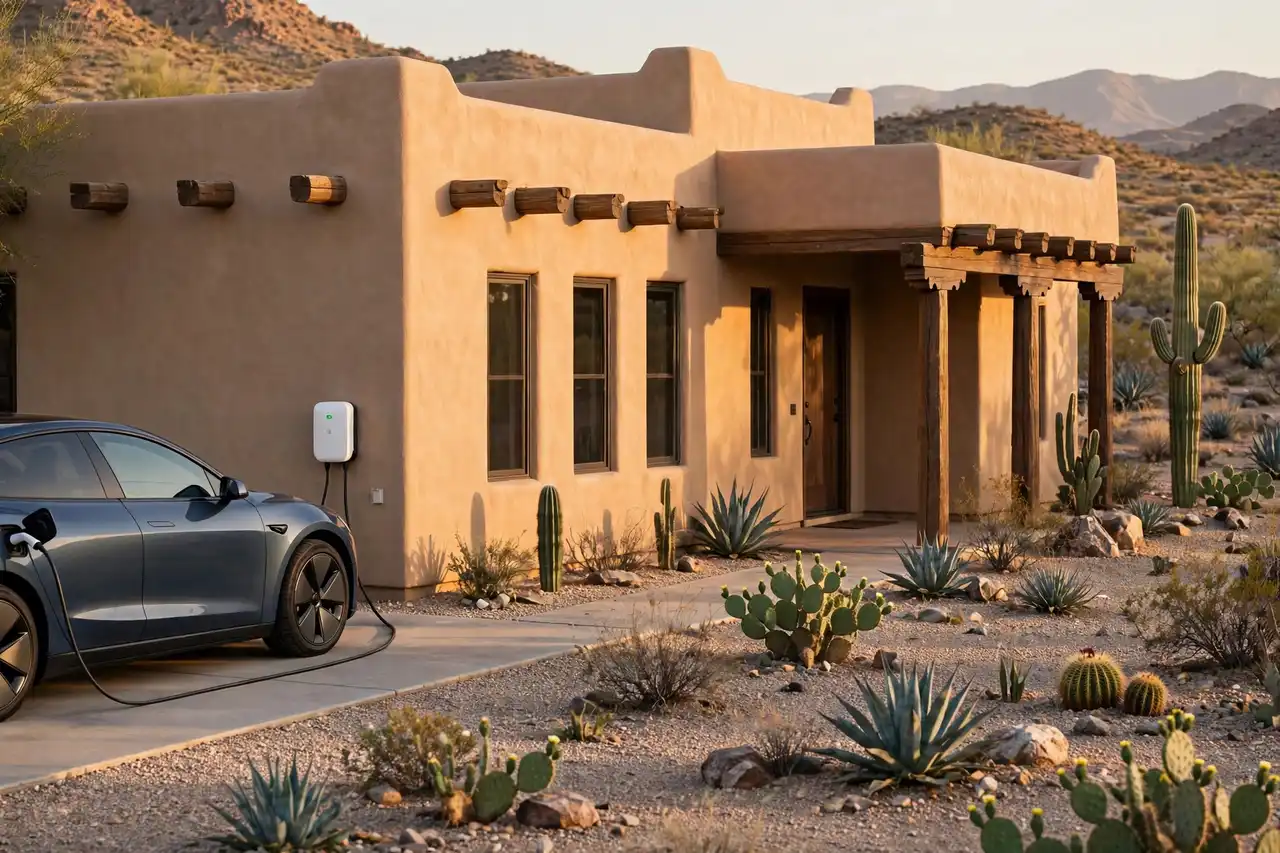
EV charging services in Ogden
An installer's work in Ogden usually starts with one of the three lead services below. The cards describe the job as it is actually scoped; the grid underneath carries the rest of the menu.
Home EV Charger Installation in Ogden
One circuit, one station, one inspection: the residential install in its usual form. An installer sizes the circuit to the household's driving, mounts the station where the cable reaches the port without drama, sets its output to the circuit it landed on, and leaves the paperwork filed with the house.
In Ogden: where most Ogden projects start and finish: one circuit, one station, one inspection.
Dedicated Circuit & Electrical Panel Upgrade in Ogden
A service change is the least reversible and most enabling job on this page: it re-bases the whole house's electrical life. Done inside the charger project, it shares the permit, the utility visit and the electrician's day with the circuit it makes room for.
In Ogden: the job that surfaces wherever housing is older — and Ogden's stock makes it a routine conversation, settled by a load calculation.
Multifamily & Condo EV Charging in Ogden
Shared buildings convert charging from a purchase into a policy, and the installers fluent here speak both languages — amperage and agenda items. The electrical design that wins approval is the one whose metering and load answers arrive attached to the application.
In Ogden: assigned-space and shared charging for Ogden buildings, including the metering that keeps costs on the right owner.
Utility programs and electricity in Ogden
Electricity in Ogden comes from PacifiCorp. The utility matters twice over for a charger install: it sets the time-of-use rates that decide what overnight charging costs you, and it is the organisation that may — or may not — currently help pay for the equipment.
Program status is a snapshot, and this page dates its snapshot: sources checked at build time found no PacifiCorp residential charger rebate, no Utah home-charger program, and a federal credit that ended September 30, 2025. Ogden households should treat that as the position until a utility announcement changes it — utilities publish openings prominently when budgets exist, because unspent program money is a problem for them too.
One more utility habit worth copying from Ogden's EV owners: charge on the overnight rate window if your plan has one. The charger itself can usually be scheduled from the car or the station, so the habit costs nothing once it is set.
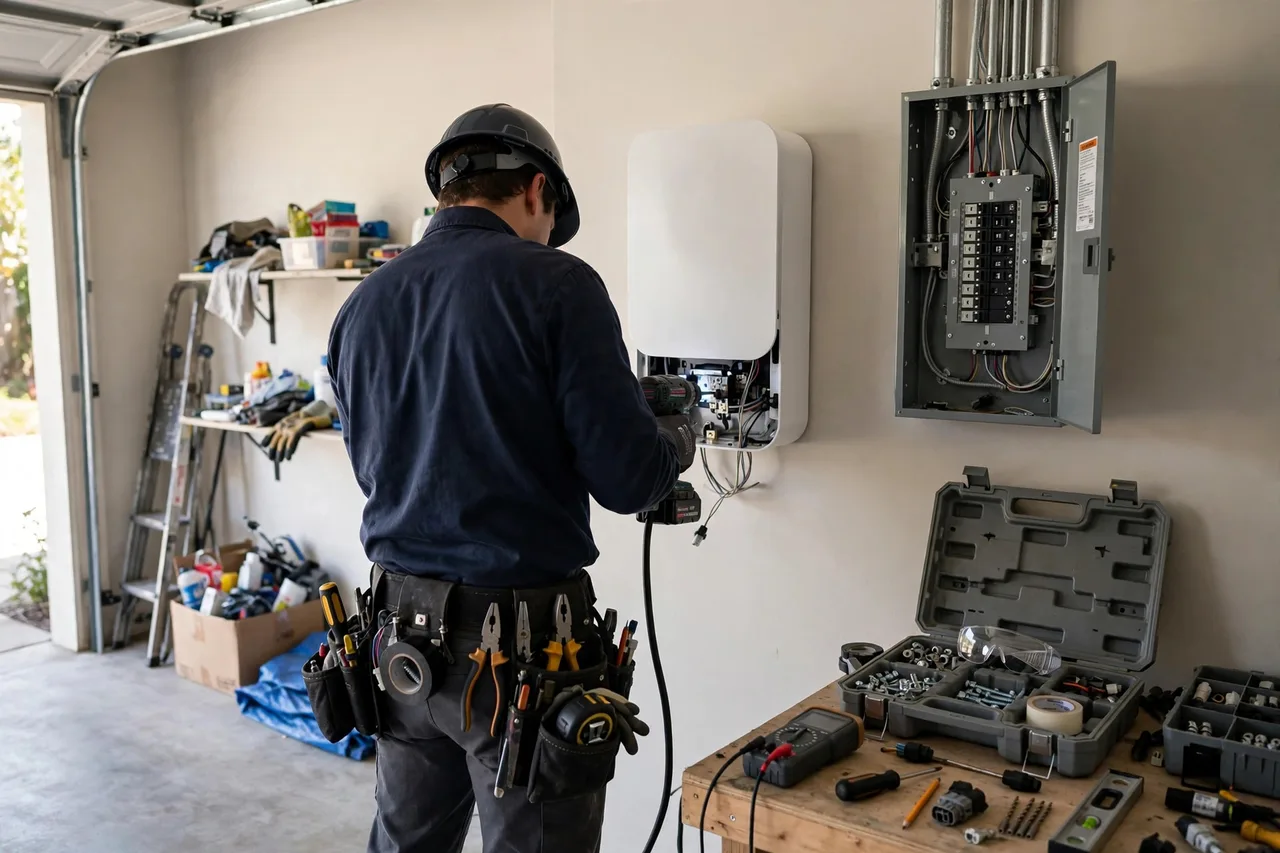
Condos, HOAs and the law in Utah
An association in Utah cannot simply say no. The right-to-charge law recorded for this state (UCA §57-8-8.2 (condo); §57-8a-802 (HOA)) entitles an owner to install charging equipment for their own vehicle in their own parking space, subject to reasonable association conditions on placement, insurance and eventual restoration. For a Ogden owner, the practical consequence is that the application is a compliance exercise — equipment, circuit, paperwork — rather than a popularity contest at a board meeting.
For renters, coverage in Utah is recorded as: Owners. If you rent in Ogden, the practical route is still a written proposal to the landlord — dedicated circuit, licensed installer, your name on the permit — because a charger-ready space is an asset most landlords keep when you leave.
Read the full process in our guide to installing an EV charger in a condo or HOA community, and the multifamily and condo charging service page for how shared and assigned-space installs are designed.
Climate, garages and charger placement
The desert garage can be the hottest room in the Southwest by late afternoon, which is why arid-metro charging is a night industry. The station's thermal management and the car's agree on the schedule independently — after midnight, when the slab has given back the day's heat and the tariff is at its kindest.
Monsoon-season habits, where the desert has them: exterior equipment sealed against wind-driven dust and sudden water, runs pitched clear of the flash drainage paths every local knows by sight, and a connector that lives holstered rather than on gravel. The desert is gentle on chargers that respect it.

Permits and inspection in Ogden
Timelines are set by the city's counter, not the installer: the electrical work itself is typically a day, while permit issuance and the inspection visit follow the department's queue. A quote that promises a date should tell you which parts of that date the installer actually controls.

Neighbourhoods and ZIP codes served
The page covers 13 ZIP codes in and around Ogden — including 84201, 84244, 84401, 84402, 84403, 84404, 84405, 84407, 84408, 84409, 84412, 84414, 84415 — across Weber. If your ZIP is not in the first set shown, ask anyway: installer coverage follows the metro, not a postcode fence.
The same working area takes in the neighbouring localities of Roy, Hooper, Eden, Huntsville — the county ring an installer based in Ogden actually drives. Requests from those communities route exactly as city requests do: same services, same permit discipline, same local facts where they differ.
Weber County accounts for 17 of the ZIP codes and 5 named postal localities in the research file, the nearest of them Roy, Hooper, Eden, Huntsville. The survey counts 269,648 residents in the county, with a median household income of $90,005 and a median home value of $426,700. Measured across its ZIP codes, the Ogden footprint runs about 9 miles north to south and 3 east to west, from ZIP 84201 to 84415 — the ground an installer based here actually covers in a working week.
Beyond the county seats, the working area takes in Roy, Clearfield, Hill Afb, Hooper, Eden, Willard, Layton, Syracuse, Huntsville, Kaysville, Mantua, Brigham City, Morgan, Corinne, Croydon, Evanston — the named localities for which Ogden is the nearest metro in the network (neighbouring metros' pages cover their own ground), each routing to the same installer-matching service.
The wider working area also reaches Deweyville, Mendon, Providence, Garland, Echo, Collinston, Cache Junction, Hyde Park, Sandy, Park City, Cornish, Richmond, Herriman, Tooele, Peoa, Draper, Alpine, Laketown, Eagle Mountain, Dayton, Heber City, Cedar Valley, Wallsburg, Paris, Mapleton, Thatcher, Downey, Montpelier, Elberta, Eureka, Goshen, Fort Bridger, Frontier, Arimo, Arbon — ground shared with neighbouring metros, where installers cross the same county lines in both directions.
ZIP codes in that shared ground include 82931, 82933, 82937, 82939, 83209, 83220, 83238, 83254, 83263, 83281, 83283, 83286, 84004, 84014, 84020, 84028, 84032, 84036, 84044, 84045, 84049, 84058, 84065, 84069, 84086, 84089, 84090, 84091, 84092, 84098, 84108, 84112, 84119, 84120, 84127, 84139, 84165, 84170, 84301, 84305.
The largest communities in that working area after Ogden itself, by the GeoNames populated-place file: Layton (population 74,143), Roy (population 37,964), Clearfield (population 30,653), Kaysville (population 30,472), Syracuse (population 27,395), Clinton (population 21,399), Brigham City (population 18,752), North Ogden (population 18,446), South Ogden (population 16,955), Evanston (population 12,133), West Haven (population 11,921), West Point (population 10,345), Pleasant View (population 9,273), Washington Terrace (population 9,157), Riverdale (population 8,666), Hooper (population 8,214), South Weber (population 6,971), Farr West (population 6,616), Plain City (population 6,299), Harrisville (population 6,221). Charging demand follows those populations — the subdivisions and town centres where the next driveways, and the next panels, are.
Davis County reaches into the working area with 370,924 residents, a median household income of $110,884 and a median home value of $505,500; its localities on this page include Clearfield, Hill Afb, Layton, Syracuse. Box Elder County reaches into the working area with 61,246 residents, a median household income of $84,550 and a median home value of $403,600; its localities on this page include Willard, Mantua, Brigham City, Corinne. Morgan County reaches into the working area with 12,802 residents, a median household income of $130,929 and a median home value of $654,900; its localities on this page include Morgan, Croydon.
| ZIP | Locality | County |
|---|---|---|
| 84201 | Ogden | Weber |
| 84404 | Ogden | Weber |
| 84407 | Ogden | Weber |
| 84244 | Ogden | Weber |
| 84402 | Ogden | Weber |
| 84409 | Ogden | Weber |
| 84412 | Ogden | Weber |
| 84415 | Ogden | Weber |
| 84401 | Ogden | Weber |
| 84408 | Ogden | Weber |
| 84403 | Ogden | Weber |
| 84405 | Ogden | Weber |
| 84414 | Ogden | Weber |
| 84067 | Roy | Weber |
| 84015 | Clearfield | Davis |
| 84056 | Hill Afb | Davis |
| 84315 | Hooper | Weber |
| 84016 | Clearfield | Davis |
| 84310 | Eden | Weber |
| 84340 | Willard | Box Elder |
| 84041 | Layton | Davis |
| 84075 | Syracuse | Davis |
| 84040 | Layton | Davis |
| 84317 | Huntsville | Weber |
| 84037 | Kaysville | Davis |
| 84324 | Mantua | Box Elder |
| 84302 | Brigham City | Box Elder |
| 84050 | Morgan | Morgan |
| 84307 | Corinne | Box Elder |
| 84018 | Croydon | Morgan |
| 82930 | Evanston | Uinta |

Planning the install: from panel to parking
Experienced Ogden installers talk about 'the tell': the small observation that predicts the job. A panel directory in pencil with three generations of handwriting. A garage converted, then converted back. A charger-shaped hole in the household's plans — the second car already ordered. Mention your own tells at the visit; they are scope information, and scope named early is scope settled fairly.
One more piece of sequencing advice Ogden installers give consistently: if the panel is being opened anyway, settle the other electrical maybes in the same visit — the circuit you will want next year costs least while the permit and the electrician are already in the house.
Home charging know-how for Ogden households
The renter's route to a charger
Renters get chargers installed every week, on a simple insight: the proposal that works makes the landlord better off. A permitted circuit, installed by a licensed electrician at the tenant's expense, that remains with the property afterwards is not a favour to grant — it is an improvement to accept. The letter that carries it names the installer, the insurance, the metering arrangement for the electricity, and the restoration position at tenancy's end. Where this state's law gives tenants charging rights, the statute joins the letter; everywhere, the letter does the persuading.
HOA rules and the single-family exterior
Owning the house does not always settle the charger's exterior chapter: architectural-approval clauses in many communities reach visible equipment, conduit runs on front elevations, and anything mounted streetside. The practical route is a five-minute check of the covenants before the install, and, where approval applies to exterior work, a small application — equipment photo, mounting position, conduit path — that reads as a courtesy because it is one. Interior garage installs in most single-family communities are entirely the owner's affair; it is the visible fraction that earns the paperwork.
The charger among the electrification stack
Few households electrify one appliance at a time for long. The charger arrives, then the heat pump conversation starts, then the induction range. Each addition is a load-calculation event, and the households that fare well treat them as one programme: capacity planned once, circuits sequenced, the panel schedule telling the whole story. If your five-year list includes more than the car, hand the list to the installer at the first visit — the most economical capacity is the capacity planned before it is needed.
The sounds a station makes
A charging station is mostly silent, but not entirely: a contactor's clunk when a session starts, a faint hum under load, occasionally a small fan in warm weather. These are the sounds of switching and cooling, and they are normal. The sounds that earn attention are changes — buzzing that was not there last month, clicking cycles, a hum that grows. Electricity should be boring to listen to; when it stops being boring, that is information, and the correct response is an electrician rather than a search engine.
Dust, grime and the working garage
Garages are workshops, and workshops make dust. A charging connector living in one needs its holster the way a tool needs its hook — off the bench, out of the sawdust's fall line, capped by its dock rather than dangling. Metal filings and charger contacts are particular enemies; grinding and charging do not share a corner happily. None of this asks for a cleanroom — just the ordinary discipline of a space that works for a living, extended to the one appliance that is also a fuel line.

Frequently asked questions
Can I still get the federal tax credit for a home charger in Ogden, UT?
Checked and dated: in the sources reviewed for this page, PacifiCorp runs no residential charger rebate, Utah runs no home-charger programme, and the federal credit that once filled the gap ended on September 30, 2025. If a salesperson's spreadsheet shows a rebate line for a Ogden install, the published programme page is the only acceptable evidence.
Can my HOA or condo board in Ogden, UT refuse my charger?
Only within limits the statute sets. Utah law (UCA §57-8-8.2 (condo); §57-8a-802 (HOA)) protects an owner's right to install in their own space; associations may regulate placement, appearance and insurance and require restoration on removal, but a blanket refusal is not theirs to give. If a board stalls, a complete written application citing the statute is the standard remedy.
Panel upgrade or not — how do Ogden, UT homeowners find out?
It hinges on two numbers you cannot read off the panel door: the service's rating, and what the load calculation says it already carries. The vintage of Ogden's stock — median build year 1969, about 63% of homes from before 1980 — means both answers are common here. The charger enters the arithmetic at 125% of its draw; whatever room survives that entry decides between a circuit, a management device, and an upgrade.
How much faster is Level 2 charging at home in Ogden, UT?
In parked hours: a Level 1 cord returns about 3–5 miles for each of them, and a Level 2 circuit returns roughly 25–40, set by its amperage and the car's acceptance. For a Ogden household parking ten hours, that is the difference between recovering a short errand day and recovering any day the car can legally drive.
How does the installer matching on this page work?
Three things happen, in order. Your request is routed to licensed installers who work in Ogden; one of them contacts you to book a site visit; and the visit produces a written quote based on your actual panel and parking. PlugReady USA runs the matching, not the tools — the contractor on the job is the installer who visits.
I live in a Ogden apartment or condo building — can I charge at home?
Yes, with the building as a partner rather than an obstacle. In Ogden, about 24% of homes sit in buildings of five or more units, so the pattern is established: a written proposal, a licensed installer, a metering design that charges the energy to you, and the association or landlord approving a package rather than a request. The law section above gives Utah's position; the multifamily service designs the rest.
Nearby cities in Utah
- EV charger installation in Salt Lake City — about 34 miles from Ogden, metro population 1,300,000
- EV charger installation in Logan — about 36 miles from Ogden, metro population 150,000
- EV charger installation in Provo — about 72 miles from Ogden, metro population 700,000
- EV charger installation in St. George — about 299 miles from Ogden, metro population 185,000
- EV charger installation in Idaho Falls, ID — about 159 miles from Ogden, metro population 165,000
- EV charger installation in Twin Falls, ID — about 163 miles from Ogden, metro population 120,000
- EV charger installation in Grand Junction, CO — about 243 miles from Ogden, metro population 160,000
Ready to charge at home in Ogden?
Two minutes of form, and the request is in front of licensed installers who cover this city — quotes follow site visits, in writing.