EV Charger Installation in Twin Falls, ID
Home Level 2 charging, panel upgrades and condo installs in Twin Falls — matched to licensed local installers, with the local facts that shape the job set out below.
The charger is the visible tenth of the project. Below it sit a load calculation, a wire run, a statute, a tariff and a permit — and in Twin Falls each of those has a local answer. Twin Falls itself is home to about 54,164 people. Idaho's fleet stood at 14,100 battery-electric vehicles plus 6,700 plug-in hybrids through 2025, so the local answers are no longer theoretical: installers here run this job weekly. What follows gathers the Twin Falls version of each layer — utility programs as they actually stand, condo and HOA law as written, permit practice, and the survey data on the housing stock — so the one conversation that matters, the site visit, starts informed.
A note on what PlugReady USA is and is not: we publish the local research and run the matching; the installation itself belongs to licensed electricians and installer companies working in Twin Falls. Everything below is written so you can hold your own in that conversation — numbers first, sales language nowhere.
The demand picture for the Twin Falls metro, from the registration data this site is built on: Magic Valley. Registration counts are the honest way to size a charging market — they count households, not headlines — and they are why Twin Falls sits where it does in our build order (rank 287 of 300 metros, Tier C).
The same survey puts median household income in Twin Falls at $61,205, with 64% of occupied homes owner-occupied and 70% of the housing stock single-unit detached. For charging, those are the operative facts: owners can approve their own electrical work, and detached homes put the car, the panel and the parking under one roof.

The composite picture matters more than any single statistic. In Twin Falls: an older housing fabric, where panel archaeology is a normal part of the first visit; overwhelmingly a detached-house city, so most installs are the simple garage pattern; buildings of five or more units are a visible minority of the stock; meanwhile, owners hold a working majority, with renters a significant minority. A page that ignored that profile would give the same advice everywhere; this one is ordered by it.
The counts behind the percentages, for the record: Twin Falls has 21,838 housing units on the survey's count, 20,828 of them occupied, and 13,353 owner-occupied households making their own electrical decisions. Detached houses number 15,341; homes built before 1980 number 10,610; units in buildings of five or more number 1,838. An installer's week in this city is a walk through exactly that distribution. The page's geography is equally concrete: 2 ZIP codes across Twin Falls, centred near 42.56 degrees north latitude. The city anchors the Twin Falls metropolitan area, home to roughly 120,000 people on the research file's metro estimate — the wider labour and housing market this page's installers work across.
The same survey release fills in the household economics around the housing stock: a median home value of $321,300, median gross rent of $1,082, per-capita income of $32,338, and a median resident age of 35. The movement data matters as much as the money data: 79% of Twin Falls workers drive to work alone — the commute pattern home charging is built around; 7% work from home, a population whose cars charge on daytime and overnight schedules alike; 24% of adults hold a bachelor's degree or higher; 5% of housing units stood vacant at the survey. Vehicle ownership, from the same release: 12,602 households in Twin Falls run two or more vehicles, and 763 run none — the two ends of the market this page serves and does not serve.
Two burden statistics frame the economics: in Twin Falls, 53% of renters and 0% of mortgage-holding owners are housing-cost burdened at the standard 30% threshold. And 66% of households are family households, the segment most likely to run the two-vehicle, two-schedule pattern the second-vehicle planning notes address.
This is the context an installer works against, whether it is written down or not. Pre-war and immediate post-war streets dominate the map, and their electrical fabric is stratified — original services beneath mid-century additions beneath modern subpanels, an archaeology the load calculation reads layer by layer. The detached-house majority keeps the geometry simple: lot, driveway, garage, panel — four elements under one ownership, arranged by the household rather than negotiated with a building.
The balance of tenure keeps both crafts alive locally: firms that run domestic circuits all week, and firms whose week is landlord letters and board packs — with the good ones fluent in both. The specification pattern at this income band is disciplined: capacity for today's car and a conduit sized for tomorrow's, the upgrade deferred until the load calculation insists. The commission's calendar quietly schedules the market: when a new time-of-use design is approved, installer phones ring in a pattern the docket predicted months earlier.
In an early market every install is disproportionately instructive: the permit counter learns, the association learns, the street learns, and the second install on any street is always easier than the first. The permit counter in a smaller city is a conversation, not a queue: applications are read by people who may know the street, and complete paperwork is remembered kindly. Without a state charging statute, shared-property approvals in this metro are won on paper quality: metering clarity, licensed installers, insurance, reversibility — the complete package the guides set out.
The electrical reality in Twin Falls homes
The Census Bureau counts Twin Falls's housing in ways that turn out to be an installer's briefing: the median home dates to 1982, 49% of units stood before 1980, 70% are detached single-unit houses, and 64% of occupied homes belong to their occupants. Panel sizes, wire routes and even permit histories track those proportions street by street. Age shows up electrically before it shows up anywhere else: services sized for a house with a third of today's appliances. Expect the first conversation to be about capacity — what the panel is, what it already feeds, and which of the three routes (circuit, management, upgrade) your numbers support. Owner-occupiers can plan on their own timeline; renters and condo owners have an extra approval layer, which the law section below covers for this state.
One further survey line belongs in any Twin Falls install conversation: 30% of the city's homes heat with electricity — 6,177 households whose panels already carry a major winter load before a charger is contemplated. Electric heat and EV charging are the two largest discretionary loads a house can host, and where they coincide, the load calculation stops being a formality.
The tenure split cuts the other way too: roughly 7,475 occupied homes in Twin Falls are rented. For those households the charger question is a negotiation with a property owner — written proposal, licensed installer, metering clarity — and it succeeds often enough that installers here keep the pattern ready.
The city's stock is not all houses: 8% of units are in structures of five or more. Shared buildings mean shared panels, assigned parking and association process — the substance of the multifamily sections below.
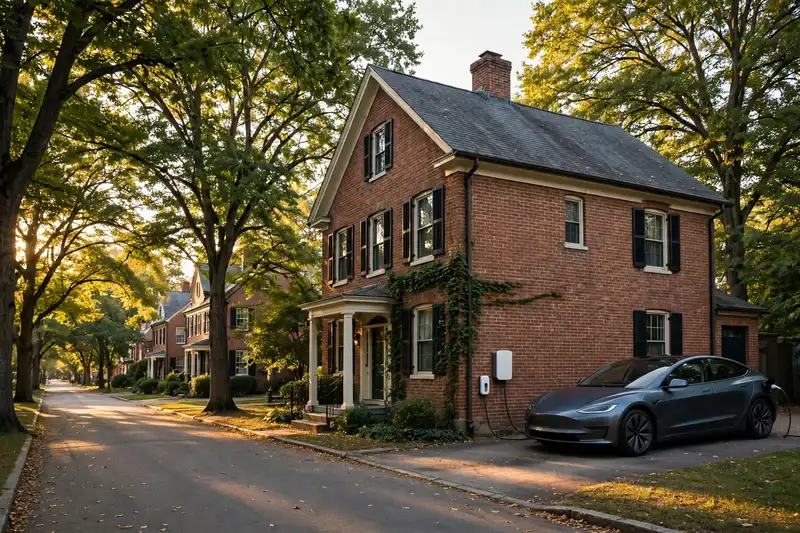
EV charging services in Twin Falls
The full menu runs to ten services; the three cards at the top are the ones Twin Falls's housing stock and state law push to the front. Everything links to its national service page for scope and process in full.
Home EV Charger Installation in Twin Falls
Start to finish, the domestic install is a half-day of electrical work wrapped in a week of scheduling: the survey, the circuit, the mounting, the configuration, the inspection. What the household experiences is simpler — a car that is full every morning and a cable that lives where the car does.
In Twin Falls: usually the first job a new EV household in Twin Falls books, scoped to the panel the house already has.
Dedicated Circuit & Electrical Panel Upgrade in Twin Falls
Where the load calculation fails the existing service, the upgrade is not an upsell — it is the finding. Done under permit with the utility's meter work coordinated, it converts the charger project into the house's electrical reset, and every later project inherits the headroom.
In Twin Falls: the job that surfaces wherever housing is older — and Twin Falls's stock makes it a routine conversation, settled by a load calculation.
Level 2 Charger Installation in Twin Falls
The step up from a household outlet to a real circuit: 240 volts, sized as a continuous load, delivering several times the overnight range of a Level 1 cord. The craft is in matching circuit, station configuration and vehicle acceptance so the three agree.
In Twin Falls: what most Twin Falls drivers mean when they say they want 'a real charger' — 240 volts, sized to the circuit.
Utility programs and electricity in Twin Falls
Electricity in Twin Falls comes from Idaho Power Co. The utility matters twice over for a charger install: it sets the time-of-use rates that decide what overnight charging costs you, and it is the organisation that may — or may not — currently help pay for the equipment.
Why does this page labour the absence of a rebate? Because in Twin Falls the phantom rebate is the most common distortion in charger quotes: a figure justified by money that is not, at present, claimable. The verified position: federal 30C ended September 30, 2025; no Idaho replacement for typical home installs; no Idaho Power Co residential charger rebate in the sources checked. If someone quotes you a rebate, the follow-up is one sentence — show me the program page — and its answer decides the quote's credibility.
While you are reading your tariff, check how your plan treats the evening peak. A charger scheduled to start after the peak window is the single easiest saving in home charging, and it is set once, in the car or the station, then forgotten.
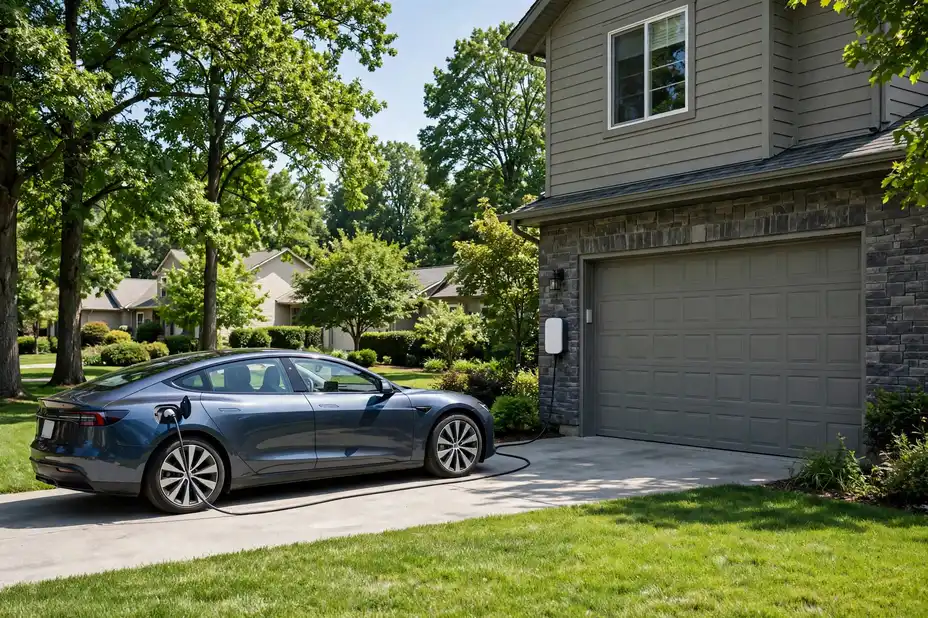
Condos, HOAs and the law in Idaho
Idaho has no statewide right-to-charge law. That needs saying plainly, because roundups on the internet sometimes claim otherwise: in the authoritative statute indexes checked for this page, no Idaho law prevents a homeowners association or condominium from refusing a charger in a common or assigned space. Your community's own covenants and board govern the question in Twin Falls.
There is also a longer game available to Twin Falls owners: associations revise their documents, boards turn over, and state legislatures have been adding right-to-charge laws year after year. A written application — and, if it comes to it, a written refusal — is the record that each of those futures works from.
The general process, minus the statute, is still covered in our guide to installing an EV charger in a condo or HOA community — most of its application-package advice applies in Twin Falls exactly as written.
Climate, garages and charger placement
Cold rewrites the charging routine in this part of the country. Batteries accept charge more slowly when they are cold, range falls, and the car's own systems spend energy on warmth — so the overnight window matters more, not less. A Level 2 circuit sized generously is the household's answer: it restores the day's driving with hours to spare even in the slow weeks of January.
Garage doors and cold air negotiate all winter. A door seal in good order, the station mounted on an interior wall rather than the door's own wall, and a cable that never crosses the threshold — small decisions that keep the charging corner of a cold garage closer to the house's climate than the street's.

Permits and inspection in Twin Falls
If your install is part of a larger job — a panel upgrade, a garage build — the charger usually rides on the same permit set. Ask for the charger circuit to be listed explicitly so the inspection record shows it.

Neighbourhoods and ZIP codes served
The page covers 2 ZIP codes in and around Twin Falls — including 83301, 83303 — across Twin Falls. If your ZIP is not in the first set shown, ask anyway: installer coverage follows the metro, not a postcode fence.
The same working area takes in the neighbouring localities of Kimberly, Filer, Hansen, Buhl, Murtaugh, Castleford, Rogerson — the county ring an installer based in Twin Falls actually drives. Requests from those communities route exactly as city requests do: same services, same permit discipline, same local facts where they differ.
Twin Falls County accounts for 9 of the ZIP codes and 8 named postal localities in the research file, the nearest of them Kimberly, Filer, Hansen, Buhl, Murtaugh. The survey counts 93,734 residents in the county, with a median household income of $67,409 and a median home value of $337,900.
Beyond the county seats, the working area takes in Kimberly, Filer, Hansen, Jerome, Eden, Buhl, Murtaugh, Hazelton, Wendell, Castleford, Rogerson, Dietrich, Shoshone, Hagerman, Gooding, Bliss, Burley, Paul, Heyburn, Richfield, Oakley, Rupert, Jackpot, King Hill, Albion, Glenns Ferry, Minidoka, Picabo, Almo, Declo, Fairfield, Carey — the named localities for which Twin Falls is the nearest metro in the network (neighbouring metros' pages cover their own ground), each routing to the same installer-matching service.
The largest communities in that working area after Twin Falls itself, by the GeoNames populated-place file: Jerome (population 11,184), Burley (population 10,436), Hailey (population 8,134), Rupert (population 5,705), Buhl (population 4,275), Kimberly (population 3,610), Gooding (population 3,509), Heyburn (population 3,223), Wendell (population 2,744), Ketchum (population 2,728), Filer (population 2,691), Bellevue (population 2,300), Shoshone (population 1,488), Sun Valley (population 1,422), Hansen (population 1,249), Glenns Ferry (population 1,229), Jackpot (population 1,195), Paul (population 1,192), Owyhee (population 953), Hagerman (population 867). Charging demand follows those populations — the subdivisions and town centres where the next driveways, and the next panels, are.
Cassia County reaches into the working area with 25,483 residents, a median household income of $70,830 and a median home value of $284,600; its localities on this page include Burley, Oakley, Albion, Almo, Declo. Gooding County reaches into the working area with 15,931 residents, a median household income of $63,559 and a median home value of $250,900; its localities on this page include Wendell, Hagerman, Gooding, Bliss. Minidoka County reaches into the working area with 22,208 residents, a median household income of $70,377 and a median home value of $262,600; its localities on this page include Paul, Heyburn, Rupert, Minidoka. Jerome County reaches into the working area with 25,173 residents, a median household income of $71,724 and a median home value of $271,800; its localities on this page include Jerome, Eden, Hazelton. Lincoln County reaches into the working area with 5,358 residents, a median household income of $71,453 and a median home value of $255,600; its localities on this page include Dietrich, Shoshone, Richfield.
| ZIP | Locality | County |
|---|---|---|
| 83301 | Twin Falls | Twin Falls |
| 83303 | Twin Falls | Twin Falls |
| 83341 | Kimberly | Twin Falls |
| 83328 | Filer | Twin Falls |
| 83334 | Hansen | Twin Falls |
| 83338 | Jerome | Jerome |
| 83325 | Eden | Jerome |
| 83316 | Buhl | Twin Falls |
| 83344 | Murtaugh | Twin Falls |
| 83335 | Hazelton | Jerome |
| 83355 | Wendell | Gooding |
| 83321 | Castleford | Twin Falls |
| 83302 | Rogerson | Twin Falls |
| 83324 | Dietrich | Lincoln |
| 83352 | Shoshone | Lincoln |
| 83332 | Hagerman | Gooding |
| 83330 | Gooding | Gooding |
| 83314 | Bliss | Gooding |
| 83318 | Burley | Cassia |
| 83347 | Paul | Minidoka |
| 83336 | Heyburn | Minidoka |
| 83349 | Richfield | Lincoln |
| 83346 | Oakley | Cassia |
| 83350 | Rupert | Minidoka |
| 89825 | Jackpot | Elko |
| 83633 | King Hill | Elmore |
| 83311 | Albion | Cassia |
| 83623 | Glenns Ferry | Elmore |
| 83343 | Minidoka | Minidoka |
| 83348 | Picabo | Blaine |
| 83312 | Almo | Cassia |
| 83323 | Declo | Cassia |
| 83327 | Fairfield | Camas |
| 83320 | Carey | Blaine |

Planning the install: from panel to parking
Homeowners sometimes ask why a job that looks like 'one outlet' needs a site visit at all. The visit exists because the three variables that set the scope — spare capacity, the run's route, and the property's approval layer — are all invisible from a photograph. In Twin Falls an experienced installer reads them in minutes, in the panel's directory card, the garage's geometry and the community's documents. The quote that follows a visit is a different species from the quote that precedes one: it can be held to.
One more piece of sequencing advice Twin Falls installers give consistently: if the panel is being opened anyway, settle the other electrical maybes in the same visit — the circuit you will want next year costs least while the permit and the electrician are already in the house.
Home charging know-how for Twin Falls households
Household safety habits around the charger
A charging setup joins a household's ordinary safety landscape — the same category as the stove and the water heater: respected, listed, and left to do its job. The household habits are few. The cable lives off the floor where small feet and wheels travel; the connector is docked, not dangled; children learn the house rule that the charger is an appliance, not a toy, the way they learn the oven's. Nothing about a properly installed station asks for anxiety — just the standard respect electricity has always been owed.
Long runs and voltage drop
Distance taxes a circuit twice: in materials, and in voltage. A long run at charging currents loses voltage along its length, and the code's remedy is conductor sized a step beyond the minimum so the station at the far end still receives what it expects. This is one of the reasons a detached structure or a far-corner panel turns a simple circuit into a designed one — the arithmetic is easy, but it has to be done, and it is invisible in any quote that scopes the job from the charger box alone. The site visit is where the tape measure settles it.
Historic districts and exterior rules
In a designated historic district, the charger's exterior footprint can need a second audience: the preservation commission, whose concern is the streetscape rather than the circuit. The designs that pass keep faith with that concern — equipment inside the garage where possible, conduit routed away from the principal facade, nothing mounted on historic fabric. It adds a step, not a saga, and local installers know their commission's habits the way they know their permit counter's.
When you move: take it or leave it
The station is portable in a way the circuit is not. A plug-in unit unplugs and travels; a hardwired one leaves with an electrician's half hour. The circuit — the larger share of the original project — stays with the house, where the paperwork decides what it is worth: documented as a permitted charger circuit, it is a listing feature for the next EV household; undocumented, it is a mystery outlet in the garage. Owners planning a move inside a few years can say so at install time; the plug-in-versus-hardwired choice reads differently with a departure date attached.

Frequently asked questions
What happened to the federal home-charger credit in Twin Falls, ID?
The three possible pots are all, at present, empty for a Twin Falls homeowner: no Idaho Power Co residential rebate in current published sources, no Idaho home programme, and a federal credit that closed on September 30, 2025. Programmes do relaunch — on the utility's site, with dates — and until one does, the honest quote is the one with no rebate line at all.
Can my association in Twin Falls, ID say no to a home charger?
In Twin Falls the honest answer is yes, they can refuse: Idaho gives owners no statutory charging right, so the board's discretion governs. What changes outcomes is the quality of the file in front of them — drawings, metering, insurance, a named licensed installer — and a growing number of boards here approve exactly that file.
Does a Level 2 charger mean a panel upgrade for a Twin Falls, ID home?
The question has a correct instrument: the load calculation. It totals what your service already carries — with the code's demand factors, not nameplate panic — and sets the charger's continuous load against the remainder. In Twin Falls, where the median home dates to 1982 and about 49% of units predate 1980, the answer splits by street: post-war and newer 200-amp homes usually proceed; older 100-amp homes choose between capacity work and load management. Anyone answering without the calculation is guessing in a uniform.
Level 1 or Level 2 in Twin Falls, ID — what is the real difference?
Level 2 is several-fold faster in the only unit that matters — miles back per hour parked: roughly 25–40 against Level 1's 3–5. The exact figure follows the circuit: a 40-amp circuit and a 60-amp circuit are both Level 2, and the car's onboard limit may sit below either. Your installer matches the three numbers at the site visit.
What happens next after I send a request?
Three things happen, in order. Your request is routed to licensed installers who work in Twin Falls; one of them contacts you to book a site visit; and the visit produces a written quote based on your actual panel and parking. PlugReady USA runs the matching, not the tools — the contractor on the job is the installer who visits.
Do installers cover the communities around Twin Falls, ID?
Yes — an installer's working area is the county ring, not the city limit. From this page the same request flow covers Kimberly, Filer, Hansen, Buhl, Murtaugh and the rest of Twin Falls's surrounding localities, under the same permit discipline and the same local facts where they differ.
Nearby cities in Idaho
- EV charger installation in Boise — about 123 miles from Twin Falls, metro population 800,000
- EV charger installation in Idaho Falls — about 158 miles from Twin Falls, metro population 165,000
- EV charger installation in Coeur d'Alene — about 377 miles from Twin Falls, metro population 180,000
- EV charger installation in Logan, UT — about 156 miles from Twin Falls, metro population 150,000
- EV charger installation in Ogden, UT — about 163 miles from Twin Falls, metro population 725,000
- EV charger installation in Salt Lake City, UT — about 189 miles from Twin Falls, metro population 1,300,000
Ready to charge at home in Twin Falls?
Tell us the job — service, ZIP and property type — and licensed local installers will take it from there.