EV Charger Installation in Virginia Beach, VA
Charging where you park, in Virginia Beach: the utility programs, state law, permit process and housing facts behind a home charger install, gathered in one place.
The overnight plug is the least glamorous and most consequential part of owning an electric car, and Virginia Beach households have been adopting it at pace: 134,900 battery-electric vehicles and 39,300 plug-in hybrids were registered across Virginia by the end of 2025. Virginia Beach itself is home to about 456,349 people. What follows is the local field guide — utility programs as they actually stand, the association law as it actually reads, the permit as it is actually filed, and the housing numbers that predict your install before anyone opens the panel.
A word on how to use the page: each section answers one of the questions an installer will ask you anyway — panel, utility, property rules, permits — with Virginia Beach's actual answers. Read the two that apply to your house and you will start the quoting conversation several steps ahead.
What the Experian and AFDC registration data say about Virginia Beach–Norfolk–Newport News: VA 134.9K BEVs; right-to-charge. Translated out of market language: your neighbours are already charging at home, the permit office already knows the paperwork, and the installers already know the housing stock.
The same survey puts median household income in Virginia Beach at $92,968, with 65% of occupied homes owner-occupied and 55% of the housing stock single-unit detached. For charging, those are the operative facts: owners can approve their own electrical work, and detached homes put the car, the panel and the parking under one roof.

The composite picture matters more than any single statistic. In Virginia Beach: a housing stock of mixed vintages, where both electrical eras appear on the same street; a detached-house majority with a real attached and multifamily minority; buildings of five or more units are a visible minority of the stock; meanwhile, owner-occupiers dominate, so most readers can approve their own electrical work outright. A page that ignored that profile would give the same advice everywhere; this one is ordered by it.
Keep six figures and you keep Virginia Beach's whole electrical character: 191,294 housing units; 179,851 occupied homes; 117,165 owner-occupied; 104,365 detached houses; 75,916 pre-1980 homes; 37,981 homes in buildings of five or more units. Percentages elsewhere on this page are these numbers in disguise — the counts are the originals, and they are the numbers a local installer's experience is actually made of. The page's geography is equally concrete: 20 ZIP codes across City of Suffolk, Virginia Beach (city), centred near 36.84 degrees north latitude. The city anchors the Virginia Beach–Norfolk–Newport News metropolitan area, home to roughly 1,850,000 people on the research file's metro estimate — the wider labour and housing market this page's installers work across.
The same survey release fills in the household economics around the housing stock: a median home value of $403,200, median gross rent of $1,753, per-capita income of $50,027, and a median resident age of 39. And the daily rhythms behind the housing numbers: 76% of Virginia Beach workers drive to work alone — the commute pattern home charging is built around; 12% work from home, a population whose cars charge on daytime and overnight schedules alike; 1% commute by public transit; 42% of adults hold a bachelor's degree or higher. And the fleet in the driveways: 55,192 households in Virginia Beach have exactly one vehicle, 113,982 have two or more, and 10,587 have none.
The cost-burden lines say who feels housing costs most in Virginia Beach: 53% of renters spend 30% or more of income on rent, and 0% of owners with mortgages spend the same share on housing costs. Family households are 66% of all households — the two-car, school-run demographic whose charging patterns this page's planning sections keep circling back to.
Read together, the local facts draw a recognisable picture. The building booms left their fingerprints in the panel stock — each era's standard service size still legible in the directory cards of its streets. Installers here run two trades in one van — domestic circuits in the morning, a building's shared-service design in the afternoon — and the city's pages, this one included, have to serve both readers.
An owner-majority market also writes its own references: every completed install is visible to the neighbours who share the owner's incentives, and the street-level demonstration effect compounds quietly. Middle incomes discipline the specification toward the durable middle: not the minimum circuit that passes, not the maximal one that impresses — the one the load calculation actually indicates, documented. Tariff design is the quiet policy: the shape of the overnight window, the demand charges commercial customers face, the interconnection queue's pace — all set in dockets the diligent can read.
The state fleet is well past the early-adopter chapter: dealer lots, workplace car parks and school runs all show it, and the installer market has professionalised in response. At this scale the city's charging infrastructure is legible — a household can learn the whole local system, its programmes, precedents and people, in an evening's reading. This page is most of that evening. Where the state's statute speaks, the local conversation changes register: installers quote the framework, boards keep counsel's template, and approvals become administrative.
The electrical reality in Virginia Beach homes
Four numbers organise everything an installer expects in Virginia Beach: median build year 1984; 40% of units built before 1980; 55% of the stock detached; 65% of occupied homes owner-occupied. Capacity, circuit routes and approval layers all correlate with those four. The paragraphs below are their commentary. A mixed-age stock like this splits installs into two camps: newer subdivisions where a 200-amp panel usually has planned capacity, and established neighbourhoods where the panel conversation comes first. Neither is a problem — but they are different jobs, and the estimate you get should say which camp your home falls into and why. Detached houses matter for a practical reason: a garage or driveway on your own lot means the charger, the car and the circuit are all under one roof and one owner's control, which is the simplest configuration there is.
One further survey line belongs in any Virginia Beach install conversation: 64% of the city's homes heat with electricity — 114,676 households whose panels already carry a major winter load before a charger is contemplated. Electric heat and EV charging are the two largest discretionary loads a house can host, and where they coincide, the load calculation stops being a formality.
One further split matters for how this page is organised: about 62,686 of Virginia Beach's occupied homes are renter-occupied. Everything above assumes you can approve your own electrical work; where you cannot, the approval layer — landlord or association — becomes part of the job, which is why the law section carries unusual weight here.
And 20% of Virginia Beach's homes are in buildings with five or more units — apartments and condominiums where charging is a building decision before it is an electrical one. If that is your situation, the law and multifamily sections of this page are the ones written for you.
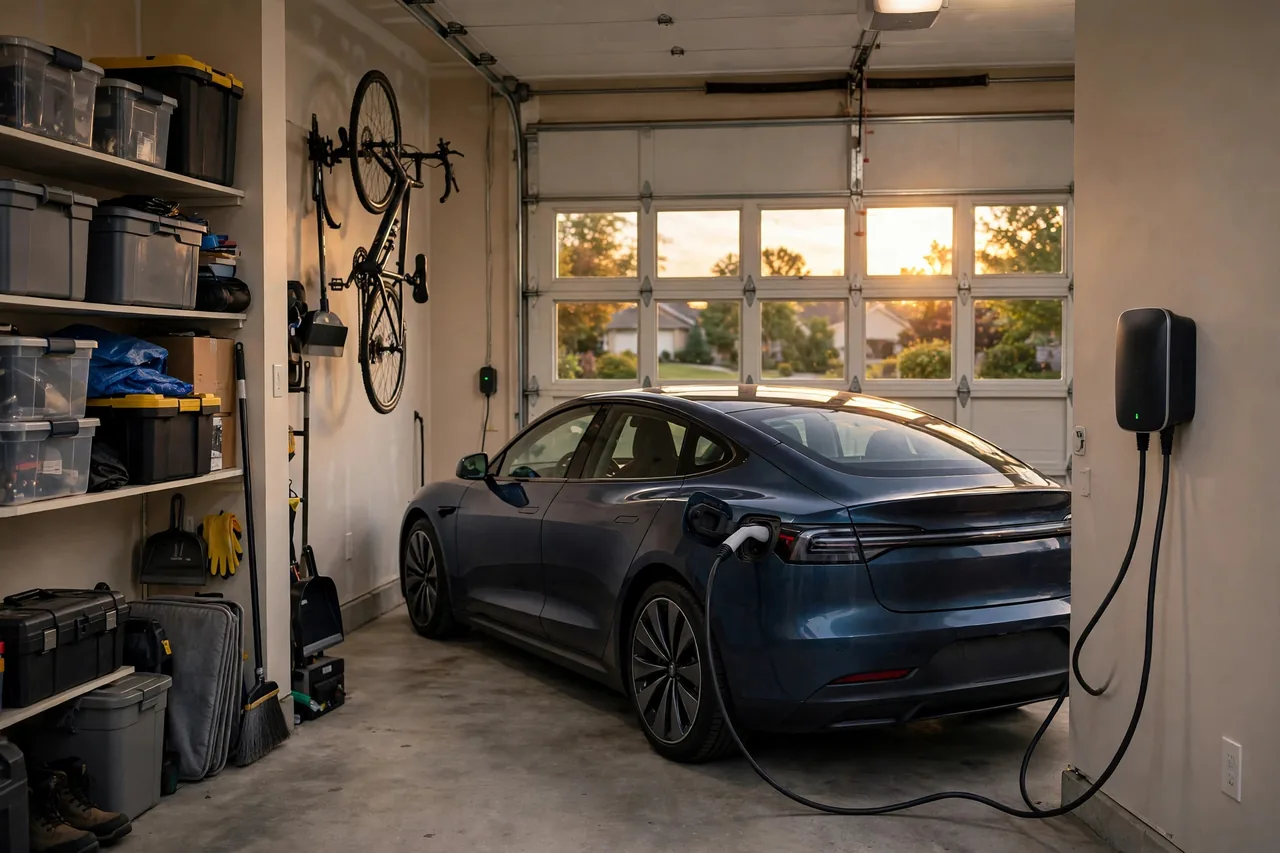
EV charging services in Virginia Beach
Installers in Virginia Beach book the same ten services as everywhere — but not in the same proportions. The three leading cards below are this city's pattern, set by its panels, its buildings and its statute book.
Home EV Charger Installation in Virginia Beach
The residential standard: a station where the car sleeps, on a circuit of its own, installed under permit. Variations are all local — the panel's spare room, the run's route through the house's fabric, and the parking pattern the cable has to serve.
In Virginia Beach: usually the first job a new EV household in Virginia Beach books, scoped to the panel the house already has.
Dedicated Circuit & Electrical Panel Upgrade in Virginia Beach
Where the load calculation fails the existing service, the upgrade is not an upsell — it is the finding. Done under permit with the utility's meter work coordinated, it converts the charger project into the house's electrical reset, and every later project inherits the headroom.
In Virginia Beach: relevant in Virginia Beach wherever a 100-amp panel already carries cooking, heating and hot water before a charger asks for room.
Multifamily & Condo EV Charging in Virginia Beach
In a multifamily building the charger is the easy half. The craft is the route to yes: a complete board application, a metering design that bills the right owner, load management that shares the building's capacity, and only then the circuit. Installers who do this work weekly carry the paperwork templates with them.
In Virginia Beach: the approvals-plus-wiring job for Virginia Beach's condos and HOA communities, where the process matters as much as the circuit.
Utility programs and electricity in Virginia Beach
Electricity in Virginia Beach comes from Virginia Electric & Power Co. The utility matters twice over for a charger install: it sets the time-of-use rates that decide what overnight charging costs you, and it is the organisation that may — or may not — currently help pay for the equipment.
No verified residential charger rebate was in place for Virginia Electric & Power Co in the sources checked for this page (the federal Alternative Fuel Refueling Property Credit ended on September 30, 2025, and no Virginia state program replaced it for typical home installs). That can change — utilities open and close funded rounds — so an installer quoting you today should be able to name any current program precisely, with its published terms. If they cannot name it, it is not part of your job.
Before the install, it is worth a two-minute look at your tariff. Many Virginia Electric & Power Co customers can move to a time-of-use plan where overnight energy is charged at a lower rate, and a scheduled charger makes that saving automatic.
Condos, HOAs and the law in Virginia
Charging is a protected right for association owners in Virginia. The state's right-to-charge statute (Va. Code §55.1-1823.1 (HOA); §55.1-1962.1 (condo)) stops a homeowners association or condominium from banning an owner's charging station outright. Conditions still exist — placement, appearance, insurance and restoration can all be regulated, and the owner pays — yet the starting position is yes-with-rules rather than no-unless-persuaded, and that difference decides most applications before they are written.
For renters, coverage in Virginia is recorded as: Owners. If you rent in Virginia Beach, the practical route is still a written proposal to the landlord — dedicated circuit, licensed installer, your name on the permit — because a charger-ready space is an asset most landlords keep when you leave.
Both the process and the paperwork are covered in the condo and HOA guide; Virginia Beach readers can skip the chapters about persuading reluctant boards and go straight to the compliance checklist.
Climate, garages and charger placement
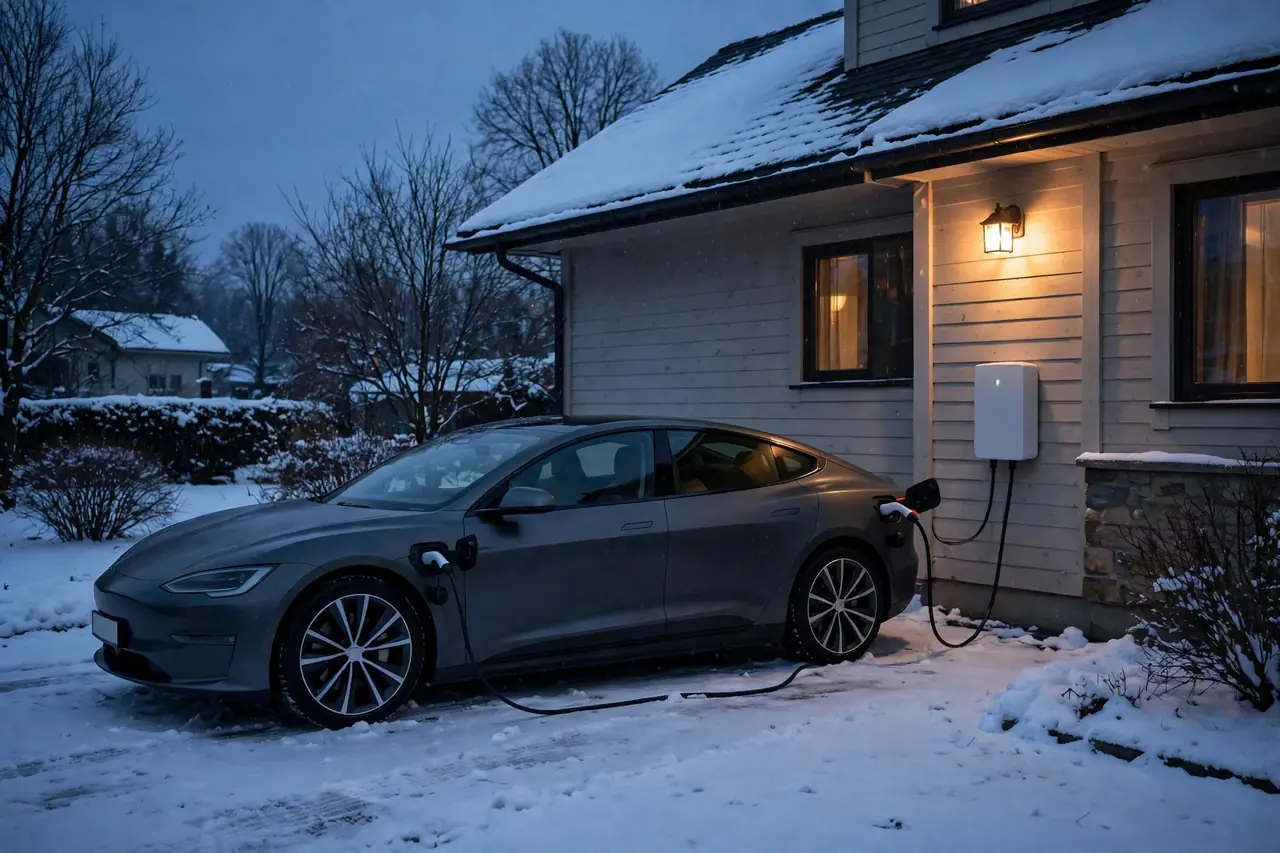
Storm surge and wind-driven rain redraw the map of good positions: the station belongs above the remembered water line, on the wall the prevailing weather reaches last, with the run's exterior penetrations sealed against driven rain rather than polite rain. Coastal installers carry this checklist in their sleep.
Charging through hurricane season is mostly a paperwork virtue: the documented, inspected install is the one insurers process without argument afterwards. It is one more reason the permit file matters more on this coastline than the equipment's colour does.

Permits and inspection in Virginia Beach
Timelines are set by the city's counter, not the installer: the electrical work itself is typically a day, while permit issuance and the inspection visit follow the department's queue. A quote that promises a date should tell you which parts of that date the installer actually controls.

Neighbourhoods and ZIP codes served
The page covers 20 ZIP codes in and around Virginia Beach — including 23450, 23451, 23452, 23453, 23454, 23455, 23456, 23457, 23458, 23459, 23460, 23461, 23462, 23463, 23464, 23465, 23466, 23467, 23471, 23479 — across City of Suffolk, Virginia Beach (city). If your ZIP is not in the first set shown, ask anyway: installer coverage follows the metro, not a postcode fence.
Virginia Beach (city) County accounts for 19 of the ZIP codes in the research file. The survey counts 456,349 residents in the county, with a median household income of $92,968 and a median home value of $382,500. City of Suffolk County accounts for 9 of the ZIP codes and 2 named postal localities in the research file, the nearest of them Suffolk. The survey counts 98,796 residents in the county, with a median household income of $92,666 and a median home value of $347,400. Measured across its ZIP codes, the Virginia Beach footprint runs about 21 miles north to south and 12 east to west, from ZIP 23450 to 23479 — the ground an installer based here actually covers in a working week.
Beyond the county seats, the working area takes in Norfolk, Chesapeake, Portsmouth, Fort Monroe, Hampton, Newport News, Suffolk, Knotts Island, Poquoson, Carrollton, Moyock, Townsend, Capeville, Yorktown, Rescue, Battery Park, Currituck, South Mills, Seaford, Smithfield, Seaview, Cape Charles, Maple, Isle Of Wight, Cheriton, Shawboro, Fort Eustis, Oyster, Windsor, Coinjock, Maryus, Barco, Corapeake, Bena, Achilles, Gloucester Point, Lackey, New Point, Camden, Eastville, Susan, Hayes, Wicomico, Zuni, Elizabeth City, Port Haywood, Ordinary, Aydlett, Sunbury, Onemo, Corolla, Bohannon, Carrsville, Machipongo, Surry, Shiloh, Poplar Branch, Diggs, Cardinal, Schley, Elberon, White Marsh, Ivor, Ware Neck, Moon, Gates, Mathews, Birdsnest, Hobbsville, Belvidere, Franktown, Grandy, North, Foster, Marionville, Hudgins — the named localities for which Virginia Beach is the nearest metro in the network (neighbouring metros' pages cover their own ground), each routing to the same installer-matching service.
The largest communities in that working area after Virginia Beach itself, by the GeoNames populated-place file: Norfolk (population 238,005), Chesapeake (population 235,429), Newport News (population 186,247), East Hampton (population 147,993), Hampton (population 137,148), Portsmouth Heights (population 99,049), Portsmouth (population 96,201), Suffolk (population 88,161). Charging demand follows those populations — the subdivisions and town centres where the next driveways, and the next panels, are.
Norfolk (city) County reaches into the working area with 233,596 residents, a median household income of $66,109 and a median home value of $289,900; its localities on this page include Norfolk. Hampton (city) County reaches into the working area with 137,557 residents, a median household income of $69,621 and a median home value of $245,700; its localities on this page include Fort Monroe, Hampton. Chesapeake (city) County reaches into the working area with 252,583 residents, a median household income of $95,373 and a median home value of $378,400; its localities on this page include Chesapeake.
| ZIP | Locality | County |
|---|---|---|
| 23450 | Virginia Beach | Virginia Beach (city) |
| 23452 | Virginia Beach | Virginia Beach (city) |
| 23462 | Virginia Beach | Virginia Beach (city) |
| 23465 | Virginia Beach | Virginia Beach (city) |
| 23455 | Virginia Beach | Virginia Beach (city) |
| 23464 | Virginia Beach | Virginia Beach (city) |
| 23502 | Norfolk | Norfolk (city) |
| 23453 | Virginia Beach | City of Suffolk |
| 23454 | Virginia Beach | Virginia Beach (city) |
| 23460 | Virginia Beach | Virginia Beach (city) |
| 23501 | Norfolk | Norfolk (city) |
| 23451 | Virginia Beach | Virginia Beach (city) |
| 23463 | Virginia Beach | Virginia Beach (city) |
| 23466 | Virginia Beach | Virginia Beach (city) |
| 23467 | Virginia Beach | Virginia Beach (city) |
| 23471 | Virginia Beach | Virginia Beach (city) |
| 23479 | Virginia Beach | Virginia Beach (city) |
| 23325 | Chesapeake | Chesapeake (city) |
| 23513 | Norfolk | Norfolk (city) |
| 23518 | Norfolk | Norfolk (city) |
| 23459 | Virginia Beach | Virginia Beach (city) |
| 23458 | Virginia Beach | Virginia Beach (city) |
| 23326 | Chesapeake | Chesapeake (city) |
| 23509 | Norfolk | Norfolk (city) |
| 23504 | Norfolk | Norfolk (city) |
| 23523 | Norfolk | Norfolk (city) |
| 23324 | Chesapeake | Chesapeake (city) |
| 23456 | Virginia Beach | Virginia Beach (city) |
| 23506 | Norfolk | Norfolk (city) |
| 23515 | Norfolk | Norfolk (city) |
| 23519 | Norfolk | Norfolk (city) |
| 23529 | Norfolk | Norfolk (city) |
| 23541 | Norfolk | Norfolk (city) |
| 23551 | Norfolk | Norfolk (city) |
| 23514 | Norfolk | Norfolk (city) |
| 23510 | Norfolk | Norfolk (city) |
| 23517 | Norfolk | Norfolk (city) |
| 23708 | Portsmouth | Portsmouth (city) |
| 23461 | Virginia Beach | Virginia Beach (city) |
| 23320 | Chesapeake | Chesapeake (city) |
| 23503 | Norfolk | Norfolk (city) |
| 23507 | Norfolk | Norfolk (city) |
| 23508 | Norfolk | Norfolk (city) |
| 23505 | Norfolk | Norfolk (city) |
| 23704 | Portsmouth | Portsmouth (city) |
| 23702 | Portsmouth | Portsmouth (city) |
| 23511 | Norfolk | Norfolk (city) |
| 23707 | Portsmouth | Portsmouth (city) |
| 23327 | Chesapeake | Chesapeake (city) |
| 23328 | Chesapeake | Chesapeake (city) |
| 23705 | Portsmouth | Portsmouth (city) |
| 23709 | Portsmouth | Portsmouth (city) |
| 23323 | Chesapeake | Chesapeake (city) |
| 23701 | Portsmouth | Portsmouth (city) |
| 23703 | Portsmouth | Portsmouth (city) |
| 23322 | Chesapeake | Chesapeake (city) |
| 23651 | Fort Monroe | Hampton (city) |
| 23457 | Virginia Beach | Virginia Beach (city) |
| 23667 | Hampton | Hampton (city) |
| 23321 | Chesapeake | Chesapeake (city) |
| 23663 | Hampton | Hampton (city) |
| 23668 | Hampton | Hampton (city) |
| 23664 | Hampton | Hampton (city) |
| 23661 | Hampton | Hampton (city) |
| 23669 | Hampton | Hampton (city) |
| 23607 | Newport News | Newport News (city) |
| 23435 | Suffolk | City of Suffolk |
| 23605 | Newport News | Newport News (city) |
| 23433 | Suffolk | City of Suffolk |
| 23665 | Hampton | Hampton (city) |
| 23666 | Hampton | Hampton (city) |
| 23630 | Hampton | Hampton (city) |
| 23670 | Hampton | Hampton (city) |
| 23681 | Hampton | Hampton (city) |
| 23436 | Suffolk | City of Suffolk |
| 27950 | Knotts Island | Currituck |
| 23601 | Newport News | Newport News (city) |
| 23432 | Suffolk | City of Suffolk |
| 23662 | Poquoson | Poquoson (city) |
| 23314 | Carrollton | Isle of Wight |
| 27958 | Moyock | Currituck |
| 23443 | Townsend | Northampton |
| 23606 | Newport News | Newport News (city) |
| 23313 | Capeville | Northampton |
| 23693 | Yorktown | York |
| 23424 | Rescue | Isle of Wight |
| 23304 | Battery Park | Isle of Wight |
| 23434 | Suffolk | City of Suffolk |
| 27929 | Currituck | Currituck |
| 23602 | Newport News | Newport News (city) |

Planning the install: from panel to parking
A useful way to read any Virginia Beach quote is to ask which of three jobs it describes. Job one: the panel has room and the run is short — a circuit and a station. Job two: the panel is full — capacity work joins the quote, as an upgrade or as load management. Job three: the property adds people — an HOA, a landlord, a building's shared service — and the approvals timeline joins the electrical one. None of the three is a bad job; they are simply different scopes, and a clear quote says which one you are in.
Finally, photograph the finished work — station, nameplate, panel directory with the new breaker labelled — and file it with the inspection record. When the car changes, the house sells or a second station joins the first, that folder is the difference between a five-minute answer and an archaeological dig.
Home charging know-how for Virginia Beach households
Looking after a charging station
A wall charger asks little: a connector kept holstered and clean, a cable un-kinked, an enclosure whose seals survive, and an owner who notices change — a new hum, a warmer plug, a trip that was not happening last season. Firmware updates arrive through the station's connection where it has one. Once a year, a glance at the connector's contacts for wear or discolouration covers most of the rest. It is infrastructure, not a pet: the correct amount of attention is small, regular, and mostly visual.
Making the rate window automatic
Time-of-use tariffs reward households whose charging happens while the grid sleeps, and the reward compounds silently: every night, for the life of the car. The mechanism is trivial — a schedule set in the vehicle or the station — but the details decide whether it survives contact with real life: the window must fit the household's latest departure, the schedule must yield gracefully on the nights the car comes home empty, and the settings must live somewhere the household can find them again. Set it up at commissioning, with the installer, and the saving becomes infrastructure rather than intention.
Homework that sharpens the site visit
You can cut a site visit's uncertainty in half with a phone camera. Photograph the panel — door open, directory card legible, the rating label in frame — plus the wall where the station would go and the car's parking position with the port side visible. Send them with the request. The installer arrives already knowing the panel's make and spare spaces, the run's likely route, and which questions remain live ones. Quotes get firmer, visits get shorter, and nobody discovers the decisive fact at the door.
The school-run charge window
Households organised around school runs live on a distinctive charge curve: two short hops, a long parked day, an afternoon of activities. The car sits at home for the middle of the day — which, for solar households, is precisely the generation window, and for everyone else makes the overnight session almost an afterthought. Scheduling follows the family's actual day, not the tariff's assumption of one, and the installer who asks about the school run is designing, not chatting.
How rebate paperwork usually works
Where a utility program does exist, its money moves on paperwork rails: pre-approval before purchase in some programmes, photographs and the inspection record after installation, deadlines measured in weeks. The practical lesson travels even to cities without a current program — keep everything. The permit, the passed inspection, the equipment invoice with model and serial, photographs of the finished work: filed together, they are the application for any programme that opens later, and the file costs nothing to keep.

Frequently asked questions
Is the federal charger tax credit still available in Virginia Beach, VA?
No. The federal Alternative Fuel Refueling Property Credit (30C) ended for equipment placed in service after September 30, 2025. In the sources checked for this page, Virginia Electric & Power Co had no verified residential charger rebate running either — if an installer names a current program, ask for its published terms.
What can my HOA in Virginia Beach, VA do about a charger install?
Not outright. Under Va. Code §55.1-1823.1 (HOA); §55.1-1962.1 (condo), Virginia associations cannot prohibit an owner's charger; they can condition it — reasonably — on placement, insurance and restoration, with the owner funding the work. The disputes that do arise are usually about conditions, and they settle fastest when the application answers them in advance.
Will my Virginia Beach, VA home need a panel upgrade for a Level 2 charger?
Sometimes, and the honest route to the answer is arithmetic rather than opinion. Virginia Beach's median home was built in 1984; roughly 40% of the stock predates 1980, which is where the 100-amp panels concentrate. If yours is one, expect the upgrade-or-management conversation; if it is a modern 200-amp service with spare spaces, expect a circuit. The site visit's calculation decides, and you are entitled to see it.
How much faster is Level 2 charging at home in Virginia Beach, VA?
In parked hours: a Level 1 cord returns about 3–5 miles for each of them, and a Level 2 circuit returns roughly 25–40, set by its amperage and the car's acceptance. For a Virginia Beach household parking ten hours, that is the difference between recovering a short errand day and recovering any day the car can legally drive.
How does the installer matching on this page work?
Your request — service, Virginia Beach ZIP, property type and timing — goes to licensed local installers who cover Virginia Beach. They contact you directly to arrange a site visit and quote. PlugReady USA is the matching service, not the installer, and the sections above exist so you can judge any quote against the local facts.
How long does a typical home charger installation take in Virginia Beach, VA?
Separate the three clocks. The installer's clock: typically a day of electrical work for the standard layout. The permit office's clock: issuance on the department's queue. The inspector's clock: a visit scheduled after the work. A realistic quote in Virginia Beach, Virginia names all three; the total is usually days to a few weeks, dominated by the two clocks nobody on the crew controls.
Nearby cities in Virginia
- EV charger installation in Richmond — about 89 miles from Virginia Beach, metro population 1,350,000
- EV charger installation in Charlottesville — about 160 miles from Virginia Beach, metro population 220,000
- EV charger installation in Lynchburg — about 171 miles from Virginia Beach, metro population 265,000
- EV charger installation in Harrisonburg — about 188 miles from Virginia Beach, metro population 140,000
- EV charger installation in Winchester — about 198 miles from Virginia Beach, metro population 135,000
- EV charger installation in Roanoke — about 214 miles from Virginia Beach, metro population 325,000
- EV charger installation in Salisbury, MD — about 109 miles from Virginia Beach, metro population 425,000
- EV charger installation in Washington, DC — about 151 miles from Virginia Beach, metro population 6,400,000
- EV charger installation in Raleigh, NC — about 157 miles from Virginia Beach, metro population 1,500,000
Ready to charge at home in Virginia Beach?
Two minutes of form, and the request is in front of licensed installers who cover this city — quotes follow site visits, in writing.