EV Charger Installation in Billings, MT
Home Level 2 charging, panel upgrades and condo installs in Billings — matched to licensed local installers, with the local facts that shape the job set out below.
Homeowners in Billings tend to research the charger first and the circuit second; installers work the other way round. The circuit is the project — its capacity, its route, its paperwork — and the station is the appliance that hangs off the end of it. Billings itself is home to about 121,478 people, and Montana's roads carried 6,900 battery-electric vehicles and 4,200 plug-in hybrids by the end of 2025. This page is organised the installer's way: panel and housing realities first, then the utility's programs and tariffs, the law for shared properties, climate placement, and the permit that closes the job out properly.
A note on what PlugReady USA is and is not: we publish the local research and run the matching; the installation itself belongs to licensed electricians and installer companies working in Billings. Everything below is written so you can hold your own in that conversation — numbers first, sales language nowhere.
What the Experian and AFDC registration data say about Billings: MT anchor. Translated out of market language: your neighbours are already charging at home, the permit office already knows the paperwork, and the installers already know the housing stock.
Read the survey numbers as an installer reads them. A median household income of $69,112 and an owner-occupation rate of 62% describe a city where most charger decisions are made by the person who owns the panel — no landlord layer, no board layer for the typical job. The 58% of homes that are single-unit detached are the straightforward installs: garage or driveway, one owner, one circuit.

Put the survey together and Billings's charging profile reads like this: an older housing fabric, where panel archaeology is a normal part of the first visit; a detached-house majority with a real attached and multifamily minority; buildings of five or more units are a visible minority of the stock; and owners hold a working majority, with renters a significant minority. That combination — more than any single number — is what the installers working here plan around, and it is the lens for everything on this page.
In absolute terms, the survey counts 55,694 housing units in Billings — 52,424 occupied, 32,680 of them by their owners. The stock resolves into 32,546 single-unit detached houses, 28,679 homes standing since before 1980, and 10,662 units in larger buildings. Those six counts are the city's charging map drawn without percentages, and every section of this page is a consequence of one of them. The page's geography is equally concrete: 14 ZIP codes across Yellowstone, centred near 45.77 degrees north latitude. The city anchors the Billings metropolitan area, home to roughly 190,000 people on the research file's metro estimate — the wider labour and housing market this page's installers work across.
The same survey release fills in the household economics around the housing stock: a median home value of $343,400, median gross rent of $1,138, per-capita income of $43,934, and a median resident age of 39. And the daily rhythms behind the housing numbers: 78% of Billings workers drive to work alone — the commute pattern home charging is built around; 8% work from home, a population whose cars charge on daytime and overnight schedules alike; 1% commute by public transit; 37% of adults hold a bachelor's degree or higher. Vehicle ownership, from the same release: 32,268 households in Billings run two or more vehicles, and 2,646 run none — the two ends of the market this page serves and does not serve.
The cost-burden lines say who feels housing costs most in Billings: 51% of renters spend 30% or more of income on rent, and 0% of owners with mortgages spend the same share on housing costs. Family households are 54% of all households — the two-car, school-run demographic whose charging patterns this page's planning sections keep circling back to.
Taken as one portrait, the numbers describe a specific charging market. The oldest housing throws the longest shadows over an install: knob-and-tube remnants in the attic, ungrounded receptacles, services sized for iceboxes and radios that now feed induction ranges and heat pumps. The mixed stock means the city's charging statistics will always be two statistics wearing one coat: a domestic-circuit count and a building-project count, growing on different clocks for different reasons.
The balance of tenure keeps both crafts alive locally: firms that run domestic circuits all week, and firms whose week is landlord letters and board packs — with the good ones fluent in both. Households at this band comparison-shop on scope rather than on slogans, which rewards the installer whose quote shows its working — the load study, the route, the permit, itemised. Filed tariffs and public dockets give this territory a paper trail most markets lack: the diligent household can read the utility's own electrification plan and know which programmes are funded, piloted or merely proposed.
The state fleet is young, and Billings's charging story is being written by its first draft of households — the ones whose installs will be the precedents boards and neighbours cite for a decade. At this scale the page's role sharpens — in a market without a crowd of specialists to interview, the household's own preparation carries more of the project's quality. Without a state charging statute, shared-property approvals in this metro are won on paper quality: metering clarity, licensed installers, insurance, reversibility — the complete package the guides set out.
The electrical reality in Billings homes
Start with the survey's three operative figures for Billings: median build year 1979; 51% of housing units standing since before 1980; 58% of the stock in single-unit detached houses, with 62% of occupied homes owner-occupied. Between them, they sketch the electrical city an installer works in. Age shows up electrically before it shows up anywhere else: services sized for a house with a third of today's appliances. Expect the first conversation to be about capacity — what the panel is, what it already feeds, and which of the three routes (circuit, management, upgrade) your numbers support. Housing age also tracks wire-run reality: older homes more often place the panel in a basement or interior wall far from the garage, and distance is copper, conduit and labour.
The fuel table adds one more local fact: 11,852 Billings homes — 23% of the stock — heat with electricity. Those households already think in kilowatts through the winter, their panels carry the load to prove it, and a charger's overnight appetite joins a system that is, in the useful sense, already electrified.
The tenure split cuts the other way too: roughly 19,744 occupied homes in Billings are rented. For those households the charger question is a negotiation with a property owner — written proposal, licensed installer, metering clarity — and it succeeds often enough that installers here keep the pattern ready.
One more structural fact shapes Billings's charging map: 19% of the city's housing units sit in buildings of five or more units. Those households cannot simply book a circuit — their charger runs through a building, a board and a shared electrical service, which is why the multifamily service and the law section below carry unusual weight on this page.
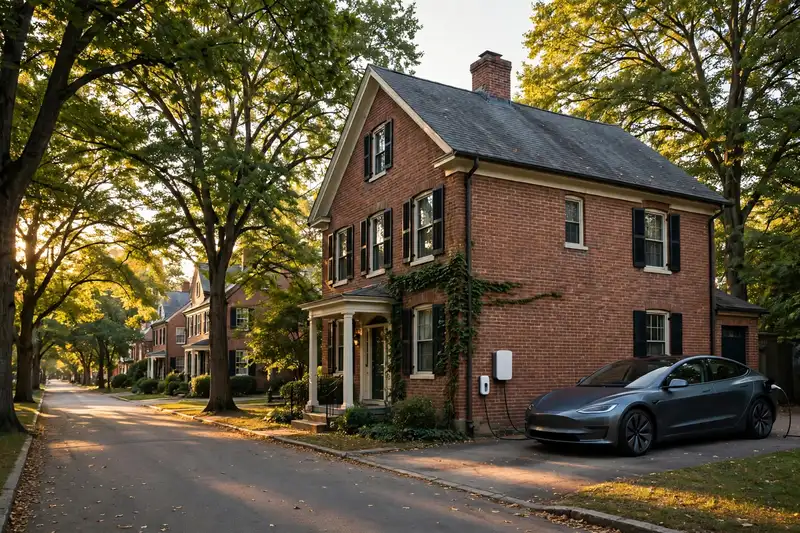
EV charging services in Billings
An installer's work in Billings usually starts with one of the three lead services below. The cards describe the job as it is actually scoped; the grid underneath carries the rest of the menu.
Home EV Charger Installation in Billings
Think of it as plumbing for electrons, done once: capacity checked, circuit run, station mounted and configured, inspection passed. The households that report the smoothest projects describe the same shape — a visit that measured, a quote that itemised, and a car that simply charged from the first night.
In Billings: where most Billings projects start and finish: one circuit, one station, one inspection.
Dedicated Circuit & Electrical Panel Upgrade in Billings
When the arithmetic says the service is full, this is the enabling job: a larger panel, or a new dedicated circuit with capacity planned in, done under the same permit umbrella as the charger it feeds. It is also the upgrade the rest of the house quietly benefits from for decades.
In Billings: the capacity answer when Billings's older panels meet a continuous load.
Level 2 Charger Installation in Billings
Level 2 is where home charging becomes effortless: a dedicated 240-volt circuit returning a full battery overnight instead of a partial one by morning. The installer's work is the circuit itself — breaker, conductor, connection type — and the station's settings matched to it.
In Billings: the upgrade from a wall outlet to a dedicated 240-volt circuit, and the end of range arithmetic at bedtime.
Utility programs and electricity in Billings
Electricity in Billings comes from NorthWestern Energy LLC. Parts of the wider metro are served by Yellowstone Valley Elec Co-op, Fergus Electric Coop, Inc, Mid-Yellowstone Elec Coop, Inc. The utility matters twice over for a charger install: it sets the time-of-use rates that decide what overnight charging costs you, and it is the organisation that may — or may not — currently help pay for the equipment.
Program status is a snapshot, and this page dates its snapshot: sources checked at build time found no NorthWestern Energy LLC residential charger rebate, no Montana home-charger program, and a federal credit that ended September 30, 2025. Billings households should treat that as the position until a utility announcement changes it — utilities publish openings prominently when budgets exist, because unspent program money is a problem for them too.
Renters and condo owners should note the metering question early: whose meter the charger hangs off decides who pays for the energy, and NorthWestern Energy LLC's options for submetering are part of the multifamily conversation below.
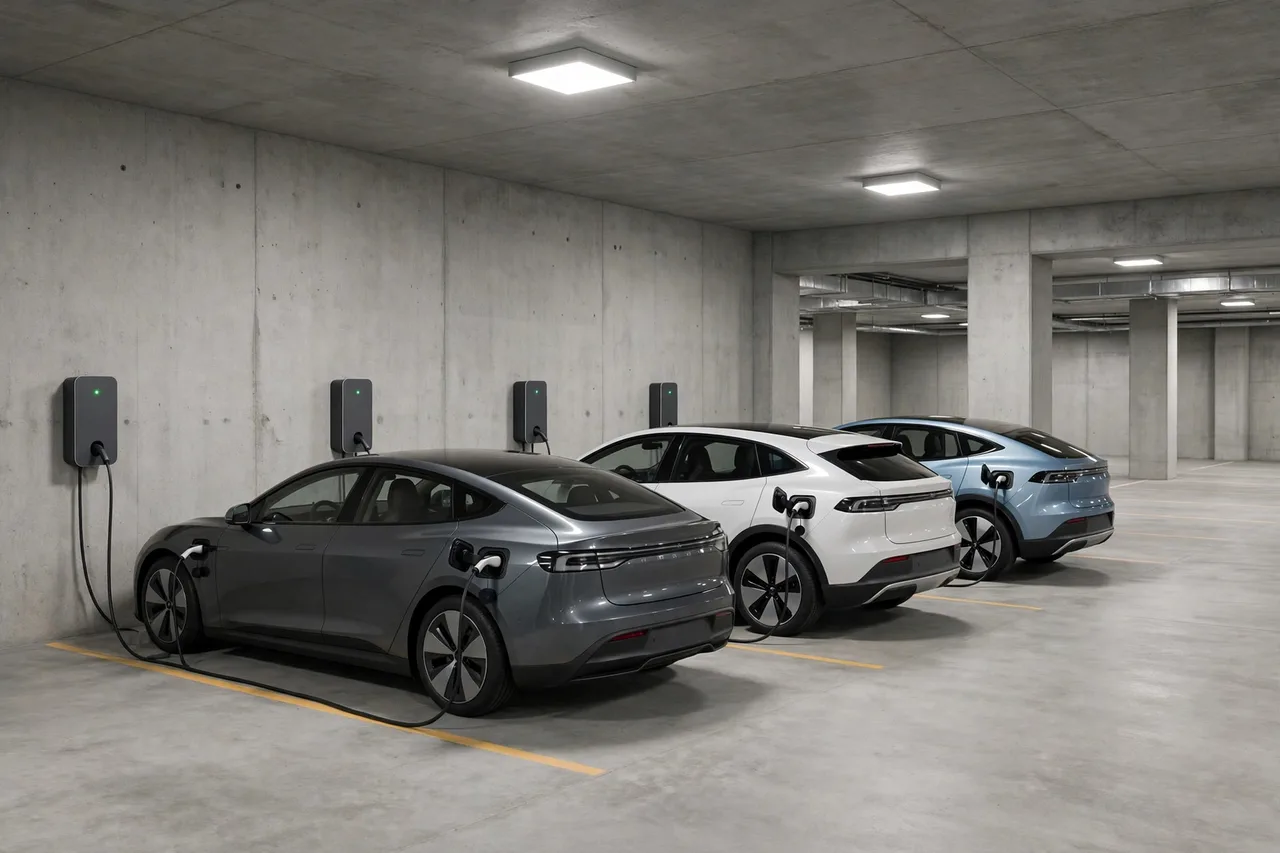
Condos, HOAs and the law in Montana
There is no Montana right-to-charge statute to lean on. Some national roundups list protection that does not exist in this state's code; the statute indexes checked for this page are clear. In Billings, a condo or HOA charger is approved — or not — under the community's own documents, which makes the quality of your application the whole ballgame.
Strategy, then, is the local substitute for statute. In Billings the applications that succeed tend to share a shape: they arrive before the meeting rather than at it, they answer metering and insurance in the first paragraph, and they offer the board a design it can approve once and reuse for the next owner who asks.
The general process, minus the statute, is still covered in our guide to installing an EV charger in a condo or HOA community — most of its application-package advice applies in Billings exactly as written.
Climate, garages and charger placement
The plugged-in car is the winter-ready car: battery held at a kinder temperature by the wall, cabin preconditioned without draining the pack, departure on schedule regardless of the night's low. Households in cold metros describe the home charger less as fuelling than as winter equipment outright.
Cord flexibility is a rated property, and January is when the rating is read. Cables specified for cold service coil and uncoil at temperatures that make lesser jackets crack; where the station is chosen locally, this line of the specification has already been read for you — one of the quieter values of a local installer.

Permits and inspection in Billings
The permit trail also protects the next transaction: a charger circuit on the inspection record is an asset a buyer's inspector reads in one line, while an undocumented circuit is a question that follows the sale. Installers who work this metro treat the filing as part of the deliverable, not an errand.

Neighbourhoods and ZIP codes served
The page covers 14 ZIP codes in and around Billings — including 59101, 59102, 59103, 59104, 59105, 59106, 59107, 59108, 59111, 59112, 59114, 59115, 59116, 59117 — across Yellowstone. If your ZIP is not in the first set shown, ask anyway: installer coverage follows the metro, not a postcode fence.
The same working area takes in the neighbouring localities of Huntley, Shepherd, Acton, Laurel, Worden, Ballantine, Broadview, Pompeys Pillar, Custer — the county ring an installer based in Billings actually drives. Requests from those communities route exactly as city requests do: same services, same permit discipline, same local facts where they differ.
Yellowstone County accounts for 23 of the ZIP codes and 10 named postal localities in the research file, the nearest of them Huntley, Shepherd, Acton, Laurel, Worden. The survey counts 168,957 residents in the county, with a median household income of $76,570 and a median home value of $349,500. Measured across its ZIP codes, the Billings footprint runs about 12 miles north to south and 12 east to west, from ZIP 59101 to 59117 — the ground an installer based here actually covers in a working week.
Beyond the county seats, the working area takes in Huntley, Shepherd, Acton, Laurel, Worden, Pryor, Ballantine, Park City, Molt, Broadview, Edgar, Joliet, Fromberg, Pompeys Pillar, Boyd, Bridger, Saint Xavier, Columbus, Fort Smith, Roundup, Rapelje, Roberts, Lavina, Hardin, Ryegate, Custer, Bearcreek, Frannie, Musselshell, Crow Agency, Absarokee, Reed Point, Red Lodge, Deaver, Garryowen, Belfry — the named localities for which Billings is the nearest metro in the network (neighbouring metros' pages cover their own ground), each routing to the same installer-matching service.
The largest communities in that working area after Billings itself, by the GeoNames populated-place file: Cody (population 9,792), Laurel (population 6,943), Lockwood (population 6,797), Powell (population 6,462), Hardin (population 3,800), Lovell (population 2,422), Red Lodge (population 2,222), Columbus (population 2,042), Greybull (population 1,879), Roundup (population 1,836), Crow Agency (population 1,616), Basin (population 1,305), Absarokee (population 1,150), Park City (population 983), Ranchester (population 940), Dayton (population 804), Busby (population 745), Cowley (population 735), Bridger (population 729), Joliet (population 638). Charging demand follows those populations — the subdivisions and town centres where the next driveways, and the next panels, are.
Carbon County reaches into the working area with 11,116 residents, a median household income of $80,261 and a median home value of $420,800; its localities on this page include Edgar, Joliet, Fromberg, Boyd, Bridger. Big Horn County reaches into the working area with 12,891 residents, a median household income of $58,750 and a median home value of $143,400; its localities on this page include Pryor, Saint Xavier, Fort Smith, Hardin, Crow Agency. Stillwater County reaches into the working area with 9,182 residents, a median household income of $84,732 and a median home value of $405,800; its localities on this page include Park City, Molt, Columbus, Rapelje, Absarokee. Musselshell County reaches into the working area with 5,152 residents, a median household income of $58,920 and a median home value of $235,000; its localities on this page include Roundup, Musselshell. Golden Valley County reaches into the working area with 899 residents, a median household income of $58,333 and a median home value of $212,200; its localities on this page include Lavina, Ryegate.
| ZIP | Locality | County |
|---|---|---|
| 59101 | Billings | Yellowstone |
| 59103 | Billings | Yellowstone |
| 59104 | Billings | Yellowstone |
| 59108 | Billings | Yellowstone |
| 59111 | Billings | Yellowstone |
| 59112 | Billings | Yellowstone |
| 59114 | Billings | Yellowstone |
| 59115 | Billings | Yellowstone |
| 59116 | Billings | Yellowstone |
| 59117 | Billings | Yellowstone |
| 59102 | Billings | Yellowstone |
| 59107 | Billings | Yellowstone |
| 59106 | Billings | Yellowstone |
| 59105 | Billings | Yellowstone |
| 59037 | Huntley | Yellowstone |
| 59079 | Shepherd | Yellowstone |
| 59002 | Acton | Yellowstone |
| 59044 | Laurel | Yellowstone |
| 59088 | Worden | Yellowstone |
| 59066 | Pryor | Big Horn |
| 59006 | Ballantine | Yellowstone |
| 59063 | Park City | Stillwater |
| 59057 | Molt | Stillwater |
| 59015 | Broadview | Yellowstone |
| 59026 | Edgar | Carbon |
| 59041 | Joliet | Carbon |
| 59029 | Fromberg | Carbon |
| 59064 | Pompeys Pillar | Yellowstone |
| 59013 | Boyd | Carbon |
| 59014 | Bridger | Carbon |
| 59075 | Saint Xavier | Big Horn |
| 59019 | Columbus | Stillwater |
| 59035 | Fort Smith | Big Horn |
| 59072 | Roundup | Musselshell |
| 59067 | Rapelje | Stillwater |
| 59073 | Roundup | Musselshell |
| 59070 | Roberts | Carbon |
| 59046 | Lavina | Golden Valley |
| 59034 | Hardin | Big Horn |
| 59074 | Ryegate | Golden Valley |
| 59024 | Custer | Yellowstone |
| 59007 | Bearcreek | Carbon |
| 82423 | Frannie | Park |
| 59059 | Musselshell | Musselshell |
| 59022 | Crow Agency | Big Horn |
| 59001 | Absarokee | Stillwater |
| 59069 | Reed Point | Stillwater |
| 59068 | Red Lodge | Carbon |
| 82421 | Deaver | Big Horn |
| 59031 | Garryowen | Big Horn |
| 59008 | Belfry | Carbon |

Planning the install: from panel to parking
Walk the route before anyone quotes the route. Between Billings's panels and its parking spaces lie the job's real variables: a finished ceiling or an open one, a straight shot through a shared wall or a tour of the attic, forty feet of conductor or a hundred and forty. Installers who quote from photographs quote the average of all routes; installers who walk yours quote the one you actually have. The site visit is where the quote stops being a genre and becomes a document.
Finally, photograph the finished work — station, nameplate, panel directory with the new breaker labelled — and file it with the inspection record. When the car changes, the house sells or a second station joins the first, that folder is the difference between a five-minute answer and an archaeological dig.
Home charging know-how for Billings households
Adapters and other false economies
Continuous loads forgive nothing, and adapters are where charging setups go to be forgiven anyway: a chain of plugs between the wall and a device that draws near its circuit's limit for eight hours is a chain of warm connections. The standing rule from installers is plain — the station connects as its listing intends, hardwired or into a receptacle rated and installed for the duty, and borrowed dryer outlets and travel adapters are emergency expedients, not a charging system. Households that need the car charged nightly should own the boring version of the setup: one circuit, one connection, no improvisation.
Charging while you travel
Cars left for weeks prefer a middle state of charge and a quiet life: plugged in, scheduled modestly, neither brimmed nor starved. The home station makes this effortless — the car sips as it wants, the household returns to a vehicle that is ready rather than recovered. Tell a housesitter nothing at all; there is nothing to do. It is one of home charging's under-sold virtues: the car manages its own storage, from your wall, while the house is empty.
Garage layout: the unglamorous decider
More charging routines are decided by garage geography than by equipment. Which bay the EV takes, which side its port sits on, where the freezer, bikes and workbench have permanent tenure — the station belongs at the intersection of those facts, with a cable that reaches the port without crossing the walking line to the door. Installers who walk the layout with the car in place are not being thorough for its own sake; they are preventing the daily, decade-long annoyance of a station mounted for a parking pattern nobody uses.
A word about the word 'charger'
Strictly speaking, the charger lives in the car: the onboard unit that converts alternating current from the wall into the direct current the battery stores. The box on your wall is supply equipment — it negotiates, switches and protects, but the conversion happens in the vehicle. The distinction explains two practical things: why the car's acceptance rate caps every circuit conversation, and why the same wall equipment serves different cars at different speeds. Installers use 'charger' for the wall box anyway, as does this page — but the mental model is worth owning.

Frequently asked questions
Can I still get the federal tax credit for a home charger in Billings, MT?
The honest ledger for Billings reads: federal credit, ended September 30, 2025; state program, none for typical home installs; NorthWestern Energy LLC residential rebate, none verified in the sources checked. If a salesperson's quote leans on any of the three, the correct response is a request for the program's published page.
What can my HOA in Billings, MT do about a charger install?
They hold the stronger hand in Montana: with no right-to-charge statute on the books, a Billings association's covenants are the law of the car park. The applications that succeed anyway share a shape — owner-funded, licensed installer, metered energy, insured, reversible — because they answer the board's risk questions in advance and in writing.
Panel upgrade or not — how do Billings, MT homeowners find out?
The question has a correct instrument: the load calculation. It totals what your service already carries — with the code's demand factors, not nameplate panic — and sets the charger's continuous load against the remainder. In Billings, where the median home dates to 1979 and about 51% of units predate 1980, the answer splits by street: post-war and newer 200-amp homes usually proceed; older 100-amp homes choose between capacity work and load management. Anyone answering without the calculation is guessing in a uniform.
How much faster is Level 2 charging at home in Billings, MT?
Think of it in parked hours. Level 1 gives you back 3–5 miles for each of them; Level 2 gives back about 25–40, set by the circuit's amperage and what the car can accept. Overnight, that is the gap between 'enough for tomorrow' and 'full, every morning'.
What happens after I request an installer through this page?
Your request — service, Billings ZIP, property type and timing — goes to licensed local installers who cover Billings. They contact you directly to arrange a site visit and quote. PlugReady USA is the matching service, not the installer, and the sections above exist so you can judge any quote against the local facts.
How long does a typical home charger installation take in Billings, MT?
The electrical work itself is usually a half day to a day for a straightforward house — panel near the parking, one circuit, one station. Around it sit two calendars the installer does not control: the permit's issuance and the inspection visit, which follow the local department's queue. Ask any quote to separate the three timelines; a blended promise hides which part might slip.
Nearby cities in Montana
- EV charger installation in Bozeman — about 141 miles from Billings, metro population 125,000
- EV charger installation in Missoula — about 314 miles from Billings, metro population 125,000
- EV charger installation in Casper, WY — about 235 miles from Billings, metro population 80,000
- EV charger installation in Idaho Falls, ID — about 242 miles from Billings, metro population 165,000
- EV charger installation in Rapid City, SD — about 313 miles from Billings, metro population 145,000
Ready to charge at home in Billings?
Tell us the job — service, ZIP and property type — and licensed local installers will take it from there.