EV Charger Installation in Louisville, KY
Everything a Louisville homeowner needs before booking a charger install — the panel question, the utility's current programs, the HOA law and the permit — sourced, dated and local.
There is a short list of things that never change about a charger install — it needs capacity, a route, a position and a permit — and a longer list of things that change with the ZIP code. This page is the longer list, for Louisville. Louisville itself is home to about 640,793 people. Kentucky's registered electric fleet reached 20,700 battery-electric vehicles and 8,600 plug-in hybrids through 2025, and the installers working this metro have local habits worth borrowing. The utility section states what is verified and what is not; the law section quotes the position as it stands; the housing section works from survey data rather than vibes.
The sections that follow are deliberately unglamorous: statutes, survey data, permit counters, tariff habits. That is what a good install is made of. The car is the exciting part; this page is about the wall it plugs into.
Why Louisville ranks 50 in this network's 300-metro build order: KY 20.7K BEVs. Those are registration figures, not projections, and they translate directly into installation work — every newly registered plug-in vehicle is a household deciding where it will charge.
Read the survey numbers as an installer reads them. A median household income of $67,251 and an owner-occupation rate of 60% describe a city where most charger decisions are made by the person who owns the panel — no landlord layer, no board layer for the typical job. The 62% of homes that are single-unit detached are the straightforward installs: garage or driveway, one owner, one circuit.

The composite picture matters more than any single statistic. In Louisville: an older housing fabric, where panel archaeology is a normal part of the first visit; a detached-house majority with a real attached and multifamily minority; buildings of five or more units hold a substantial share of homes, which keeps the multifamily sections of this page in daily use; meanwhile, owners hold a working majority, with renters a significant minority. A page that ignored that profile would give the same advice everywhere; this one is ordered by it.
Keep six figures and you keep Louisville's whole electrical character: 295,381 housing units; 269,328 occupied homes; 162,462 owner-occupied; 181,953 detached houses; 176,265 pre-1980 homes; 68,557 homes in buildings of five or more units. Percentages elsewhere on this page are these numbers in disguise — the counts are the originals, and they are the numbers a local installer's experience is actually made of. The page's geography is equally concrete: 66 ZIP codes across Jefferson, centred near 38.19 degrees north latitude. The city anchors the Louisville/Jefferson County metropolitan area, home to roughly 1,400,000 people on the research file's metro estimate — the wider labour and housing market this page's installers work across.
The same survey release fills in the household economics around the housing stock: a median home value of $241,700, median gross rent of $1,144, per-capita income of $39,418, and a median resident age of 38. The movement data matters as much as the money data: 73% of Louisville workers drive to work alone — the commute pattern home charging is built around; 12% work from home, a population whose cars charge on daytime and overnight schedules alike; 1% commute by public transit; 34% of adults hold a bachelor's degree or higher. The survey's vehicle table is the one an EV page should quote first: 27,485 of Louisville's households have no vehicle at all, while 136,346 have two or more — the multi-car households for whom the second circuit is a when, not an if.
Two burden statistics frame the economics: in Louisville, 46% of renters and 0% of mortgage-holding owners are housing-cost burdened at the standard 30% threshold. And 55% of households are family households, the segment most likely to run the two-vehicle, two-schedule pattern the second-vehicle planning notes address.
None of these facts is trivia; each one moves a real decision in the project. Where so much of the stock predates modern code cycles, the site visit doubles as a survey — grounding electrode, service entrance, panel provenance — before it is ever a quote. The built form refuses a single story: houses with garages on one side of the arterial, garden apartments and mid-rise condos on the other, each population charging by different rules.
The balance also shapes the housing-turnover effect: chargers installed by owners stay as amenities, chargers negotiated by tenants test what the tenancy paperwork said, and both patterns are live here. The specification pattern at this income band is disciplined: capacity for today's car and a conduit sized for tomorrow's, the upgrade deferred until the load calculation insists. The regulatory calendar is the programme calendar: rate cases, electrification plans and pilot approvals move through the commission on public timetables, and installers plan their marketing around them.
Youth in the fleet also means the used-EV wave has not arrived; adoption here is new-car led, and charging installs follow the dealer map more than the classifieds. Mid-sized metros feel fleet growth personally: each year's registrations are visible in the school car park and the permit statistics, and the installer market grows in step rather than in surges. Without a state charging statute, shared-property approvals in this metro are won on paper quality: metering clarity, licensed installers, insurance, reversibility — the complete package the guides set out.
The electrical reality in Louisville homes
Start with the survey's three operative figures for Louisville: median build year 1970; 60% of housing units standing since before 1980; 62% of the stock in single-unit detached houses, with 60% of occupied homes owner-occupied. Between them, they sketch the electrical city an installer works in. Age shows up electrically before it shows up anywhere else: services sized for a house with a third of today's appliances. Expect the first conversation to be about capacity — what the panel is, what it already feeds, and which of the three routes (circuit, management, upgrade) your numbers support. Housing age also tracks wire-run reality: older homes more often place the panel in a basement or interior wall far from the garage, and distance is copper, conduit and labour.
One further survey line belongs in any Louisville install conversation: 40% of the city's homes heat with electricity — 107,008 households whose panels already carry a major winter load before a charger is contemplated. Electric heat and EV charging are the two largest discretionary loads a house can host, and where they coincide, the load calculation stops being a formality.
Renters are the other constituency in these numbers: about 106,866 of Louisville's occupied homes are rented rather than owned. Their charging route runs through a landlord conversation instead of a panel they control — a different project, covered by the rentals guide and the law section below, but a routine one in a city with this many renting households.
The city's stock is not all houses: 23% of units are in structures of five or more. Shared buildings mean shared panels, assigned parking and association process — the substance of the multifamily sections below.
EV charging services in Louisville
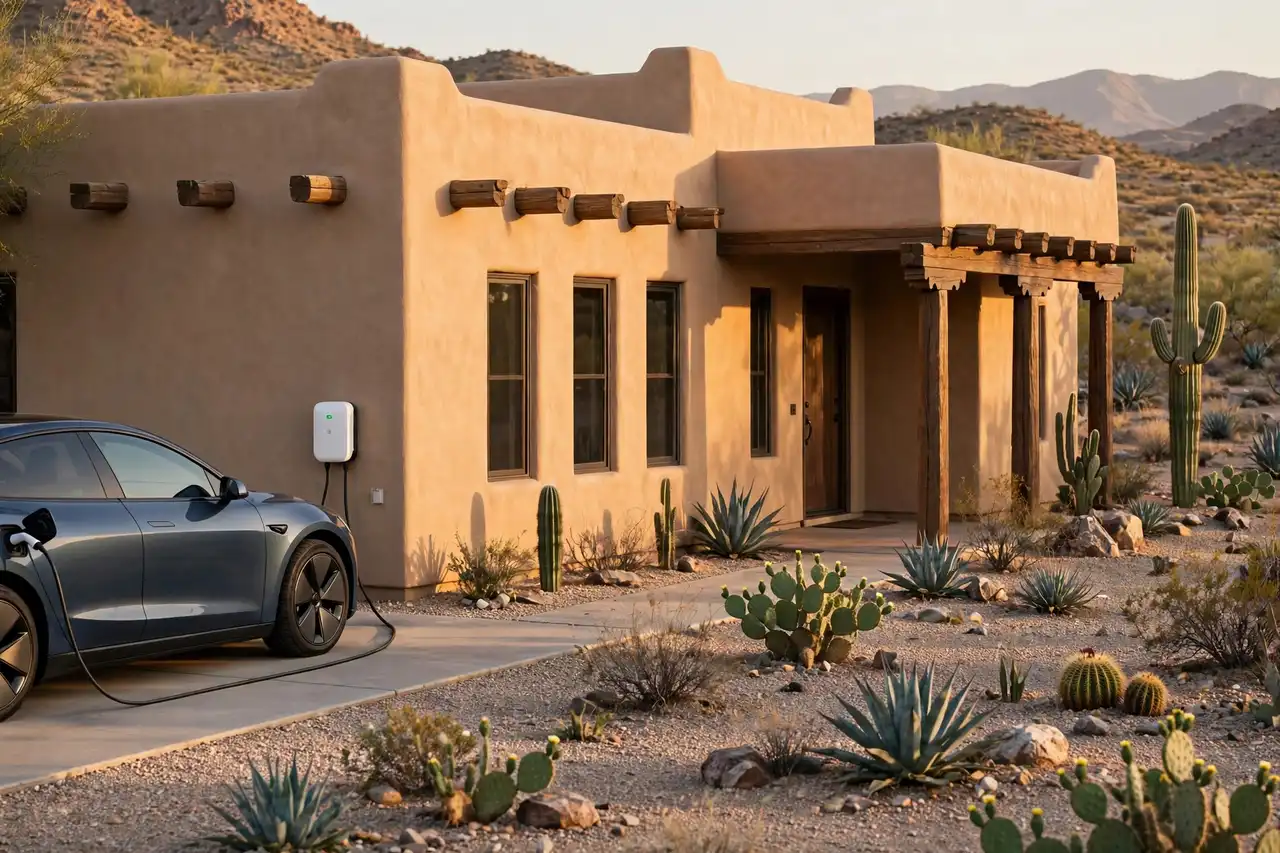
Ten services cover the work installers do in Louisville. Three lead the list here because of what this city's housing and law actually look like — each links to its national service page, where scope and process are set out in full.
Home EV Charger Installation in Louisville
Think of it as plumbing for electrons, done once: capacity checked, circuit run, station mounted and configured, inspection passed. The households that report the smoothest projects describe the same shape — a visit that measured, a quote that itemised, and a car that simply charged from the first night.
In Louisville: the install Louisville's new EV households book first, and the one the rest of this page keeps returning to.
Dedicated Circuit & Electrical Panel Upgrade in Louisville
Panel work is the one part of a charger project that outlives the car, the station and possibly the household's tenure. Specified generously and documented properly, it is less an expense than a permanent alteration in what the house can do.
In Louisville: the capacity answer when Louisville's older panels meet a continuous load.
Level 2 Charger Installation in Louisville
What is being bought is recovery rate. A Level 2 circuit returns in one overnight session what a household receptacle returns in a day and a half, and that margin is the difference between planning around the car and forgetting about it.
In Louisville: the upgrade from a wall outlet to a dedicated 240-volt circuit, and the end of range arithmetic at bedtime.
Utility programs and electricity in Louisville
Electricity in Louisville comes from Louisville Gas & Electric Co. Parts of the wider metro are served by Salt River Electric Coop Corp, Shelby Energy Coop, Inc. The utility matters twice over for a charger install: it sets the time-of-use rates that decide what overnight charging costs you, and it is the organisation that may — or may not — currently help pay for the equipment.
Plan on no rebate in Louisville at the moment. In the sources checked for this page, Louisville Gas & Electric Co publishes no residential charger rebate, Kentucky runs no state scheme for typical home installs, and the federal credit that once filled this gap closed on September 30, 2025. Installers quote the work; utilities fund programs; the second list is currently empty here, and any quote that implies otherwise should come with the program's published terms attached.
If your service includes a demand component, the charger's start time matters more than its size: staggered against the house's other big loads, the same circuit costs noticeably less to run across a year.
Condos, HOAs and the law in Kentucky
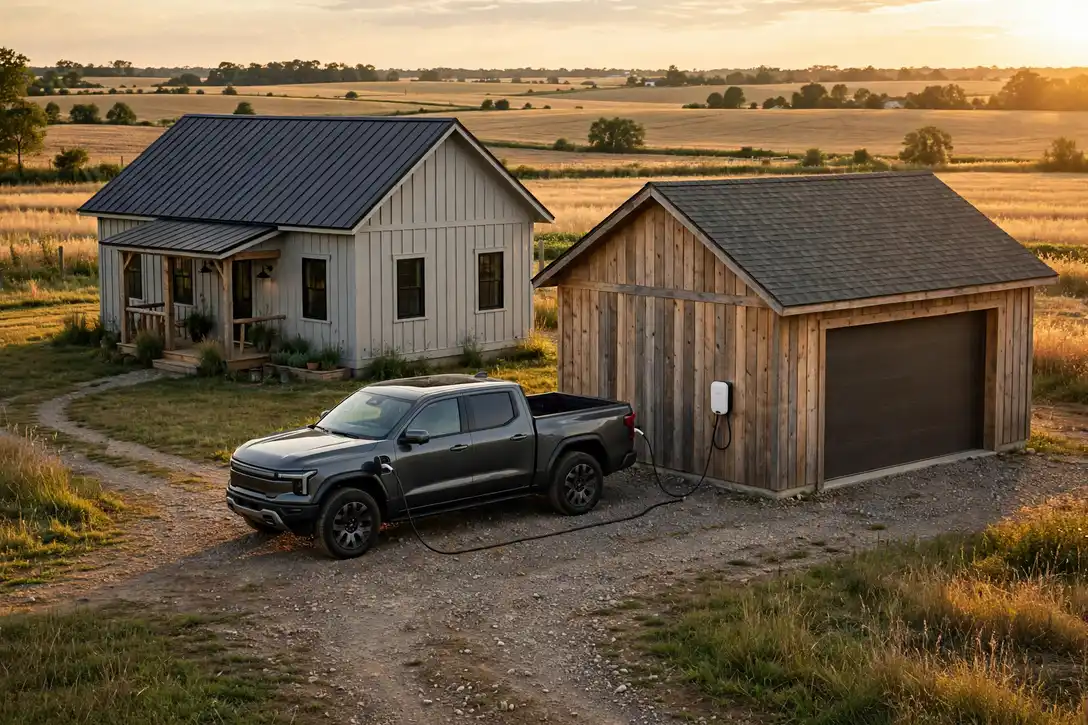
There is no Kentucky right-to-charge statute to lean on. Some national roundups list protection that does not exist in this state's code; the statute indexes checked for this page are clear. In Louisville, a condo or HOA charger is approved — or not — under the community's own documents, which makes the quality of your application the whole ballgame.
Owners of single-family homes in HOA communities should also check the covenants before assuming the driveway is uncomplicated: exterior-equipment and architectural-approval clauses can apply to a visible wall-mounted station even where the garage interior is entirely the owner's business.
The negotiation playbook — application contents, metering options, the wording that answers boards' standard objections — is set out in our condo and HOA guide, read here as a persuasion manual rather than a rights manual.
Climate, garages and charger placement
Mixed-climate households discover the schedule twice a year: the winter window that suits the battery's warming and the summer window that dodges the afternoon peak are different settings, and the households that thrive change them with the clocks. It is the entire seasonal maintenance programme of a home charger.
A four-season climate asks the installation to be boring in every month: cable that stays flexible in January, an enclosure untroubled by August humidity, and drainage that keeps spring melt away from the connector. None of this is exotic — it is the standard outdoor discipline, and it is why station placement gets a full minute of the site visit rather than a wave at the nearest wall.

Permits and inspection in Louisville
Bring the panel schedule up to date while the electrician is in it — the new circuit labelled, in the directory, in pen. Inspectors notice; future electricians bless you for it; and the load calculation for any second circuit starts from that card.
Neighbourhoods and ZIP codes served
The page covers 66 ZIP codes in and around Louisville — including 40201, 40202, 40203, 40204, 40205, 40206, 40207, 40208, 40209, 40210, 40211, 40212, 40213, 40214, 40215, 40216, 40217, 40218, 40219, 40220, 40221, 40222, 40223, 40224, 40225, 40228, 40229, 40231, 40232, 40233, 40241, 40242, 40243, 40245, 40250, 40251, 40252, 40253, 40255, 40256, 40257, 40258, 40259, 40261, 40266, 40268, 40269, 40270, 40272, 40280, 40281, 40282, 40283, 40285, 40287, 40289, 40290, 40291, 40292, 40293 — across Jefferson. If your ZIP is not in the first set shown, ask anyway: installer coverage follows the metro, not a postcode fence.
The same working area takes in the neighbouring localities of Masonic Home, Fairdale, Glenview, Harrods Creek, Prospect, Eastwood, Fisherville — the county ring an installer based in Louisville actually drives. Requests from those communities route exactly as city requests do: same services, same permit discipline, same local facts where they differ.
Jefferson County accounts for 73 of the ZIP codes and 8 named postal localities in the research file, the nearest of them Masonic Home, Fairdale, Glenview, Harrods Creek, Prospect. The survey counts 783,022 residents in the county, with a median household income of $69,866 and a median home value of $248,400. Measured across its ZIP codes, the Louisville footprint runs about 15 miles north to south and 21 east to west, from ZIP 40201 to 40299 — the ground an installer based here actually covers in a working week.
Beyond the county seats, the working area takes in Masonic Home, Fairdale, Jeffersonville, Hillview, Glenview, Clarksville, Harrods Creek, New Albany, Brooks, Mount Washington, Prospect, Eastwood, Shepherdsville, Pewee Valley, Fisherville, Mount Saint Francis, Crestwood, Lanesville, Sellersburg, Elizabeth, Goshen, Floyds Knobs, Georgetown, Clermont, Buckner, Simpsonville, Finchville, Charlestown, Taylorsville, La Grange, Memphis, West Point, New Middletown, Greenville, Borden, Coxs Creek, Crandall, Lebanon Junction, Fairfield, Corydon, Westport, Laconia, Otisco, Bradford, Muldraugh, Henryville, New Salisbury, Shelbyville, Fort Knox, Nazareth, Smithfield, Palmyra, Marysville, Bethlehem, Central, New Washington, Pekin, Pendleton, Ramsey, Brandenburg, Bardstown, Radcliff, Bloomfield, Underwood, Vine Grove, Mauckport, Eminence, Mount Eden, Nabb, Waddy, Depauw, Boston, Sulphur, Lexington, New Castle, Ekron, Chaplin, Fredericksburg, Pleasureville, Bedford, Bagdad, Rineyville, Scottsburg, Elizabethtown, Battletown, Guston, Milltown, Salem, Campbellsburg, Port Royal, Hanover, New Haven, Milton, Saint Catharine, Leavenworth, Austin, New Hope, Marengo, Nerinx, Hardinsburg, Turners Station, Irvington, Loretto, Deputy, Springfield, Webster, Cecilia, Rhodelia, Payneville, Glendale, Madison, Hodgenville, Saint Francis, Perry Park, Carrollton, English, Crothersville, Custer, Worthville — the named localities for which Louisville is the nearest metro in the network (neighbouring metros' pages cover their own ground), each routing to the same installer-matching service.
ZIP codes in that shared ground include 40036, 40078, 40342, 40601, 40602, 40603, 40604, 40618, 40619, 40620, 40621, 40622.
The largest communities in that working area after Louisville itself, by the GeoNames populated-place file: Jeffersonville (population 46,960), New Albany (population 36,732), Elizabethtown (population 29,678), Jeffersontown (population 26,946), Pleasure Ridge Park (population 25,813), Valley Station (population 22,756), Radcliff (population 22,387), Clarksville (population 21,866). Charging demand follows those populations — the subdivisions and town centres where the next driveways, and the next panels, are.
| ZIP | Locality | County |
|---|---|---|
| 40201 | Louisville | Jefferson |
| 40221 | Louisville | Jefferson |
| 40224 | Louisville | Jefferson |
| 40225 | Louisville | Jefferson |
| 40231 | Louisville | Jefferson |
| 40232 | Louisville | Jefferson |
| 40233 | Louisville | Jefferson |
| 40250 | Louisville | Jefferson |
| 40251 | Louisville | Jefferson |
| 40252 | Louisville | Jefferson |
| 40253 | Louisville | Jefferson |
| 40255 | Louisville | Jefferson |
| 40256 | Louisville | Jefferson |
| 40257 | Louisville | Jefferson |
| 40261 | Louisville | Jefferson |
| 40266 | Louisville | Jefferson |
| 40268 | Louisville | Jefferson |
| 40269 | Louisville | Jefferson |
| 40281 | Louisville | Jefferson |
| 40282 | Louisville | Jefferson |
| 40283 | Louisville | Jefferson |
| 40285 | Louisville | Jefferson |
| 40287 | Louisville | Jefferson |
| 40290 | Louisville | Jefferson |
| 40292 | Louisville | Jefferson |
| 40218 | Louisville | Jefferson |
| 40213 | Louisville | Jefferson |
| 40205 | Louisville | Jefferson |
| 40220 | Louisville | Jefferson |
| 40219 | Louisville | Jefferson |
| 40280 | Louisville | Jefferson |
| 40217 | Louisville | Jefferson |
| 40209 | Louisville | Jefferson |
| 40228 | Louisville | Jefferson |
| 40204 | Louisville | Jefferson |
| 40206 | Louisville | Jefferson |
| 40041 | Masonic Home | Jefferson |
| 40207 | Louisville | Jefferson |
| 40208 | Louisville | Jefferson |
| 40202 | Louisville | Jefferson |
| 40214 | Louisville | Jefferson |
| 40215 | Louisville | Jefferson |
| 40222 | Louisville | Jefferson |
| 40259 | Louisville | Jefferson |
| 40270 | Louisville | Jefferson |
| 40289 | Louisville | Jefferson |
| 40293 | Louisville | Jefferson |
| 40294 | Louisville | Jefferson |
| 40295 | Louisville | Jefferson |
| 40296 | Louisville | Jefferson |
| 40297 | Louisville | Jefferson |
| 40298 | Louisville | Jefferson |
| 40203 | Louisville | Jefferson |
| 40291 | Louisville | Jefferson |
| 40210 | Louisville | Jefferson |
| 40229 | Louisville | Jefferson |
| 40118 | Fairdale | Jefferson |
| 47132 | Jeffersonville | Clark |
| 47133 | Jeffersonville | Clark |
| 47134 | Jeffersonville | Clark |
| 47144 | Jeffersonville | Clark |
| 47199 | Jeffersonville | Clark |
| 40242 | Louisville | Jefferson |
| 40129 | Hillview | Bullitt |
| 40025 | Glenview | Jefferson |
| 40211 | Louisville | Jefferson |
| 40223 | Louisville | Jefferson |
| 40299 | Louisville | Jefferson |
| 40243 | Louisville | Jefferson |
| 40216 | Louisville | Jefferson |
| 40212 | Louisville | Jefferson |
| 47130 | Jeffersonville | Clark |
| 40241 | Louisville | Jefferson |
| 47129 | Clarksville | Clark |
| 40027 | Harrods Creek | Jefferson |
| 47151 | New Albany | Floyd |
| 40109 | Brooks | Bullitt |
| 40258 | Louisville | Jefferson |
| 47150 | New Albany | Floyd |
| 40047 | Mount Washington | Bullitt |
| 40245 | Louisville | Jefferson |
| 40272 | Louisville | Jefferson |
| 40059 | Prospect | Jefferson |
| 40018 | Eastwood | Jefferson |
| 40165 | Shepherdsville | Bullitt |
| 40056 | Pewee Valley | Oldham |
| 40023 | Fisherville | Jefferson |
| 40166 | Shepherdsville | Bullitt |
| 47146 | Mount Saint Francis | Floyd |
| 40014 | Crestwood | Oldham |
Planning the install: from panel to parking
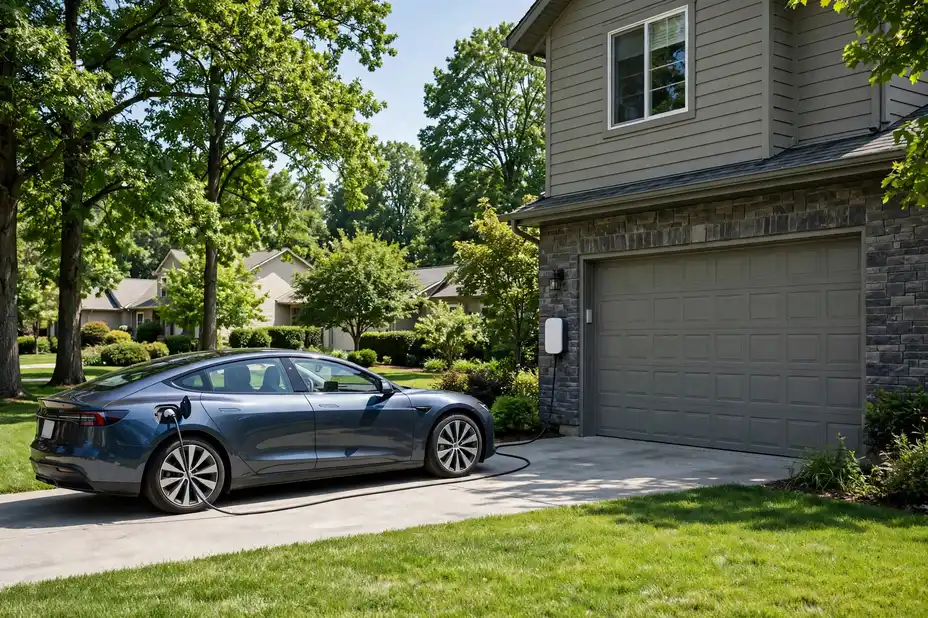
Walk the route before anyone quotes the route. Between Louisville's panels and its parking spaces lie the job's real variables: a finished ceiling or an open one, a straight shot through a shared wall or a tour of the attic, forty feet of conductor or a hundred and forty. Installers who quote from photographs quote the average of all routes; installers who walk yours quote the one you actually have. The site visit is where the quote stops being a genre and becomes a document.
One more piece of sequencing advice Louisville installers give consistently: if the panel is being opened anyway, settle the other electrical maybes in the same visit — the circuit you will want next year costs least while the permit and the electrician are already in the house.
Home charging know-how for Louisville households
Three permit myths, retired
Myth one: it is just an outlet. A receptacle on a new 240-volt continuous-load circuit is permitted electrical work in effectively every jurisdiction — the outlet's familiarity does not change the circuit's nature. Myth two: nobody will know. The panel schedule, the insurer, the buyer's inspector and the next electrician all eventually know. Myth three: the permit is the expensive part. It is among the smallest lines in the project and the only one that produces an independent witness. Retire all three before the quotes arrive.
Charging for guests
A home charger quietly becomes hospitality infrastructure: the visiting family's EV, the friend's road-trip top-up, the neighbour mid-renovation. Households handle it with varying ceremony — a standing offer, a holster left accessible, a note in the guest room. The electrical system does not care; the point is social. The charger joins the spare bed and the good coffee in the category of things a house offers the people it likes.
Getting onto the board's agenda
Association decisions happen inside a procedure, and the procedure has a door: the agenda. Applications that miss the submission deadline wait a full cycle regardless of merit, so the first question for any board is clerical — when do items close for the next meeting, and in what format. Arrive inside the procedure with a complete package and the discussion is about your design; arrive outside it and the discussion is about process, and process always wins the evening. Property managers, asked politely, will tell you the format they prefer applications in.
Planning for the second EV
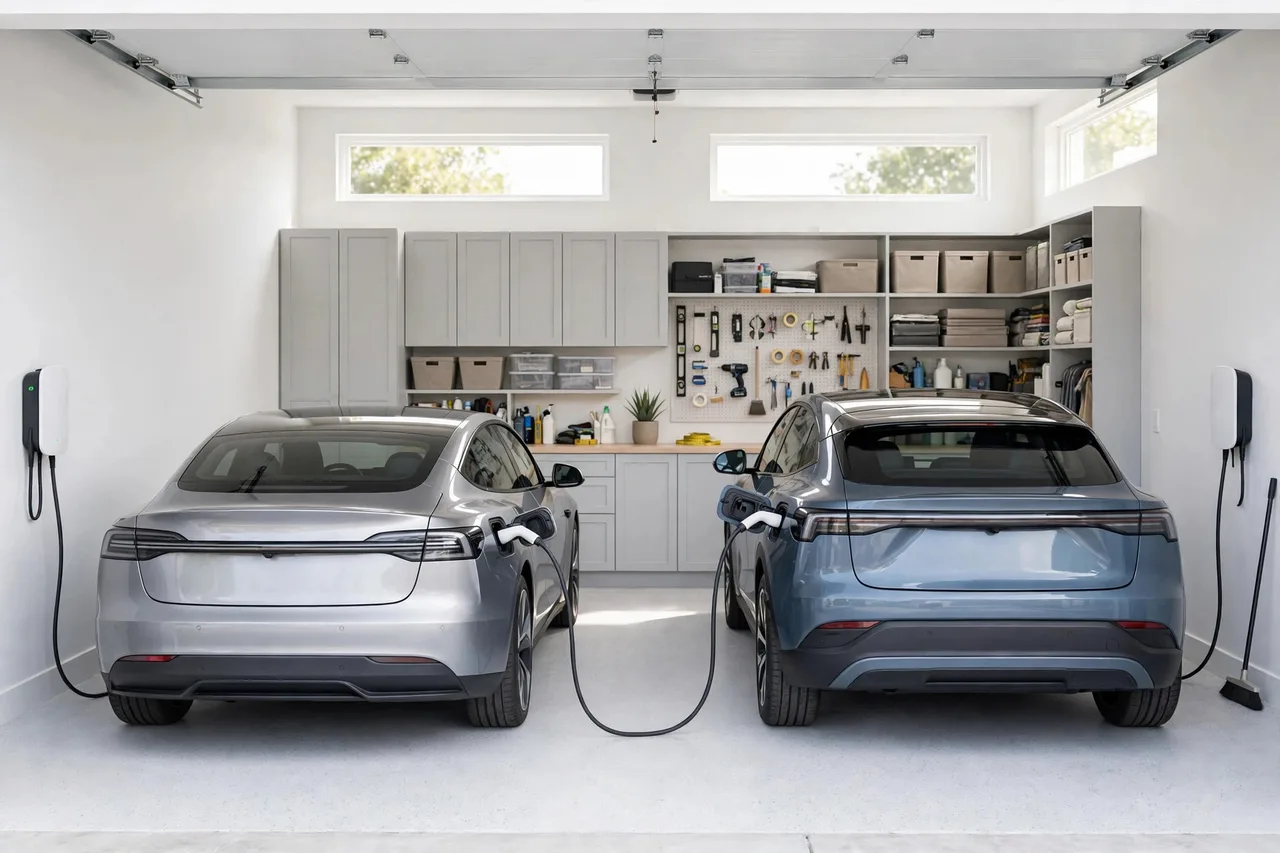
The second electric car rarely arrives as a surprise — it is the household's own verdict on the first one. Planning for it at the first install costs little: conduit sized a step up, panel capacity reserved on the schedule, and a station position that can serve a second bay or share its circuit through power-sharing equipment. Retrofitting the same readiness later means reopening finished work. Installers ask about the five-year picture during the site visit because the honest answers change today's scope more cheaply than any other conversation in the project.
Surge protection and the connected house
A charging station is a computer that drinks from the service entrance, and it shares that entrance with everything else the house owns. Whole-home surge protection at the panel — increasingly a code expectation in new work — is the standard companion recommendation when a panel is opened for a charger circuit: one device, guarding the charger, the appliances and the electronics alike. In regions with serious lightning seasons the conversation is routine; everywhere, it is a small line item riding on work already happening, and installers raise it in that spirit.

Frequently asked questions
Can I still get the federal tax credit for a home charger in Louisville, KY?
The honest ledger for Louisville reads: federal credit, ended September 30, 2025; state program, none for typical home installs; Louisville Gas & Electric Co residential rebate, none verified in the sources checked. If a salesperson's quote leans on any of the three, the correct response is a request for the program's published page.
What can my HOA in Louisville, KY do about a charger install?
They hold the stronger hand in Kentucky: with no right-to-charge statute on the books, a Louisville association's covenants are the law of the car park. The applications that succeed anyway share a shape — owner-funded, licensed installer, metered energy, insured, reversible — because they answer the board's risk questions in advance and in writing.
Does a Level 2 charger mean a panel upgrade for a Louisville, KY home?
The question has a correct instrument: the load calculation. It totals what your service already carries — with the code's demand factors, not nameplate panic — and sets the charger's continuous load against the remainder. In Louisville, where the median home dates to 1970 and about 60% of units predate 1980, the answer splits by street: post-war and newer 200-amp homes usually proceed; older 100-amp homes choose between capacity work and load management. Anyone answering without the calculation is guessing in a uniform.
How much faster is Level 2 charging at home in Louisville, KY?
In parked hours: a Level 1 cord returns about 3–5 miles for each of them, and a Level 2 circuit returns roughly 25–40, set by its amperage and the car's acceptance. For a Louisville household parking ten hours, that is the difference between recovering a short errand day and recovering any day the car can legally drive.
What happens after I request an installer through this page?
Your request — service, Louisville ZIP, property type and timing — goes to licensed local installers who cover Louisville. They contact you directly to arrange a site visit and quote. PlugReady USA is the matching service, not the installer, and the sections above exist so you can judge any quote against the local facts.
How long does a typical home charger installation take in Louisville, KY?
The electrical work itself is usually a half day to a day for a straightforward house — panel near the parking, one circuit, one station. Around it sit two calendars the installer does not control: the permit's issuance and the inspection visit, which follow the local department's queue. Ask any quote to separate the three timelines; a blended promise hides which part might slip.
Nearby cities in Kentucky
- EV charger installation in Lexington — about 67 miles from Louisville, metro population 525,000
- EV charger installation in Cincinnati, OH — about 92 miles from Louisville, metro population 2,300,000
- EV charger installation in Evansville, IN — about 106 miles from Louisville, metro population 360,000
- EV charger installation in Indianapolis, IN — about 112 miles from Louisville, metro population 2,100,000
Ready to charge at home in Louisville?
Tell us the job — service, ZIP and property type — and licensed local installers will take it from there.