EV Charger Installation in Kahului, HI
Charging where you park, in Kahului: the utility programs, state law, permit process and housing facts behind a home charger install, gathered in one place.
Consider what a home charger actually replaces: the weekly detour, the public station's queue, the arithmetic of arriving home low. In Kahului, the replacement project is well understood because the fleet is already here — 35,100 battery-electric vehicles and 9,400 plug-in hybrids registered across Hawaii through 2025. Kahului itself is home to about 28,288 people. This page is the project's local brief: your utility and its programs, your state's law, your city's permit process, and your housing stock's electrical character, each stated with its source.
How PlugReady USA works, in one breath: you describe the job once, licensed local installers who cover Kahului receive it, and the conversations happen with them directly. The rest of this page exists so those conversations start from facts — yours about the house, ours about the metro — rather than from a sales script.
What the Experian and AFDC registration data say about Kahului–Wailuku: Maui; HI share. Translated out of market language: your neighbours are already charging at home, the permit office already knows the paperwork, and the installers already know the housing stock.
Survey context for Kahului, in the three lines installers actually use: median household income $98,077; owner-occupation at 65%; single-unit detached homes at 74%. Income tracks adoption pace, tenure decides whose signature a job needs, and structure decides whether the answer is a garage circuit or a building negotiation.

Put the survey together and Kahului's charging profile reads like this: an older housing fabric, where panel archaeology is a normal part of the first visit; overwhelmingly a detached-house city, so most installs are the simple garage pattern; buildings of five or more units are a visible minority of the stock; and owners hold a working majority, with renters a significant minority. That combination — more than any single number — is what the installers working here plan around, and it is the lens for everything on this page.
Keep six figures and you keep Kahului's whole electrical character: 8,879 housing units; 8,330 occupied homes; 5,391 owner-occupied; 6,543 detached houses; 4,755 pre-1980 homes; 1,122 homes in buildings of five or more units. Percentages elsewhere on this page are these numbers in disguise — the counts are the originals, and they are the numbers a local installer's experience is actually made of. The page's geography is equally concrete: 2 ZIP codes across Maui, centred near 20.88 degrees north latitude. The city anchors the Kahului–Wailuku metropolitan area, home to roughly 165,000 people on the research file's metro estimate — the wider labour and housing market this page's installers work across.
The same survey release fills in the household economics around the housing stock: a median home value of $862,600, median gross rent of $1,488, per-capita income of $37,588, and a median resident age of 43. And the daily rhythms behind the housing numbers: 68% of Kahului workers drive to work alone — the commute pattern home charging is built around; 5% work from home, a population whose cars charge on daytime and overnight schedules alike; 3% commute by public transit; 25% of adults hold a bachelor's degree or higher. And the fleet in the driveways: 2,137 households in Kahului have exactly one vehicle, 5,611 have two or more, and 582 have none.
Two burden statistics frame the economics: in Kahului, 43% of renters and 0% of mortgage-holding owners are housing-cost burdened at the standard 30% threshold. And 72% of households are family households, the segment most likely to run the two-vehicle, two-schedule pattern the second-vehicle planning notes address.
The signature matters because installs follow it, street by street. The oldest housing throws the longest shadows over an install: knob-and-tube remnants in the attic, ungrounded receptacles, services sized for iceboxes and radios that now feed induction ranges and heat pumps. House-by-house urbanism gives the metro a house-by-house charging pattern — no building-scale projects, just thousands of individual circuits appearing one permit at a time.
The balance of tenure keeps both crafts alive locally: firms that run domestic circuits all week, and firms whose week is landlord letters and board packs — with the good ones fluent in both. Household incomes at this level put the metro's charging adoption on the early curve: second EVs, larger batteries, and the panel work specified generously rather than minimally. The commission's calendar quietly schedules the market: when a new time-of-use design is approved, installer phones ring in a pattern the docket predicted months earlier.
The state fleet is in its growth chapter: registrations climbing from a modest base, installer capacity being built ahead of demand, and early local precedents carrying outsized weight. A smaller metro runs on relationships: the electrical firms are few, known, and booked through reputations maintained across decades of local work. The association dimension, at least, comes with a statutory frame in this state — the law section above sets out what boards may and may not do, and applications written inside that frame travel noticeably faster.
The electrical reality in Kahului homes
Start with the survey's three operative figures for Kahului: median build year 1978; 54% of housing units standing since before 1980; 74% of the stock in single-unit detached houses, with 65% of occupied homes owner-occupied. Between them, they sketch the electrical city an installer works in. A housing stock this age leans on smaller electrical services — 100-amp panels are common, and fuse-era equipment still turns up in the oldest streets. For many of those homes the honest answer is a panel upgrade or a load-management device before the charger circuit goes in, and a good installer will show you the load calculation rather than asking you to take it on faith. Detached houses matter for a practical reason: a garage or driveway on your own lot means the charger, the car and the circuit are all under one roof and one owner's control, which is the simplest configuration there is.
One further survey line belongs in any Kahului install conversation: 52% of the city's homes heat with electricity — 4,301 households whose panels already carry a major winter load before a charger is contemplated. Electric heat and EV charging are the two largest discretionary loads a house can host, and where they coincide, the load calculation stops being a formality.
The tenure split cuts the other way too: roughly 2,939 occupied homes in Kahului are rented. For those households the charger question is a negotiation with a property owner — written proposal, licensed installer, metering clarity — and it succeeds often enough that installers here keep the pattern ready.
And 13% of Kahului's homes are in buildings with five or more units — apartments and condominiums where charging is a building decision before it is an electrical one. If that is your situation, the law and multifamily sections of this page are the ones written for you.
EV charging services in Kahului
The full menu runs to ten services; the three cards at the top are the ones Kahului's housing stock and state law push to the front. Everything links to its national service page for scope and process in full.
Home EV Charger Installation in Kahului
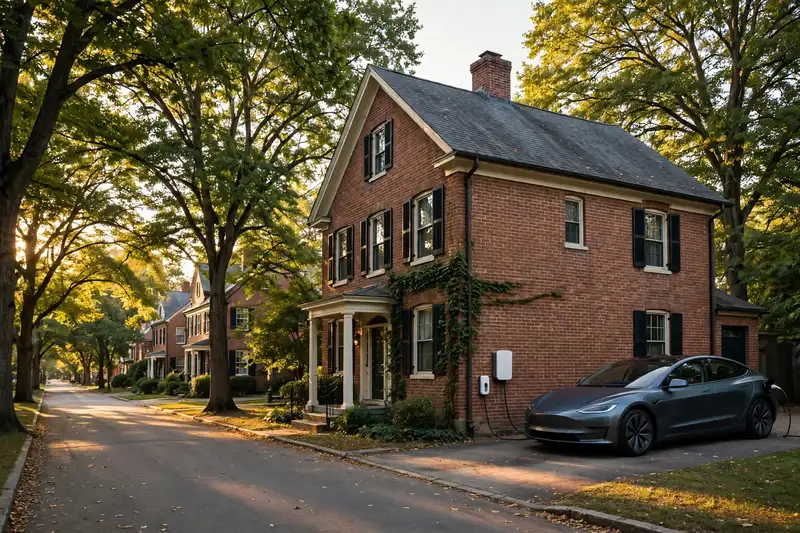
One circuit, one station, one inspection: the residential install in its usual form. An installer sizes the circuit to the household's driving, mounts the station where the cable reaches the port without drama, sets its output to the circuit it landed on, and leaves the paperwork filed with the house.
In Kahului: where most Kahului projects start and finish: one circuit, one station, one inspection.
Dedicated Circuit & Electrical Panel Upgrade in Kahului
The upgrade is unglamorous and transformative: a modern panel with honest capacity, labelled circuits, and room for the decade's next three electrical ideas after the charger. Houses rarely regret capacity; they regret its absence annually.
In Kahului: relevant in Kahului wherever a 100-amp panel already carries cooking, heating and hot water before a charger asks for room.
Multifamily & Condo EV Charging in Kahului
Shared buildings convert charging from a purchase into a policy, and the installers fluent here speak both languages — amperage and agenda items. The electrical design that wins approval is the one whose metering and load answers arrive attached to the application.
In Kahului: the approvals-plus-wiring job for Kahului's condos and HOA communities, where the process matters as much as the circuit.
Utility programs and electricity in Kahului
Electricity in Kahului comes from Maui Electric Co Ltd. The utility matters twice over for a charger install: it sets the time-of-use rates that decide what overnight charging costs you, and it is the organisation that may — or may not — currently help pay for the equipment.
Do not budget for a rebate in Kahului right now. As of the sources checked for this page, Maui Electric Co Ltd publishes no residential charger rebate, Hawaii offers no state program for typical home installs, and the federal 30C credit ended on September 30, 2025. If that changes, the utility's program page will say so with an as-of date — and this page will be updated to match. Until then, judge quotes on the work itself.
Solar households should read the export terms alongside the charging ones: the pair decides whether midday charging on home-working days beats the overnight window, and the answer is written in your tariff, not in general advice.
Condos, HOAs and the law in Hawaii
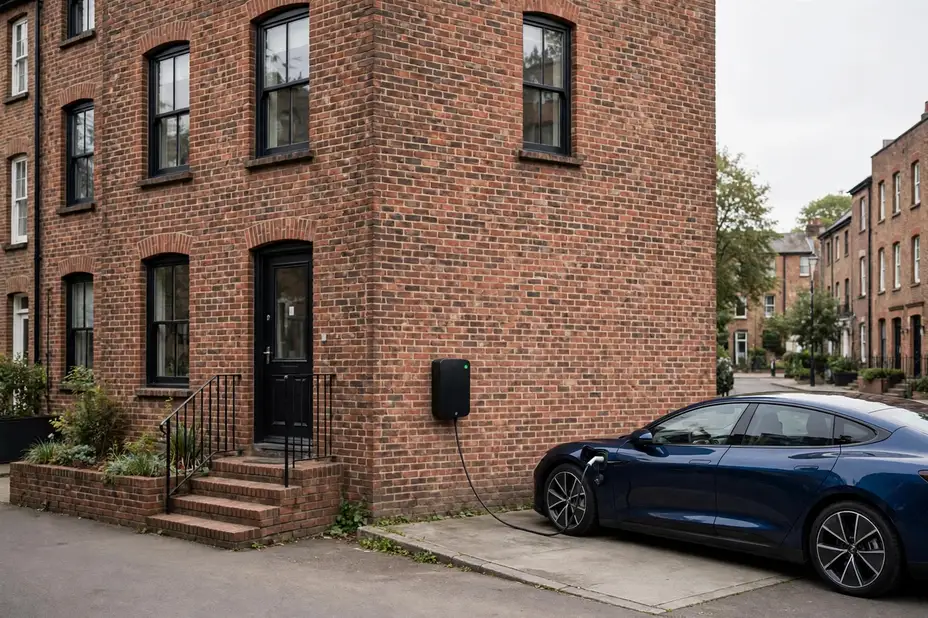
Hawaii has a right-to-charge law. Under HRS §196-7.5, a homeowners association or condominium cannot simply prohibit an owner from installing a charging station in their own parking space. The law does not make the process free or instant — owners typically carry the cost, must use a licensed installer, carry any insurance the statute specifies, and can be required to restore the space if they remove the equipment — but it converts the conversation from a request for permission into a defined process with rules on both sides.
For renters, coverage in Hawaii is recorded as: Owners. If you rent in Kahului, the practical route is still a written proposal to the landlord — dedicated circuit, licensed installer, your name on the permit — because a charger-ready space is an asset most landlords keep when you leave.
The step-by-step version lives in our guide to installing an EV charger in a condo or HOA community — the application sequence, the metering designs and the questions boards ask, in order.
Climate, garages and charger placement
Shade is a specification here, not a nicety. Outdoor stations belong under eaves or on the wall that escapes the afternoon sun; connectors left baking in a holder weather faster, and cables stiffen and crack on a shorter clock. The site walk should include a look at where the sun actually lands at four in the afternoon — that is the hour the equipment has to survive.
Heat also argues for headroom in the circuit decision. A car managing a hot battery after a hot commute draws on its own schedule; a generously sized circuit finishes the session inside the cool window instead of straddling the morning. It is a small thing, decided once, felt all summer.

Permits and inspection in Kahului
What the inspector is checking, in plain terms: conductor size against breaker size, the continuous-load calculation, terminations torqued, protection where the code wants it, and a station whose settings match the circuit it landed on. It is a short visit that validates everything you cannot see.

Neighbourhoods and ZIP codes served
The page covers 2 ZIP codes in and around Kahului — including 96732, 96733 — across Maui. If your ZIP is not in the first set shown, ask anyway: installer coverage follows the metro, not a postcode fence.
The same working area takes in the neighbouring localities of Wailuku, Paia, Makawao, Pukalani, Lahaina, Puunene, Kihei, Haiku, Kula, Lanai City, Hana, Kaunakakai, Kalaupapa, Kualapuu — the county ring an installer based in Kahului actually drives. Requests from those communities route exactly as city requests do: same services, same permit discipline, same local facts where they differ.
Maui County accounts for 19 of the ZIP codes and 17 named postal localities in the research file, the nearest of them Wailuku, Paia, Makawao, Pukalani, Lahaina. The survey counts 164,522 residents in the county, with a median household income of $97,161 and a median home value of $904,700. Measured across its ZIP codes, the Kahului footprint runs about 1 miles north to south and 0 east to west, from ZIP 96732 to 96733 — the ground an installer based here actually covers in a working week.
Beyond the county seats, the working area takes in Wailuku, Paia, Makawao, Pukalani, Lahaina, Puunene, Kihei, Haiku, Kula, Lanai City, Hana, Kaunakakai, Kalaupapa, Kualapuu, Hoolehua — the named localities for which Kahului is the nearest metro in the network (neighbouring metros' pages cover their own ground), each routing to the same installer-matching service.
The wider working area also reaches Maunaloa, Hawi, Kapaau, Waikoloa, Honolulu, Kamuela, Waimanalo, Honokaa, Kailua, FPO AA, Jbphh, Mcbh Kaneohe Bay, Kaneohe, Fort Shafter, Paauilo, Camp H M Smith, Aiea, Kaaawa, Tripler Army Medical Center, Ookala, Kapolei, Ewa Beach, Waipahu, APO AA, Papaaloa, Hauula, Keauhou, Wheeler Army Airfield, Laie, Kunia, Wahiawa, Schofield Barracks, Ninole, Kealakekua, Kahuku — ground shared with neighbouring metros, where installers cross the same county lines in both directions.
ZIP codes in that shared ground include 96558, 96701, 96717, 96730, 96750, 96762, 96764, 96774, 96780, 96782, 96789, 96795, 96801, 96802, 96803, 96805, 96806, 96807, 96808, 96812, 96814, 96815, 96816, 96818, 96821, 96825, 96838, 96839, 96840, 96841, 96843, 96844, 96847, 96849, 96850, 96853, 96854, 96858, 96860, 96863.
The largest communities in that working area after Kahului itself, by the GeoNames populated-place file: Kīhei (population 20,881), Wailuku (population 15,313), Lahaina (population 11,704), Haiku-Pauwela (population 9,245), Waihee-Waiehu (population 8,841), Haʻikū (population 8,694), Pukalani (population 7,574), Napili-Honokowai (population 7,261), Makawao (population 7,184), Kula (population 6,452), Spreckelsville (population 6,276), Wailea (population 5,938), Wailea-Makena (population 5,671), Kihei Mauka (population 4,722), Waialua (population 3,751), Kaunakakai (population 3,425), Lanai City (population 3,102), Waikapū (population 2,965), Paia (population 2,668), Huelo (population 2,340). Charging demand follows those populations — the subdivisions and town centres where the next driveways, and the next panels, are.
| ZIP | Locality | County |
|---|---|---|
| 96732 | Kahului | Maui |
| 96733 | Kahului | Maui |
| 96793 | Wailuku | Maui |
| 96779 | Paia | Maui |
| 96768 | Makawao | Maui |
| 96788 | Pukalani | Maui |
| 96767 | Lahaina | Maui |
| 96784 | Puunene | Maui |
| 96753 | Kihei | Maui |
| 96708 | Haiku | Maui |
| 96761 | Lahaina | Maui |
| 96790 | Kula | Maui |
| 96763 | Lanai City | Maui |
| 96713 | Hana | Maui |
| 96748 | Kaunakakai | Maui |
| 96742 | Kalaupapa | Maui |
| 96757 | Kualapuu | Maui |
| 96729 | Hoolehua | Maui |

Planning the install: from panel to parking
Think of the project as a chain with four links: capacity, route, placement, paperwork. Capacity is the load calculation. Route is the path copper takes from panel to parking — through a shared wall if you are lucky, across a ceiling or a trench if you are not. Placement is the unglamorous decision that governs daily life with the car for a decade: reach, cable slack, and which side the port is on. Paperwork is the permit and the passed inspection, the proof that outlives the installer's visit.
Finally, photograph the finished work — station, nameplate, panel directory with the new breaker labelled — and file it with the inspection record. When the car changes, the house sells or a second station joins the first, that folder is the difference between a five-minute answer and an archaeological dig.
Home charging know-how for Kahului households
Historic districts and exterior rules
In a designated historic district, the charger's exterior footprint can need a second audience: the preservation commission, whose concern is the streetscape rather than the circuit. The designs that pass keep faith with that concern — equipment inside the garage where possible, conduit routed away from the principal facade, nothing mounted on historic fabric. It adds a step, not a saga, and local installers know their commission's habits the way they know their permit counter's.
Orientation: the garage's compass
A garage's orientation decides its microclimate: south- and west-facing doors take the day's heat load, north-facing ones hold the cold. The charger inherits the microclimate — electronics ageing in the hot wall's summer, cables stiffening in the cold one's January. Orientation is nobody's choice by install time, but it informs placement inside the room: the interior wall over the door wall, the shaded corner over the sun line, decided by someone who has read the room's compass.
Breaker spaces are not capacity
Two different shortages hide inside the phrase 'my panel is full'. A panel can run out of breaker spaces while its service still has honest capacity — answered with a subpanel or, where the listing permits, tandem breakers. Or it can run out of capacity while spaces remain — answered with a service increase or a management system. The load calculation distinguishes the two in minutes, and the distinction is worth real scope: one answer is an afternoon's work, the other is a project. Any quote that treats them as the same problem has skipped the arithmetic.
Timing the install with other work
The least disruptive charger circuit is the one installed while other electrical work is already open. A renovation, a panel project, a garage build — each already carries the mobilisation, the permit process and the opened walls that a standalone charger job must pay for alone. The sequencing conversation costs nothing: tell the installer what else the house has planned in the next two years, and let the scope absorb the charger while the house is already a building site. The same logic in reverse — roughing in during this project for a charger planned later — is the EV-ready idea, and it belongs in the same sentence.

Frequently asked questions
Is the federal charger tax credit still available in Kahului, HI?
You cannot — it no longer exists. The 30C credit closed to equipment placed in service after September 30, 2025, and no Hawaii program replaced it for home installs. Nor did the sources checked for this page show a live Maui Electric Co Ltd residential rebate. Treat any 'credit' mentioned in a quote as a request for paperwork.
What can my HOA in Kahului, HI do about a charger install?
Not outright. Under HRS §196-7.5, Hawaii associations cannot prohibit an owner's charger; they can condition it — reasonably — on placement, insurance and restoration, with the owner funding the work. The disputes that do arise are usually about conditions, and they settle fastest when the application answers them in advance.
Does a Level 2 charger mean a panel upgrade for a Kahului, HI home?
Start from the median, then verify: the median Kahului home was built in 1978, and 54% of the stock predates 1980, so 100-amp panels are a normal sight here — and a normal candidate for either an upgrade or a load-management device. The load calculation distinguishes the two in one visit, and any quote that skips it is guessing with your money.
How quickly will a Level 2 charger fill my car in Kahului, HI?
Level 1 — the cord in the boot, on a normal outlet — returns about 3–5 miles of range an hour. Level 2 on its own 240-volt circuit returns roughly 25–40. A Kahului commuter who parks at seven and leaves at seven stops doing battery arithmetic entirely.
How does the installer matching on this page work?
Three steps: the request routes to installers who work Kahului, Hawaii; one contacts you to walk the property; the walk produces the written quote. Everything on this page — the utility position, the law, the housing data — is yours to check that quote against.
How long does a typical home charger installation take in Kahului, HI?
Plan on a day of electrical work for the standard layout, plus the permit and inspection appointments that bracket it on the city's calendar. Capacity work — an upgrade or a subpanel — extends the electrical day; approvals in a condo or HOA extend the calendar, not the tools. Your site visit ends with all three durations stated separately.
Nearby cities in Hawaii
- EV charger installation in Honolulu — about 81 miles from Kahului, metro population 1,020,000
- EV charger installation in Hilo — about 112 miles from Kahului, metro population 200,000
- EV charger installation in Santa Cruz, CA — about 2200 miles from Kahului, metro population 275,000
- EV charger installation in Salinas, CA — about 2209 miles from Kahului, metro population 450,000
- EV charger installation in San Francisco, CA — about 2212 miles from Kahului, metro population 6,700,000
Ready to charge at home in Kahului?
Tell us the job — service, ZIP and property type — and licensed local installers will take it from there.