EV Charger Installation in Hot Springs, AR
Everything a Hot Springs homeowner needs before booking a charger install — the panel question, the utility's current programs, the HOA law and the permit — sourced, dated and local.
Ask EV owners in Hot Springs what changed their routine and most give the same answer: the car charges where it parks. Hot Springs itself is home to about 37,920 people. Statewide, Arkansas counted 12,300 battery-electric vehicles and 4,900 plug-in hybrids on the road through 2025, and the metro's share of that fleet keeps growing. A home charger installation is not complicated, but it is local — the utility that serves your street, the age of your panel, your community's rules and your city's permit office all shape the job. This page pulls those Hot Springs specifics together in one place, with the numbers sourced rather than rounded into slogans.
PlugReady USA is a matching service, not the installer: you tell us the job, and we route the request to licensed local electricians and EV-installer companies who work in Hot Springs. Use the local detail below to arrive at that conversation informed — the sections are ordered the way an installer will think about your project, from the panel outward.
The demand picture for the Hot Springs metro, from the registration data this site is built on: AR coverage. Registration counts are the honest way to size a charging market — they count households, not headlines — and they are why Hot Springs sits where it does in our build order (rank 253 of 300 metros, Tier C).
Survey context for Hot Springs, in the three lines installers actually use: median household income $47,760; owner-occupation at 57%; single-unit detached homes at 63%. Income tracks adoption pace, tenure decides whose signature a job needs, and structure decides whether the answer is a garage circuit or a building negotiation.

Put the survey together and Hot Springs's charging profile reads like this: an older housing fabric, where panel archaeology is a normal part of the first visit; a detached-house majority with a real attached and multifamily minority; buildings of five or more units hold a substantial share of homes, which keeps the multifamily sections of this page in daily use; and owners hold a working majority, with renters a significant minority. That combination — more than any single number — is what the installers working here plan around, and it is the lens for everything on this page.
The counts behind the percentages, for the record: Hot Springs has 22,116 housing units on the survey's count, 18,433 of them occupied, and 10,502 owner-occupied households making their own electrical decisions. Detached houses number 13,835; homes built before 1980 number 13,328; units in buildings of five or more number 4,760. An installer's week in this city is a walk through exactly that distribution. The page's geography is equally concrete: 5 ZIP codes across Garland, centred near 34.53 degrees north latitude. The city anchors the Hot Springs metropolitan area, home to roughly 100,000 people on the research file's metro estimate — the wider labour and housing market this page's installers work across.
The same survey release fills in the household economics around the housing stock: a median home value of $165,500, median gross rent of $914, per-capita income of $31,704, and a median resident age of 45. And the daily rhythms behind the housing numbers: 76% of Hot Springs workers drive to work alone — the commute pattern home charging is built around; 7% work from home, a population whose cars charge on daytime and overnight schedules alike; 0% commute by public transit; 26% of adults hold a bachelor's degree or higher. And the fleet in the driveways: 7,558 households in Hot Springs have exactly one vehicle, 9,144 have two or more, and 1,731 have none.
Household structure, from the same release: 52% of Hot Springs households are family households. The burden shares behind the housing stock: 44% of renting households are cost-burdened at the 30%-of-income line, as are 0% of mortgaged owners — context for why the overnight rate window, once set, is treated here as a household fixture rather than a hobby.
Read together, the local facts draw a recognisable picture. The oldest housing throws the longest shadows over an install: knob-and-tube remnants in the attic, ungrounded receptacles, services sized for iceboxes and radios that now feed induction ranges and heat pumps. The housing variety shows up in the permit data as variety: single-family circuits in volume, building projects in ones and twos, each teaching the local workforce a different half of the trade.
Tenure splits the readership cleanly down the middle: owners reading for circuits, renters reading for proposals, both arriving at the same page with different first questions. The install market that serves modest incomes runs on referrals and repetition: neighbourhoods where one good install, fairly scoped, produces the street's next five customers. The regulatory calendar is the programme calendar: rate cases, electrification plans and pilot approvals move through the commission on public timetables, and installers plan their marketing around them.
The state fleet is young, and Hot Springs's charging story is being written by its first draft of households — the ones whose installs will be the precedents boards and neighbours cite for a decade. A smaller metro runs on relationships: the electrical firms are few, known, and booked through reputations maintained across decades of local work. The association dimension here runs on persuasion rather than statute — no state charging law frames the application, so the complete, professional proposal carries the whole argument, as the law section above explains.
The electrical reality in Hot Springs homes
Four numbers organise everything an installer expects in Hot Springs: median build year 1973; 60% of units built before 1980; 63% of the stock detached; 57% of occupied homes owner-occupied. Capacity, circuit routes and approval layers all correlate with those four. The paragraphs below are their commentary. A housing stock this age leans on smaller electrical services — 100-amp panels are common, and fuse-era equipment still turns up in the oldest streets. For many of those homes the honest answer is a panel upgrade or a load-management device before the charger circuit goes in, and a good installer will show you the load calculation rather than asking you to take it on faith. Attics, basements and interior panel locations are common in this vintage of stock, which is why the run's route gets its own line in any serious quote: distance and finish decide labour more than the charger does.
One further survey line belongs in any Hot Springs install conversation: 51% of the city's homes heat with electricity — 9,358 households whose panels already carry a major winter load before a charger is contemplated. Electric heat and EV charging are the two largest discretionary loads a house can host, and where they coincide, the load calculation stops being a formality.
Renters are the other constituency in these numbers: about 7,931 of Hot Springs's occupied homes are rented rather than owned. Their charging route runs through a landlord conversation instead of a panel they control — a different project, covered by the rentals guide and the law section below, but a routine one in a city with this many renting households.
The city's stock is not all houses: 22% of units are in structures of five or more. Shared buildings mean shared panels, assigned parking and association process — the substance of the multifamily sections below.
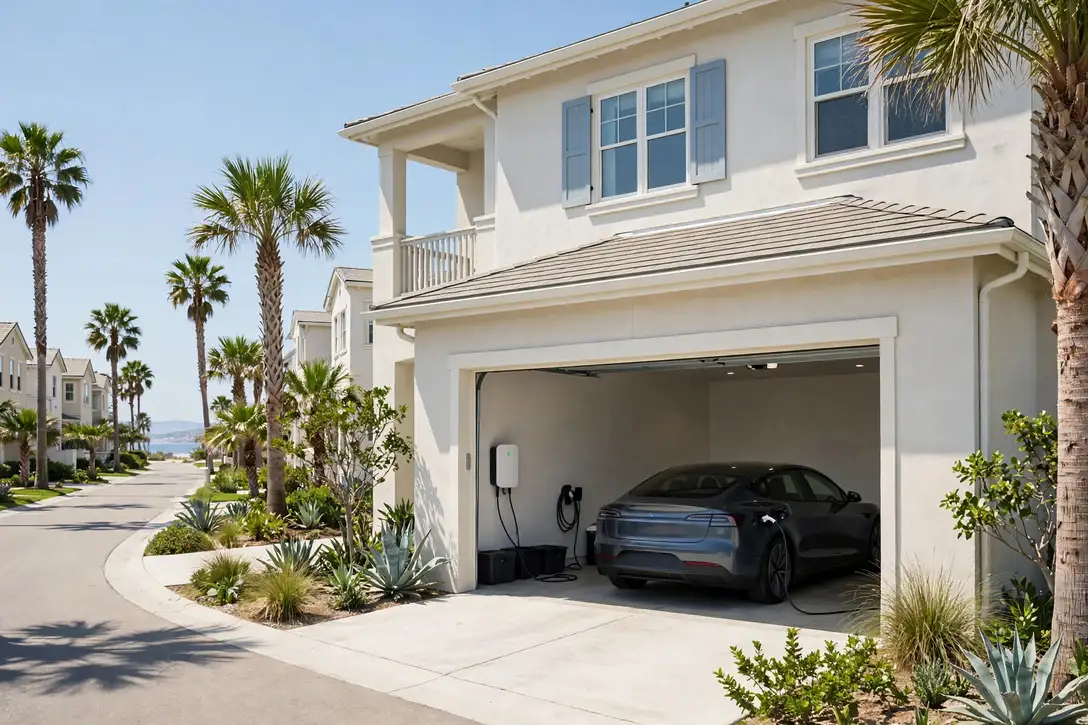
EV charging services in Hot Springs
The full menu runs to ten services; the three cards at the top are the ones Hot Springs's housing stock and state law push to the front. Everything links to its national service page for scope and process in full.
Home EV Charger Installation in Hot Springs
One circuit, one station, one inspection: the residential install in its usual form. An installer sizes the circuit to the household's driving, mounts the station where the cable reaches the port without drama, sets its output to the circuit it landed on, and leaves the paperwork filed with the house.
In Hot Springs: the core residential job in Hot Springs: circuit, mounting, configuration and inspection in one visit pattern.
Dedicated Circuit & Electrical Panel Upgrade in Hot Springs
A service change is the least reversible and most enabling job on this page: it re-bases the whole house's electrical life. Done inside the charger project, it shares the permit, the utility visit and the electrician's day with the circuit it makes room for.
In Hot Springs: the capacity fix that lets the charger circuit go in without the rest of the house living at its limit.
Level 2 Charger Installation in Hot Springs
The step up from a household outlet to a real circuit: 240 volts, sized as a continuous load, delivering several times the overnight range of a Level 1 cord. The craft is in matching circuit, station configuration and vehicle acceptance so the three agree.
In Hot Springs: the 240-volt step that turns overnight charging in Hot Springs from a trickle into a full battery by morning.
Utility programs and electricity in Hot Springs
Electricity in Hot Springs comes from Entergy Arkansas LLC. Parts of the wider metro are served by First Electric Coop Corp. The utility matters twice over for a charger install: it sets the time-of-use rates that decide what overnight charging costs you, and it is the organisation that may — or may not — currently help pay for the equipment.
Do not budget for a rebate in Hot Springs right now. As of the sources checked for this page, Entergy Arkansas LLC publishes no residential charger rebate, Arkansas offers no state program for typical home installs, and the federal 30C credit ended on September 30, 2025. If that changes, the utility's program page will say so with an as-of date — and this page will be updated to match. Until then, judge quotes on the work itself.
Renters and condo owners should note the metering question early: whose meter the charger hangs off decides who pays for the energy, and Entergy Arkansas LLC's options for submetering are part of the multifamily conversation below.
Condos, HOAs and the law in Arkansas
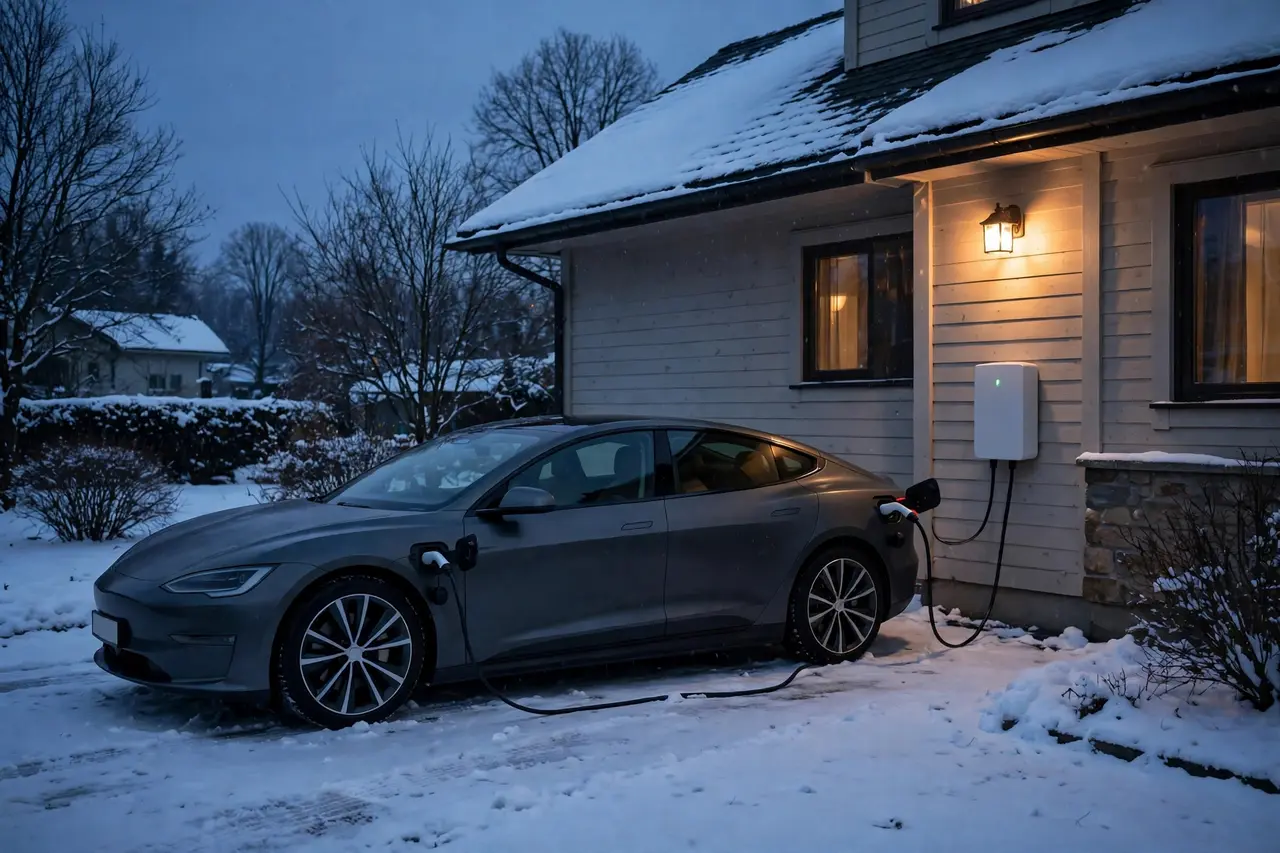
There is no Arkansas right-to-charge statute to lean on. Some national roundups list protection that does not exist in this state's code; the statute indexes checked for this page are clear. In Hot Springs, a condo or HOA charger is approved — or not — under the community's own documents, which makes the quality of your application the whole ballgame.
There is also a longer game available to Hot Springs owners: associations revise their documents, boards turn over, and state legislatures have been adding right-to-charge laws year after year. A written application — and, if it comes to it, a written refusal — is the record that each of those futures works from.
The general process, minus the statute, is still covered in our guide to installing an EV charger in a condo or HOA community — most of its application-package advice applies in Hot Springs exactly as written.
Climate, garages and charger placement
Afternoon is the design hour: a station, a cable and a car that all sit in the day's peak heat age on the local schedule, not the brochure's. West-facing walls are the last choice here; the shaded side of the garage, the eave's shadow and the overnight schedule are the three cheap protections every local installer reaches for.
Heat is the local design variable. A garage that bakes all afternoon asks more of a charging station than the nameplate assumes: electronics age faster, and a car that arrives hot from the road charges under the management of its own thermal system. Sensible installs here keep the station out of the direct sun line, favour walls with airflow, and leave the cable where it will not lie across sun-heated concrete all day.

Permits and inspection in Hot Springs
What the inspector is checking, in plain terms: conductor size against breaker size, the continuous-load calculation, terminations torqued, protection where the code wants it, and a station whose settings match the circuit it landed on. It is a short visit that validates everything you cannot see.

Neighbourhoods and ZIP codes served
The page covers 5 ZIP codes in and around Hot Springs — including 71901, 71902, 71903, 71913, 71914 — across Garland. If your ZIP is not in the first set shown, ask anyway: installer coverage follows the metro, not a postcode fence.
The same working area takes in the neighbouring localities of Hot Springs National Park, Lonsdale, Hot Springs Village, Mountain Pine, Jessieville, Pearcy, Royal — the county ring an installer based in Hot Springs actually drives. Requests from those communities route exactly as city requests do: same services, same permit discipline, same local facts where they differ.
Garland County accounts for 12 of the ZIP codes and 7 named postal localities in the research file, the nearest of them Hot Springs National Park, Lonsdale, Hot Springs Village, Mountain Pine, Jessieville, Pearcy. The survey counts 100,035 residents in the county, with a median household income of $57,181 and a median home value of $194,300. Measured across its ZIP codes, the Hot Springs footprint runs about 5 miles north to south and 8 east to west, from ZIP 71901 to 71914 — the ground an installer based here actually covers in a working week.
Beyond the county seats, the working area takes in Jones Mill, Lonsdale, Hot Springs Village, Mountain Pine, Jessieville, Malvern, Pearcy, Traskwood, Benton, Royal, Bismarck, Friendship, Donaldson, Paron, Poyen, Bonnerdale, Bauxite, Bryant, Alexander, Arkadelphia, Prattsville, Little Rock, Leola, Alpine, Perryville, Amity, Mabelvale, Story, Mount Ida, Roland, North Little Rock, Casa, Sheridan, Glenwood, Plainview, Adona, Bigelow, Curtis, Perry, Okolona, Ola, Hensley, Maumelle, Rover, Houston, Carthage, Norman, Sims, Briggsville, Sweet Home, Woodson, Centerville, College Station, Antoine, Wrightsville, Sparkman, Jefferson, Mayflower, Danville, Bluffton, Redfield, Gurdon, Pencil Bluff, Grapevine — the named localities for which Hot Springs is the nearest metro in the network (neighbouring metros' pages cover their own ground), each routing to the same installer-matching service.
The largest communities in that working area after Hot Springs itself, by the GeoNames populated-place file: Little Rock (population 202,591), North Little Rock (population 66,504), Conway (population 64,980), Pine Bluff (population 44,772), Benton (population 34,177), Sherwood (population 30,517), Russellville (population 29,166), Jacksonville (population 28,643), Cabot (population 25,587), Bryant (population 19,986), Maumelle (population 17,931), Hot Springs Village (population 12,807), Camden (population 11,347), Malvern (population 10,928), Arkadelphia (population 10,745), Stuttgart (population 9,056), Beebe (population 8,106), East End (population 6,998), Morrilton (population 6,738), Greenbrier (population 5,296). Charging demand follows those populations — the subdivisions and town centres where the next driveways, and the next panels, are.
Pulaski County reaches into the working area with 399,818 residents, a median household income of $62,873 and a median home value of $214,700; its localities on this page include Alexander, Little Rock, Mabelvale. Saline County reaches into the working area with 127,479 residents, a median household income of $79,046 and a median home value of $221,200; its localities on this page include Traskwood, Benton, Paron. Hot Spring County reaches into the working area with 33,180 residents, a median household income of $55,405 and a median home value of $151,100; its localities on this page include Jones Mill, Malvern, Benton, Bismarck, Friendship. Clark County reaches into the working area with 21,125 residents, a median household income of $52,034 and a median home value of $155,000; its localities on this page include Arkadelphia, Alpine, Amity. Perry County reaches into the working area with 10,101 residents, a median household income of $55,764 and a median home value of $130,200; its localities on this page include Perryville, Casa, Adona, Bigelow, Perry.
| ZIP | Locality | County |
|---|---|---|
| 71901 | Hot Springs National Park | Garland |
| 71914 | Hot Springs National Park | Garland |
| 71913 | Hot Springs National Park | Garland |
| 72105 | Jones Mill | Hot Spring |
| 72087 | Lonsdale | Garland |
| 71909 | Hot Springs Village | Garland |
| 71902 | Hot Springs National Park | Garland |
| 71903 | Hot Springs National Park | Garland |
| 71910 | Hot Springs Village | Garland |
| 71956 | Mountain Pine | Garland |
| 71949 | Jessieville | Garland |
| 72104 | Malvern | Hot Spring |
| 71964 | Pearcy | Garland |
| 72167 | Traskwood | Saline |
| 72158 | Benton | Saline |
| 71968 | Royal | Garland |
| 72019 | Benton | Hot Spring |
| 71929 | Bismarck | Hot Spring |
| 72015 | Benton | Saline |
| 72018 | Benton | Saline |
| 71942 | Friendship | Hot Spring |
| 71941 | Donaldson | Hot Spring |
| 72122 | Paron | Saline |
| 72128 | Poyen | Grant |
| 71933 | Bonnerdale | Hot Spring |
| 72011 | Bauxite | Saline |
| 72022 | Bryant | Saline |
| 72089 | Bryant | Saline |
| 72002 | Alexander | Pulaski |
| 71998 | Arkadelphia | Clark |
| 71999 | Arkadelphia | Clark |
| 72129 | Prattsville | Grant |
| 71923 | Arkadelphia | Clark |
| 72210 | Little Rock | Pulaski |
| 72084 | Leola | Grant |
| 72223 | Little Rock | Pulaski |
| 71920 | Alpine | Clark |
| 72126 | Perryville | Perry |
| 71921 | Amity | Clark |
| 72103 | Mabelvale | Pulaski |
| 72211 | Little Rock | Pulaski |
| 71970 | Story | Montgomery |
| 71957 | Mount Ida | Montgomery |
| 72135 | Roland | Pulaski |
| 72212 | Little Rock | Pulaski |
| 72124 | North Little Rock | Pulaski |
| 72190 | North Little Rock | Pulaski |
| 72215 | Little Rock | Pulaski |
| 72219 | Little Rock | Pulaski |
| 72221 | Little Rock | Pulaski |
| 72222 | Little Rock | Pulaski |
| 72225 | Little Rock | Pulaski |
| 72295 | Little Rock | Pulaski |
| 72209 | Little Rock | Pulaski |
| 72025 | Casa | Perry |
| 72150 | Sheridan | Grant |
| 71943 | Glenwood | Pike |
| 72857 | Plainview | Yell |
| 72001 | Adona | Perry |
| 72016 | Bigelow | Perry |
| 71728 | Curtis | Clark |
| 72204 | Little Rock | Pulaski |
| 72227 | Little Rock | Pulaski |
| 72125 | Perry | Perry |
| 72260 | Little Rock | Boone |
| 72205 | Little Rock | Pulaski |
| 72207 | Little Rock | Pulaski |
| 71962 | Okolona | Clark |
| 72853 | Ola | Yell |
| 72065 | Hensley | Pulaski |
| 72113 | Maumelle | Pulaski |
| 72860 | Rover | Yell |
| 72070 | Houston | Perry |
| 71725 | Carthage | Dallas |
| 72206 | Little Rock | Pulaski |
| 71960 | Norman | Montgomery |
| 72203 | Little Rock | Pulaski |
| 72255 | Little Rock | Pulaski |
| 71969 | Sims | Montgomery |
| 72201 | Little Rock | Pulaski |
| 72202 | Little Rock | Pulaski |
| 72118 | North Little Rock | Pulaski |
| 72828 | Briggsville | Yell |
| 72164 | Sweet Home | Pulaski |
| 72180 | Woodson | Pulaski |
| 72829 | Centerville | Yell |
| 72115 | North Little Rock | Pulaski |
| 72114 | North Little Rock | Pulaski |
| 72053 | College Station | Pulaski |
| 71922 | Antoine | Pike |

Planning the install: from panel to parking
Consider the two households inside every Hot Springs install. The first owns the panel, the parking and the decision; the second — a partner, a teenager with the next car, a future buyer — inherits all three. Designing for the second household is the difference between an install and an asset: capacity reserved, conduit honest, paperwork filed. The first conversation with an installer should name both households explicitly.
Finally, photograph the finished work — station, nameplate, panel directory with the new breaker labelled — and file it with the inspection record. When the car changes, the house sells or a second station joins the first, that folder is the difference between a five-minute answer and an archaeological dig.
Home charging know-how for Hot Springs households
Charging with an accessory dwelling
Houses with a second unit — a garage apartment, a granny flat, a rented studio — add a cast member to the charging design: another household. The questions multiply politely. Whose panel carries the circuit? Whose meter records the energy? Does the tenancy agreement mention the charger at all? None are hard questions, and all are cheaper answered at design time than at the first shared bill. Where the second unit has its own meter and panel, the design is simply two small domestic installs sharing an address.
Bidirectional charging, honestly framed
Vehicles that can return energy to a house or the grid exist, and the standards enabling them are settling — but for most households today it is a horizon technology, not a purchase category: it needs a compatible vehicle, bidirectional equipment, utility interconnection approval and a tariff that rewards it. None of that changes today's installation advice, except in one detail: conduit and panel capacity installed generously now are the same provisions a future bidirectional setup would want. Buy for the car you have; leave room for the one the industry is promising.
Making the rate window automatic
Time-of-use tariffs reward households whose charging happens while the grid sleeps, and the reward compounds silently: every night, for the life of the car. The mechanism is trivial — a schedule set in the vehicle or the station — but the details decide whether it survives contact with real life: the window must fit the household's latest departure, the schedule must yield gracefully on the nights the car comes home empty, and the settings must live somewhere the household can find them again. Set it up at commissioning, with the installer, and the saving becomes infrastructure rather than intention.
Long runs and voltage drop
Distance taxes a circuit twice: in materials, and in voltage. A long run at charging currents loses voltage along its length, and the code's remedy is conductor sized a step beyond the minimum so the station at the far end still receives what it expects. This is one of the reasons a detached structure or a far-corner panel turns a simple circuit into a designed one — the arithmetic is easy, but it has to be done, and it is invisible in any quote that scopes the job from the charger box alone. The site visit is where the tape measure settles it.

Frequently asked questions
Can I still get the federal tax credit for a home charger in Hot Springs, AR?
Nothing is currently on offer that you should plan around. The federal 30C credit ended on September 30, 2025; Arkansas operates no replacement for typical home installs; and the sources checked for this page showed no live residential rebate from Entergy Arkansas LLC. Programs do reopen — on the utility's own pages, with dates. Until one does, the install stands or falls on its own merits.
What can my HOA in Hot Springs, AR do about a charger install?
Possibly, yes. Arkansas has no statewide right-to-charge law in the authoritative indexes checked for this page, so your community's covenants govern. A complete written application — licensed installer, dedicated circuit, owner-paid metering and insurance — is the approach that gets approvals here.
Will my Hot Springs, AR home need a panel upgrade for a Level 2 charger?
It hinges on two numbers you cannot read off the panel door: the service's rating, and what the load calculation says it already carries. The vintage of Hot Springs's stock — median build year 1973, about 60% of homes from before 1980 — means both answers are common here. The charger enters the arithmetic at 125% of its draw; whatever room survives that entry decides between a circuit, a management device, and an upgrade.
How quickly will a Level 2 charger fill my car in Hot Springs, AR?
In parked hours: a Level 1 cord returns about 3–5 miles for each of them, and a Level 2 circuit returns roughly 25–40, set by its amperage and the car's acceptance. For a Hot Springs household parking ten hours, that is the difference between recovering a short errand day and recovering any day the car can legally drive.
What happens after I request an installer through this page?
Send the request and it is matched against installers covering Hot Springs — your service, ZIP, property type and timing travel with it. An installer then arranges the site visit and quotes in writing. Our role ends at the introduction; your contract, permit and paperwork are with the installer.
How long does a typical home charger installation take in Hot Springs, AR?
Separate the three clocks. The installer's clock: typically a day of electrical work for the standard layout. The permit office's clock: issuance on the department's queue. The inspector's clock: a visit scheduled after the work. A realistic quote in Hot Springs, Arkansas names all three; the total is usually days to a few weeks, dominated by the two clocks nobody on the crew controls.
Nearby cities in Arkansas
- EV charger installation in Fort Smith — about 99 miles from Hot Springs, metro population 280,000
- EV charger installation in Fayetteville — about 124 miles from Hot Springs, metro population 600,000
- EV charger installation in Jonesboro — about 154 miles from Hot Springs, metro population 140,000
- EV charger installation in Texarkana, TX — about 102 miles from Hot Springs, metro population 150,000
- EV charger installation in Monroe, LA — about 146 miles from Hot Springs, metro population 205,000
- EV charger installation in Shreveport, LA — about 146 miles from Hot Springs, metro population 395,000
Ready to charge at home in Hot Springs?
Send the essentials — what you need, where, and what kind of property — and a licensed local installer will pick it up from there.