EV Charger Installation in Anchorage, AK
Home Level 2 charging, panel upgrades and condo installs in Anchorage — matched to licensed local installers, with the local facts that shape the job set out below.
Ask EV owners in Anchorage what changed their routine and most give the same answer: the car charges where it parks. Anchorage itself is home to about 288,976 people. Statewide, Alaska counted 4,100 battery-electric vehicles and 1,300 plug-in hybrids on the road through 2025, and the metro's share of that fleet keeps growing. A home charger installation is not complicated, but it is local — the utility that serves your street, the age of your panel, your community's rules and your city's permit office all shape the job. This page pulls those Anchorage specifics together in one place, with the numbers sourced rather than rounded into slogans.
The sections that follow are deliberately unglamorous: statutes, survey data, permit counters, tariff habits. That is what a good install is made of. The car is the exciting part; this page is about the wall it plugs into.
The registration ledger for the Anchorage metro reads: AK 4.1K BEVs — small stock, but ~half the state market. Ledgers like this are what installer rounds are built from — they show where the cars already are, which is where the circuits get requested, permitted and inspected week after week.
The Census Bureau's portrait of Anchorage — median household income $103,284, 64% of occupied homes owner-occupied, 47% of units in single-unit detached houses — is, read correctly, a charging forecast. Owners approve their own work; detached houses host their own circuits; the remaining share is where the interesting projects live.

Put the survey together and Anchorage's charging profile reads like this: a housing stock of mixed vintages, where both electrical eras appear on the same street; a genuinely mixed city — houses, townhouses and larger buildings all carry weight; buildings of five or more units are a visible minority of the stock; and owners hold a working majority, with renters a significant minority. That combination — more than any single number — is what the installers working here plan around, and it is the lens for everything on this page.
The counts behind the percentages, for the record: Anchorage has 120,348 housing units on the survey's count, 108,597 of them occupied, and 69,393 owner-occupied households making their own electrical decisions. Detached houses number 57,068; homes built before 1980 number 53,607; units in buildings of five or more number 22,182. An installer's week in this city is a walk through exactly that distribution. The page's geography is equally concrete: 25 ZIP codes across Anchorage Municipality, centred near 61.21 degrees north latitude. The city anchors the Anchorage metropolitan area, home to roughly 400,000 people on the research file's metro estimate — the wider labour and housing market this page's installers work across.
The same survey release fills in the household economics around the housing stock: a median home value of $429,600, median gross rent of $1,536, per-capita income of $54,066, and a median resident age of 36. The movement data matters as much as the money data: 72% of Anchorage workers drive to work alone — the commute pattern home charging is built around; 9% work from home, a population whose cars charge on daytime and overnight schedules alike; 1% commute by public transit; 40% of adults hold a bachelor's degree or higher. And the fleet in the driveways: 35,479 households in Anchorage have exactly one vehicle, 67,096 have two or more, and 6,904 have none.
Two burden statistics frame the economics: in Anchorage, 36% of renters and 0% of mortgage-holding owners are housing-cost burdened at the standard 30% threshold. And 64% of households are family households, the segment most likely to run the two-vehicle, two-schedule pattern the second-vehicle planning notes address.
This is the context an installer works against, whether it is written down or not. Growth rings are the city's autobiography: each decade's standard — service size, wiring method, garage provision — survives intact in its ring, and the charger wave is now writing the next ring's standard. The built form refuses a single story: houses with garages on one side of the arterial, garden apartments and mid-rise condos on the other, each population charging by different rules.
Neither side dominates, so neither side's pattern sets the norm: the local market's standard documents include both the homeowner work order and the tenant proposal, kept in the same drawer. At these incomes the binding constraint is rarely money; it is scheduling — installer diaries, permit queues and the household's own calendar. The regulatory calendar is the programme calendar: rate cases, electrification plans and pilot approvals move through the commission on public timetables, and installers plan their marketing around them.
Early-market conditions have their own economics: fewer specialist installers, general electricians carrying the work, and a premium on the household arriving informed — which is the gap this page exists to close. Mid-sized metros feel fleet growth personally: each year's registrations are visible in the school car park and the permit statistics, and the installer market grows in step rather than in surges. Without a state charging statute, shared-property approvals in this metro are won on paper quality: metering clarity, licensed installers, insurance, reversibility — the complete package the guides set out.
The electrical reality in Anchorage homes
The Census Bureau's latest American Community Survey puts the median Anchorage home's build year at 1982: about 45% of the city's housing units were built before 1980, 47% are single-unit detached houses, and 64% of occupied homes are owner-occupied. Those three numbers predict most of what an installer will find. A mixed-age stock like this splits installs into two camps: newer subdivisions where a 200-amp panel usually has planned capacity, and established neighbourhoods where the panel conversation comes first. Neither is a problem — but they are different jobs, and the estimate you get should say which camp your home falls into and why. Detached houses matter for a practical reason: a garage or driveway on your own lot means the charger, the car and the circuit are all under one roof and one owner's control, which is the simplest configuration there is.
The fuel table adds one more local fact: 18,615 Anchorage homes — 17% of the stock — heat with electricity. Those households already think in kilowatts through the winter, their panels carry the load to prove it, and a charger's overnight appetite joins a system that is, in the useful sense, already electrified.
The tenure split cuts the other way too: roughly 39,204 occupied homes in Anchorage are rented. For those households the charger question is a negotiation with a property owner — written proposal, licensed installer, metering clarity — and it succeeds often enough that installers here keep the pattern ready.
And 18% of Anchorage's homes are in buildings with five or more units — apartments and condominiums where charging is a building decision before it is an electrical one. If that is your situation, the law and multifamily sections of this page are the ones written for you.
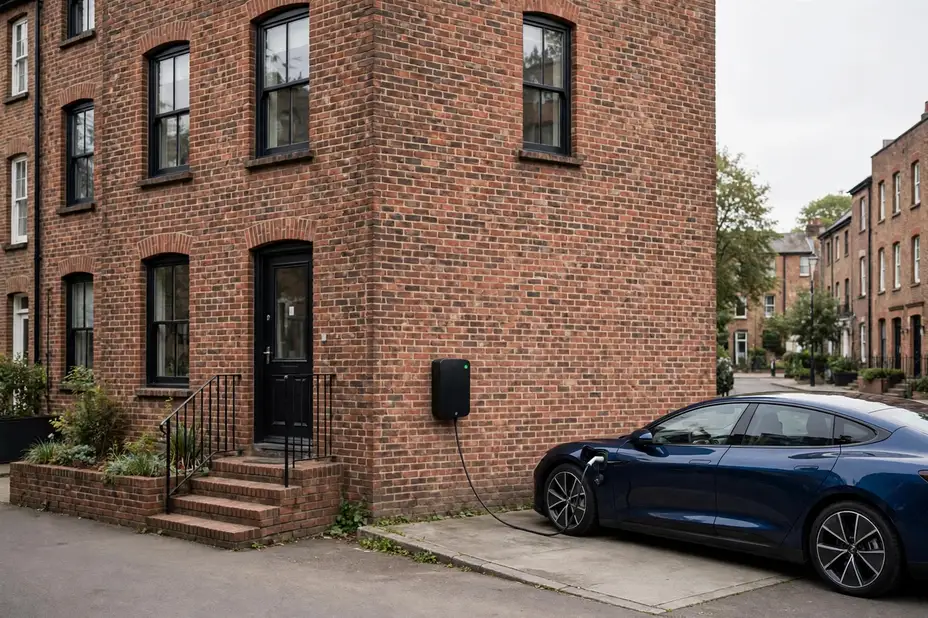
EV charging services in Anchorage
Ten services cover the work installers do in Anchorage. Three lead the list here because of what this city's housing and law actually look like — each links to its national service page, where scope and process are set out in full.
Home EV Charger Installation in Anchorage
One circuit, one station, one inspection: the residential install in its usual form. An installer sizes the circuit to the household's driving, mounts the station where the cable reaches the port without drama, sets its output to the circuit it landed on, and leaves the paperwork filed with the house.
In Anchorage: the default first install for Anchorage's EV households — a station where the car already parks.
Dedicated Circuit & Electrical Panel Upgrade in Anchorage
Where the load calculation fails the existing service, the upgrade is not an upsell — it is the finding. Done under permit with the utility's meter work coordinated, it converts the charger project into the house's electrical reset, and every later project inherits the headroom.
In Anchorage: service work that turns 'no room' into a circuit with headroom in Anchorage homes.
Level 2 Charger Installation in Anchorage
Level 2 is where home charging becomes effortless: a dedicated 240-volt circuit returning a full battery overnight instead of a partial one by morning. The installer's work is the circuit itself — breaker, conductor, connection type — and the station's settings matched to it.
In Anchorage: the circuit class behind nearly every home install in Anchorage, from first car to second.
Utility programs and electricity in Anchorage
Electricity in Anchorage comes from Chugach Electric Assn Inc. Parts of the wider metro are served by Matanuska Electric Assn Inc. The utility matters twice over for a charger install: it sets the time-of-use rates that decide what overnight charging costs you, and it is the organisation that may — or may not — currently help pay for the equipment.
Do not budget for a rebate in Anchorage right now. As of the sources checked for this page, Chugach Electric Assn Inc publishes no residential charger rebate, Alaska offers no state program for typical home installs, and the federal 30C credit ended on September 30, 2025. If that changes, the utility's program page will say so with an as-of date — and this page will be updated to match. Until then, judge quotes on the work itself.
Before the install, it is worth a two-minute look at your tariff. Many Chugach Electric Assn Inc customers can move to a time-of-use plan where overnight energy is charged at a lower rate, and a scheduled charger makes that saving automatic.
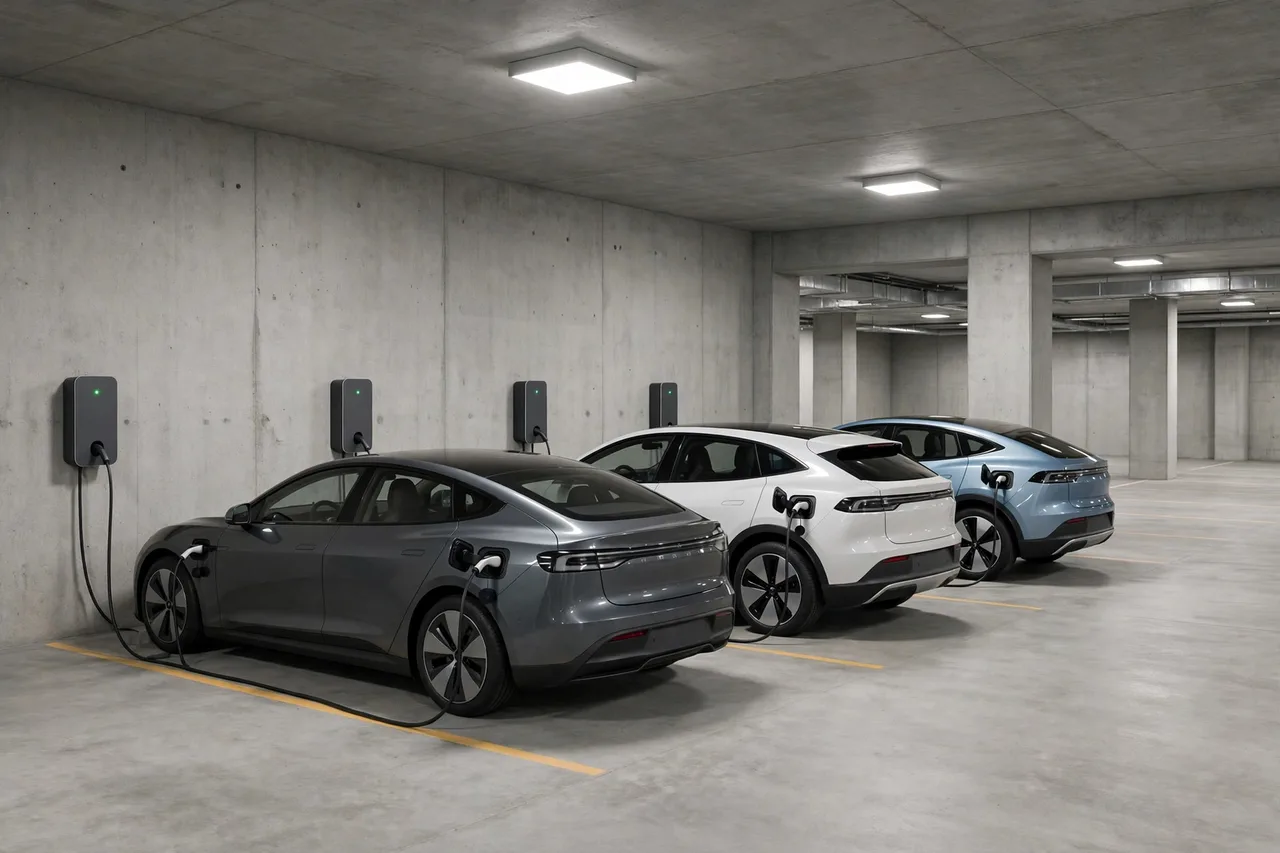
Condos, HOAs and the law in Alaska
No statute promises a charger approval in Alaska. Unlike the states that have enacted right-to-charge laws, Alaska leaves the question entirely to each community's covenants and board discretion. For Anchorage owners that is not the end of the road — it is a sign that the negotiation, the metering design and the written application carry the weight a statute would otherwise carry.
There is also a longer game available to Anchorage owners: associations revise their documents, boards turn over, and state legislatures have been adding right-to-charge laws year after year. A written application — and, if it comes to it, a written refusal — is the record that each of those futures works from.
Our condo and HOA guide was written for both kinds of state; the chapters on application packages, metering and cost allocation are the ones that matter in Anchorage, where no statute does the persuading for you.
Climate, garages and charger placement
Preconditioning is the cold-climate feature owners actually use: the car warms its battery and cabin from the wall while it is still plugged in, leaving with a full battery instead of spending the first miles on heat. It only works if the car is connected overnight — which is the whole argument for a home circuit that is effortless to use in gloves, in the dark, in February.
Snow management decides charger geography in cold metros more than any electrical factor: the station out of the plough's throw, the parking position out of the drift line, the cable route off the shovelled path. Walk the site in your head in February before signing the layout in June.

Permits and inspection in Anchorage
The permit trail also protects the next transaction: a charger circuit on the inspection record is an asset a buyer's inspector reads in one line, while an undocumented circuit is a question that follows the sale. Installers who work this metro treat the filing as part of the deliverable, not an errand.

Neighbourhoods and ZIP codes served
The page covers 25 ZIP codes in and around Anchorage — including 99501, 99502, 99503, 99504, 99507, 99508, 99509, 99510, 99511, 99513, 99514, 99515, 99516, 99517, 99518, 99519, 99520, 99521, 99522, 99523, 99524, 99529, 99530, 99599, 99695 — across Anchorage Municipality. If your ZIP is not in the first set shown, ask anyway: installer coverage follows the metro, not a postcode fence.
The same working area takes in the neighbouring localities of Eagle River, Indian, Chugiak, Girdwood, Jber — the county ring an installer based in Anchorage actually drives. Requests from those communities route exactly as city requests do: same services, same permit discipline, same local facts where they differ.
Anchorage Municipality County accounts for 31 of the ZIP codes and 6 named postal localities in the research file, the nearest of them Eagle River, Indian, Chugiak, Girdwood, Jber. The survey counts 288,976 residents in the county, with a median household income of $103,284 and a median home value of $395,900. Measured across its ZIP codes, the Anchorage footprint runs about 10 miles north to south and 17 east to west, from ZIP 99501 to 99695 — the ground an installer based here actually covers in a working week.
Beyond the county seats, the working area takes in Eagle River, Big Lake, Indian, Chugiak, Wasilla, Houston, Hope, Girdwood, Willow, Moose Pass, Cooper Landing, Palmer, Sutton, Tyonek, Sterling, Whittier, Talkeetna, Trapper Creek, Seward — the named localities for which Anchorage is the nearest metro in the network (neighbouring metros' pages cover their own ground), each routing to the same installer-matching service.
The largest communities in that working area after Anchorage itself, by the GeoNames populated-place file: Eagle River (population 24,793), Knik-Fairview (population 14,923), Wasilla (population 9,284), Lakes (population 8,364), Tanaina (population 8,197), Kalifornsky (population 7,850), Kenai (population 7,661), Meadow Lakes (population 7,570), Palmer (population 6,788), Elmendorf Air Force Base (population 6,621), Sterling (population 5,617), Gateway (population 5,552), Fishhook (population 4,679), Soldotna (population 4,544), Nikiski (population 4,493), Big Lake (population 3,350), Butte (population 3,246), Seward (population 2,790), Girdwood (population 2,250), Houston (population 2,206). Charging demand follows those populations — the subdivisions and town centres where the next driveways, and the next panels, are.
Matanuska-Susitna Borough reaches into the working area with 112,988 residents, a median household income of $94,031 and a median home value of $346,600; its localities on this page include Big Lake, Wasilla, Houston. Kenai Peninsula County reaches into the working area with 60,413 residents, a median household income of $80,538 and a median home value of $323,200; its localities on this page include Hope, Moose Pass, Cooper Landing, Tyonek, Sterling.
| ZIP | Locality | County |
|---|---|---|
| 99501 | Anchorage | Anchorage Municipality |
| 99513 | Anchorage | Anchorage Municipality |
| 99509 | Anchorage | Anchorage Municipality |
| 99514 | Anchorage | Anchorage Municipality |
| 99520 | Anchorage | Anchorage Municipality |
| 99521 | Anchorage | Anchorage Municipality |
| 99522 | Anchorage | Anchorage Municipality |
| 99523 | Anchorage | Anchorage Municipality |
| 99524 | Anchorage | Anchorage Municipality |
| 99599 | Anchorage | Anchorage Municipality |
| 99503 | Anchorage | Anchorage Municipality |
| 99517 | Anchorage | Anchorage Municipality |
| 99508 | Anchorage | Anchorage Municipality |
| 99518 | Anchorage | Anchorage Municipality |
| 99510 | Anchorage | Anchorage Municipality |
| 99507 | Anchorage | Anchorage Municipality |
| 99502 | Anchorage | Anchorage Municipality |
| 99529 | Anchorage | Anchorage Municipality |
| 99530 | Anchorage | Anchorage Municipality |
| 99515 | Anchorage | Anchorage Municipality |
| 99504 | Anchorage | Anchorage Municipality |
| 99516 | Anchorage | Anchorage Municipality |
| 99511 | Anchorage | Anchorage Municipality |
| 99577 | Eagle River | Anchorage Municipality |
| 99652 | Big Lake | Matanuska-Susitna Borough |
| 99519 | Anchorage | Anchorage Municipality |
| 99540 | Indian | Anchorage Municipality |
| 99695 | Anchorage | Anchorage Municipality |
| 99567 | Chugiak | Anchorage Municipality |
| 99623 | Wasilla | Matanuska-Susitna Borough |
| 99694 | Houston | Matanuska-Susitna Borough |
| 99687 | Wasilla | Matanuska-Susitna Borough |
| 99605 | Hope | Kenai Peninsula |
| 99629 | Wasilla | Matanuska-Susitna Borough |
| 99654 | Wasilla | Matanuska-Susitna Borough |
| 99587 | Girdwood | Anchorage Municipality |
| 99688 | Willow | Matanuska-Susitna Borough |
| 99631 | Moose Pass | Kenai Peninsula |
| 99572 | Cooper Landing | Kenai Peninsula |
| 99645 | Palmer | Matanuska-Susitna Borough |
| 99674 | Sutton | Matanuska-Susitna Borough |
| 99682 | Tyonek | Kenai Peninsula |
| 99672 | Sterling | Kenai Peninsula |
| 99693 | Whittier | Chugach Census Area |
| 99676 | Talkeetna | Matanuska-Susitna Borough |
| 99683 | Trapper Creek | Matanuska-Susitna Borough |
| 99664 | Seward | Kenai Peninsula |

Planning the install: from panel to parking
Experienced Anchorage installers talk about 'the tell': the small observation that predicts the job. A panel directory in pencil with three generations of handwriting. A garage converted, then converted back. A charger-shaped hole in the household's plans — the second car already ordered. Mention your own tells at the visit; they are scope information, and scope named early is scope settled fairly.
Future-proofing, in this trade, is mostly conduit and capacity: an oversized conduit run costs little during the first install and everything later; a panel position reserved is a breaker that never has to move. If a second EV, a workshop or an electrified water heater is anywhere in your five-year picture, say so at the site visit.
Home charging know-how for Anchorage households
Why chargers slow themselves down
Charging equipment protects itself thermally: a station whose electronics run hot — a sun-baked wall, a sealed enclosure in a heatwave garage — reduces its output rather than cook. Owners experience it as an unexpectedly slow session on the year's hottest afternoon. It is the equipment working as designed, and the installation answers are environmental: shade, airflow, an enclosure that breathes as its listing intends. A session that derates in mild weather, by contrast, is a symptom worth an electrician's opinion.
When the garage is detached
A detached garage changes the install's centre of gravity: the circuit must travel. The route is usually a buried conduit run from the house panel, with depth, conduit type and the trench's path past roots, irrigation and paving all settled at the design stage — or, where the run is long and the loads justify it, a subpanel in the garage that also serves the workshop the building inevitably becomes. The charger at the end of that run behaves exactly like any other; it is the journey, measured in copper and digging, that defines the job.
After the power comes back
Outages end untidily: a surge as the grid re-energises, a station mid-session interrupted, a car that resumes charging on its own schedule or waits for instruction depending on its settings. The household habits are minimal — know what your car and station each do on restoration, let the first post-outage session be a watched one, and treat any new tripping afterwards as information rather than nuisance. Equipment that rode out a storm badly usually says so promptly.
A receptacle is not a station
The portable cord in the car's boot and a wall-mounted station both deliver Level 2 energy, and the resemblance ends there. The fixed station is torqued, configured, weather-sealed and holstered as a permanent appliance; the receptacle route asks a domestic outlet and plug to sustain a continuous load for a decade of nightly cycles. Both are legitimate in the code's eyes when done properly — but the daily-living difference, and the wear pattern on the receptacle, are why permanent parking places graduate to permanent equipment.
Timing the install with other work
The least disruptive charger circuit is the one installed while other electrical work is already open. A renovation, a panel project, a garage build — each already carries the mobilisation, the permit process and the opened walls that a standalone charger job must pay for alone. The sequencing conversation costs nothing: tell the installer what else the house has planned in the next two years, and let the scope absorb the charger while the house is already a building site. The same logic in reverse — roughing in during this project for a charger planned later — is the EV-ready idea, and it belongs in the same sentence.

Frequently asked questions
What happened to the federal home-charger credit in Anchorage, AK?
No. The federal Alternative Fuel Refueling Property Credit (30C) ended for equipment placed in service after September 30, 2025. In the sources checked for this page, Chugach Electric Assn Inc had no verified residential charger rebate running either — if an installer names a current program, ask for its published terms.
What can my HOA in Anchorage, AK do about a charger install?
In Anchorage the honest answer is yes, they can refuse: Alaska gives owners no statutory charging right, so the board's discretion governs. What changes outcomes is the quality of the file in front of them — drawings, metering, insurance, a named licensed installer — and a growing number of boards here approve exactly that file.
Will my Anchorage, AK home need a panel upgrade for a Level 2 charger?
Sometimes — and Anchorage's housing stock is exactly why the question is worth asking properly. With a median build year of 1982 and roughly 45% of homes predating 1980, plenty of local panels are 100-amp units already carrying a full modern load. Those homes choose between an upgrade and load management; newer 200-amp homes usually just add the circuit. The site visit's load calculation is the decider.
How quickly will a Level 2 charger fill my car in Anchorage, AK?
Think of it in parked hours. Level 1 gives you back 3–5 miles for each of them; Level 2 gives back about 25–40, set by the circuit's amperage and what the car can accept. Overnight, that is the gap between 'enough for tomorrow' and 'full, every morning'.
What happens next after I send a request?
Your request is matched to licensed installers covering Anchorage, Alaska — service, ZIP, property type and timing travel with it. The installer who takes it arranges the site visit and quotes in writing; PlugReady USA's part is the research on this page and the introduction, and your contract is with the installer throughout.
My Anchorage home has no garage — where does the charger go?
Exterior installs are standard practice in Anchorage: a station listed for outdoor use, mounted on the wall by the drive or on a pedestal at the pad, with conduit sealed and the cable's reach checked against your parking position. Snow, sun and storm each have their local paragraph in the climate section above — the design answers all three at mounting time.
Nearby cities in Alaska
- EV charger installation in Fairbanks — about 277 miles from Anchorage, metro population 95,000
- EV charger installation in Bellingham, WA — about 1739 miles from Anchorage, metro population 240,000
- EV charger installation in Mount Vernon, WA — about 1763 miles from Anchorage, metro population 130,000
- EV charger installation in Bremerton, WA — about 1773 miles from Anchorage, metro population 275,000
Ready to charge at home in Anchorage?
Two minutes of form, and the request is in front of licensed installers who cover this city — quotes follow site visits, in writing.